Stuffed Gnocchi Bolognese

With origins dating back to ancient times, gnocchi hold a prominent place in Italian culinary history, where it has been passed down through generations as a cherished comfort food. Today, it continues to be an essential part of Italian cuisine, adopting different names depending on the origin.

Gnocchi (pronounced no-kee) are soft dumplings that may be made from wheat flour, rice, semolina, ricotta cheese, potatoes, or breadcrumbs.  Gnocchi are made throughout Italy, but the stuffed version is made mainly in the Piedmont region. The key to making delicate potato gnocchi is to add as little flour as possible but enough to keep the dough together. The filling should have a robust flavor so that it stands out from the potato dough. 

For our stuffed gnocchi today, I’m making an Asiago/ricotta filling served in a meaty Bolognese sauce. Yum!

Print Recipe
Stuffed Gnocchi Bolognese
Votes: 1
Rating: 5
You:
Rate this recipe!
Servings
Servings
Votes: 1
Rating: 5
You:
Rate this recipe!
Instructions
Stuffed Gnocchi
  1. Boil the whole potatoes with their skins until you can easily pierce them all the way through (about 20-25 minutes, depending on the dimension of the potatoes), then wash them with cold water & remove the skin when they are still warm.
  2. Mash the potatoes while they are still warm & make sure there are no chunks; add a pinch of salt and ¾ of the flour. Mix well with your hands until a nice soft dough forms (but not sticky); if necessary, add some more flour. When the dough is ready, wrap it in plastic wrap and let it rest & cool for about 10-15 minutes. In a small dish, combine finely grated Asiago with ricotta cheese.
  3. Cut the dough into 3 or 4 parts, take 1 part and cover the rest with plastic wrap so it doesn't dry. Dust the cutting board with flour & roll the dough with your palm to make a long thick cord about 2 cm in diameter, then cut chunks 2 cm long.
  4. Roll each cube between your palms to make balls then press them on your palm to make a disc. With a teaspoon, place a small amount of cheese in the center of the disc and close it on itself (make sure to cover the cheese well and close all the holes), roll it again between your palm to make the ball smooth & set it aside on a clean cloth.
  5. Bring to boil a large pot of salted water then slowly drop the gnocchi in & cook until they float on the surface. Drain, reserving 1 cup of starchy water. In a pan melt the butter and carefully add the drained gnocchi to sauté a little bit. Remove from pan, place in a dish until Bolognese sauce is ready.
Bolognese
  1. Heat olive oil over medium heat in a large skillet. Add diced celery, carrot & onion. Cook until veggies are soft tender. Add ground beef & let cook, breaking it apart until fully browned. Season with Italian seasoning, salt, and pepper. Stir in garlic & cook until fragrant.
  2. Stir in tomato paste, crushed tomatoes, water or stock, bay leaves & crushed red pepper flakes. Bring to a simmer & cook for about 10 minutes, stirring occasionally. Remove bay leaves.
  3. Add cooked gnocchi to Bolognese sauce & stream in reserved gnocchi water as needed if the mixture is too thick. Cook for an additional minute or so, taste and adjust seasoning, if needed.
  4. Serve with freshly grated Parmesan.

Swedish Meatball Noodle Bake

Swedish meatballs are more than just food; they represent a piece of Swedish heritage that has found its way into kitchens and restaurants globally.

The Swedish word for meatball, ‘Kottbullar’, first appeared in print around 1754. They are traditional Swedish ‘old-world’ fare at Smorgasbords and other festive occasions. Initially Swedish meatballs were only enjoyed by upper class Swedes but the increased availability of wood stoves and meat grinders in the 1850’s made meatballs accessible to the middle class as well. In northern Scandinavian countries beef was considered a luxury item, which meant meatballs were highly prized.

The meat content can vary based on geography. In southern Sweden, they are most often a 50/50 mix of beef and pork whereas further north in Sweden 70/30 of beef to pork is typical. Likely other options would be veal, venison, lamb or moose. Size-wise, they are smaller than those of Italy or Germany, typically not larger than a golf ball or smaller than ¾-inch across.

Traditional Swedish meatballs are seasoned with a hint of nutmeg, that adds warmth and depth to the meatballs, along with allspice that complements the nutmeg as well as salt & pepper. This blend of spices gives them their distinctive flavor.

In America, Swedish meatballs were very popular in the beginning of the 20th century and again in the 1950’s-1960′. But as is with many dishes, they continue to be re-invented into new concepts such as this Swedish meatball noodle bake. They are cherished for their rich blend of flavors and are a testament to the intersection of history, culture, and cuisine.

Print Recipe
Swedish Meatball Noodle Bake
Votes: 1
Rating: 5
You:
Rate this recipe!
Servings
Votes: 1
Rating: 5
You:
Rate this recipe!
Instructions
Meatballs
  1. Preheat oven to 375 F. Line a baking sheet with foil & spray with baking spray.
  2. In a bowl, combine all meatball ingredients & form into balls. Place on foil lined baking sheet & bake for 10 minutes or until cooked. Remove from oven & place on paper towel to drain off any excess drippings.
  3. Cook noodles until al dente. Drain & set aside.
Sauce
  1. In a saucepan, melt butter. Cook the onions & mushrooms until tender, approximately 3-5 minutes. Mix in flour & cook for one minute. Slowly whisk in the beef broth & Worcestershire sauce. Heat to simmer & cook until thickened. Reduce heat to low & add sour cream & heavy cream. Season with salt & pepper.
  2. Add the noodles, sauce & meatballs to a prepared baking dish. Bake for 20-30 minutes, or until sauce is thickened & bubbling.
  3. Garnish with sliced green onion. Nice to serve with roasted cherry tomatoes on the side.
Recipe Notes
  • You will probably notice I haven't used the traditional spices (nutmeg & allspice). Brion & I love Swedish meatballs but with a different combo of spices. Feel free to use what works for you.

Retro Porcupine Meatballs

Porcupine meatballs are an North American casserole dish of ground beef and rice meatballs cooked in tomato sauce. This recipe, that appealed to cooks in the 1930s, appears to have been developed during World War I when rice was affordable and readily available, but meat was pricey. The recipe appeared as ‘rice meat balls’ in the 1918 cookbook ‘Conservation Recipes’, a clear forerunner of the recipe from the Better Homes and Gardens Cookbook (1939). The name comes from the appearance of the meatballs, which appear prickly when the rice pokes out of them as they cook, resembling a porcupine.

Meat, even something as mundane as ground beef, was expensive and home cooks used innovation and imaginative ways to make a small amount of protein stretch to feed a large and hungry family. Porcupine meatballs were one of the answers to the problem.  It’s great that generations later we are still enjoying them!

Of course, this simple recipe is very customizable. Other ingredients could be added to the meatballs like green pepper, mustard, celery, horseradish, Worcestershire sauce, ketchup, or other seasonings. The simple tomato sauce made with canned soup could be enriched with molasses and seasoned with chili powder and cumin. A later recipe from 1969 for ‘porcupine meatballs paprika’ replaces tomato soup with cream of mushroom, and adds other ingredients like mustard, or sour cream and paprika. ‘Porcupine meatballs Chinois’ was a variation influenced by Chinese cooking techniques and ingredients. Served with peach sauce, the Chinois meatballs are made with ground pork, shrimp, rice and green onion, seasoned with soy sauce and sherry, and steamed instead of being cooked in sauce.

Ground turkey can also be substituted for the ground beef, just add 1/4 cup oatmeal to the mix to compensate for the extra moisture in the turkey.

I recall my mother making these meatballs numerous times when I was growing up. They tasted great then and still do today. I decided to make some with the tomato sauce and some with mushroom sauce since Brion was not familiar with this meal. I think he will enjoy them.

Print Recipe
Retro Porcupine Meatballs
Votes: 1
Rating: 5
You:
Rate this recipe!
Servings
SERVINGS
Ingredients
Meatballs
Alternative Brown Mushroom Sauce
Servings
SERVINGS
Ingredients
Meatballs
Alternative Brown Mushroom Sauce
Votes: 1
Rating: 5
You:
Rate this recipe!
Instructions
Meatballs/Sauce
  1. Preheat oven to 350 F.
  2. In a medium bowl, lightly mix together all meatball ingredients. Form mixture into 12 meatballs & place in an 11 x 7-inch baking dish.
  3. In a small bowl, whisk together sauce ingredients; pour over meatballs. Cover & bake 1 1/4 hours or until rice is tender.
  4. These meatballs are nice served over rice, egg noodles, mashed or baked potatoes. Simple but tasty!
Alternative Tomato Sauce
  1. In a saucepan, heat oil over medium heat. Sauté onion until tender crisp. Add crushed tomatoes & simmer for about 5 minutes. Add seasoning to taste & sour cream; combine then whisk in chicken broth. Pour over meatballs & bake.
Alternative Brown Mushroom Sauce
  1. In a skillet, heat oil & sauté onion & mushrooms. Add beef base, pepper, garlic powder & 2 cups of the water. Bring to a boil. Combine cornstarch with remaining 1/2 cup water. Gradually add cornstarch mixture to pan & stir as you are pouring. Cook, stirring often, until thoroughly mixed. Pour over meatballs & bake.
Recipe Notes
  • The advertisement picture on the blog was from life magazine in 1948.

Focaccia w/ Pork, Apple & Apricot Filling

CELEBRATING LABOR DAY!

Once again, the last long weekend of summer has arrived. Here in Canada, families with school age children, take it as the last chance to travel before the end of summer. Others enjoy the company of family and friends at barbecues, picnics, fairs, festivals and fireworks displays. Canadian football fans may spend a large portion of their weekend watching the Labor Day Classic matches live on television. Whatever your choice of relaxation is, you know good food will be a part of the holiday.

This stuffed focaccia came into my thoughts for a tasty choice. If you’re barbecuing, it can be wrapped in foil and heated on the grill. If a picnic is your preference, add a nice potato salad (or salad of choice) and of course, a beer. Perfect, easy and delicious!

I can’t quite remember when my love for ‘sandwiches’ began. I have memories of my brother and I having cold, leftover mashed potato sandwiches with my mother’s homemade bread after school. To me, anything is fair game for making a sandwich with.

The sweet potato focaccia I’m using in this recipe is adapted from the Focaccia Pugliese idea using the regional tradition of adding mashed potatoes to the yeasted dough for focaccia. The result is worth the extra effort — yeasty and spongy with a delicious tenderness and crusty edge.

Regional cuisine in Italy is a big deal. Focaccia recipes differ in many regions: Liguria, Puglia, Sicily, each region has its own version. Every tiny little village in Italy has its own recipes and everyone has their own ideas on how you should cook this or that.

Puglia’s cuisine is a mirror to its soul, simple yet flavorful, and deeply rooted in local produce. Its unique location ensures an abundance of seafood, and its fertile land blesses it with high-quality vegetables, grains, and olive oil.

The bread dough is not difficult to work with, it stretches easily to make focaccia pockets. This recipe is another idea that I developed into handheld stuffed focaccia pockets for picnics or lunch on the go. It consists of sweet potato focaccia filled with pork, apple & apricot filling. What’s not to love!

Print Recipe
Focaccia w/ Pork, Apple & Apricot Filling
Votes: 1
Rating: 5
You:
Rate this recipe!
Servings
POCKETS
Servings
POCKETS
Votes: 1
Rating: 5
You:
Rate this recipe!
Instructions
Filling
  1. To a skillet add butter & melt. Add onion, apples, celery & spices as well as salt & pepper. Sauté until vegetables are tender. Add garlic & cook until fragrant, 30-60 seconds. Remove from pan.
  2. Place ground pork in skillet & cook, breaking it up into small pieces, until no longer pink. Drain on paper towel. Return to skillet & add veg combo along with apricots & grated cheese. Set aside until ready to use.
Focaccia
  1. In a large bowl, combine yeast, 1/2 cup flour & 1/2 cup lukewarm water. Allow to sit for about 20 minutes until frothy.
  2. Cook & mash sweet potato; add it along with the remaining 3/4 cup lukewarm water, 3 Tbsp olive oil, 1 1/2 tsp salt & 4 cups flour. When dough forms, knead for about 7-8 minutes until the dough is soft & satiny. Place dough in a greased bowl, cover with plastic wrap & allow to rise in a draft fee place until doubled in size, about an hour.
  3. Preheat oven to 375 F.
  4. Spread work surface with olive oil. Place risen dough on it & roll out to about 1/4-inch thickness. Cut into 12 pieces. Form each piece into a ball. Roll each ball into a 6-inch circle. Divide filling between 6 of the circles leaving a border on each one. Top each one with remaining circles of dough. Pinch edges to seal in filling.
  5. On 2 parchment lined baking sheets, place filled focaccia. Sprinkle with dried rosemary & coarse sea salt if using.
  6. Bake for about 20 minutes or until slightly browned. Remove from oven & cool on wire racks.

Crab Stuffed Shrimp

Baked stuffed shrimp is just as perfect served as an hors d’oeuvre on special occasions and holiday parties as it is for family dinners. Stuffed shrimp may seem like a dine-out-only kind of dish, but rest assured, it’s not. Preparing it at home is not that big of a deal.

Shrimp, one of the most popular seafoods in North America, can be stashed in the freezer and thawed in the fridge the night before or in minutes under cold water to create a quick weeknight meal that the whole family will love. Add a few spices, some veggies, or pasta and you can have dinner on the table in minutes. Some like it sautéed with lemon and butter. Others prefer it coated in a crispy breading and fried to a golden brown. Shrimp is quite a versatile seafood that can be prepared in a variety of ways, drawing people in with its tender texture and mildly sweet, salty flavor.

A seasoning Brion & I have really come to enjoy especially with shrimp is the Old Bay Seasoning. With savory, salty, spicy, and herby notes, Old Bay Seasoning is something truly special in the culinary world. It was originally meant for seafood, but quickly became a beloved seasoning for everything from crab and shrimp to veggies, meats, and even popcorn! 

If you are a seafood lover, crab-stuffed shrimp has an amazing flavor combination you will really enjoy.

Print Recipe
Crab Stuffed Shrimp
Votes: 1
Rating: 5
You:
Rate this recipe!
Course Main Dish
Cuisine American
Servings
Ingredients
Lemon Pepper Butter
Course Main Dish
Cuisine American
Servings
Ingredients
Lemon Pepper Butter
Votes: 1
Rating: 5
You:
Rate this recipe!
Instructions
Stuffing
  1. In a saucepan over medium heat, add butter & allow to melt. Add onions, celery, garlic, green onions & seasoning & sauté for 6-8 minutes. Transfer mixture to a mixing bowl, add panko crumbs & drained crab meat. Fold in with a spatula until blended.
Shrimp
  1. Clean, devein & butterfly shrimp. Set aside in refrigerator.
Lemon Pepper Butter
  1. In a small saucepan, combine water, lemon juice, flour & seasonings. Whisk until mixture thickens. Remove from heat; add softened butter & blend in well.
Assembly
  1. Preheat oven to 400 F.
  2. In a round glass pie dish, place opened butterflied shrimp. Top each with a small scoop of stuffing. Next, place a tsp of lemon butter on each shrimp.
  3. Bake 20-25 minutes or until crab meat filling begins to get golden brown. Serve hot fresh broccoli.

Pork Tenderloin w/ Italian Sausage & Herb Stuffing

PORK, stuffed with PORK and wrapped in PORK bacon = a total delight for meat lovers!

Pork tenderloin is a wonderful cut of pork that when cooked well, produces a tender meal full of flavor.  Wrapping the pork in bacon simply enhances the flavor as, let’s face it – bacon makes everything taste great!!

Bacon wrapped sausage stuffed pork tenderloin is made with a lean pork tenderloin stuffed with spicy Italian pork sausages and herbs, wrapped in pieces of crispy bacon and a spicy pepper crust.

Although there were certain small differences in original Italian sausages, most consist of ground pork seasoned with some combination of fennel, anise, red bell peppers, paprika, garlic, and red pepper flakes. The red pepper flakes are what give the spicy varieties of Italian sausage their signature kick, while fennel is the hallmark flavor that makes Italian sausage distinct from other kinds of sausage.

This sausage typically comes as one of the following three kinds: hot, mild and sweet. The main difference between hot and mild is the addition of cayenne pepper or hot red pepper flakes. The difference between sweet and mild is the addition of sweet basil to the recipe.

All things considered, this combo should make a super good meal!

Print Recipe
Pork Tenderloin w/ Italian Sausage & Herb Stuffing
Votes: 1
Rating: 5
You:
Rate this recipe!
Servings
Votes: 1
Rating: 5
You:
Rate this recipe!
Instructions
  1. Butterfly pork tenderloin & pound flat with a meat mallet.
  2. In a saucepan, heat oil & add onion & garlic. Sauté until aromatic. Add Italian seasoning, sage & sausage meat. Cook until browned then add panko crumbs & vegetable broth. Season with salt & pepper to taste. Remove from heat & allow to cool.
  3. Place the sausage mixture on top of the pork tenderloin, leaving about 1-inch around the sides. Tightly wrap the tenderloin into a roll.
  4. Starting at one side, wrap the bacon around the stuffed tenderloin. Overlap, using the bacon to secure the tenderloin from coming apart.
  5. Preheat oven to 350 F.
  6. In a skillet over medium heat, sear the pork tenderloin roll in a pan on the stove top on all sides.
  7. Transfer bacon wrapped tenderloin into the oven & roast for about 25-30 minutes or until internal thermometer reads 145-150 F.
  8. Allow meat to rest under foil for about 10 minutes before carving.

Beef & Potato Empanadas

CELEBRATING CINCO de MAYO!

Cinco de Mayo commemorates a regional Mexican military battle, but it has evolved to become an important celebration of Mexican culture. Cinco de Mayo is not a major holiday in Mexico. In fact, it’s even considered a minor holiday in the region where it is observed, Puebla. It commemorates the Battle of Puebla on May 5, 1862, when a small band of Mexican fighters defeated French invaders. It has nothing to do with Mexican independence, contrary to what a lot of North Americans may think.

Today Cinco de Mayo is celebrated extensively in the United States and to a lesser degree around the world, including here in Canada. Decorations use the red, white and green colors of the Mexican flag. There are the sounds of traditional folk music from Mexico. Schools use the celebration to teach about Mexican culture and the Spanish language.

Like any celebration of an important date, food typically plays a significant role in traditions. For the occasion I decided to go with some tender flakey empanadas loaded with ground beef, pork, potatoes, and spices. To keep it even more ‘authentic’, the filling is encased in a cornmeal pastry.

Print Recipe
Meat & Potato Empanadas
Votes: 1
Rating: 5
You:
Rate this recipe!
Course Lunch
Cuisine Mexican
Servings
Course Lunch
Cuisine Mexican
Servings
Votes: 1
Rating: 5
You:
Rate this recipe!
Instructions
Pastry
  1. In a small bowl, combine sour cream & ice water: set aside. In a large bowl, whisk together flour, ½ cup cornmeal, sugar & salt. Using a pastry blender or fingertips, cut in butter until mixture resembles both coarse crumbs & small peas. Sprinkle the cold sour cream mixture over dough, tossing with a fork to evenly distribute it. Do NOT overwork dough.
  2. Cover bowl with plastic wrap & refrigerate for at least an hour.
Filling
  1. Bring potatoes to a boil in salted water. Simmer 15 minutes or until tender. Drain well and mash.
  2. While potatoes are cooking, brown ground beef, pork, onion, and garlic until no pink remains using a spoon to break it up. Add remaining ingredients (including mashed potatoes) except for breadcrumbs.
  3. Bring to a boil, reduce heat and simmer 15 minutes or until thickened. Add 1 tablespoon of breadcrumbs to help the mixture hold together if needed. Cool for 20 minutes.
Assembly/Baking
  1. Divide chilled pastry into 10 balls. Roll each one in cornmeal. Place a ball between 2 sheets of plastic wrap & roll into a 6-inch circle.
  2. Preheat oven to 350 F.
  3. Divide the filling into 10 portions. Place a portion on one side of the pastry circle, leaving about a ½-inch border (on filled side). Flip the opposite side over filling & press edges together to enclose it well. Use a fork to make the classic look.
  4. Repeat with the remaining pastry & filling. Lay empanadas on a parchment lined baking sheet. Brush lightly with egg wash.
  5. Bake for about 20 minutes or until pastry is baked & slightly browned.

Stuffed Roasted Romas

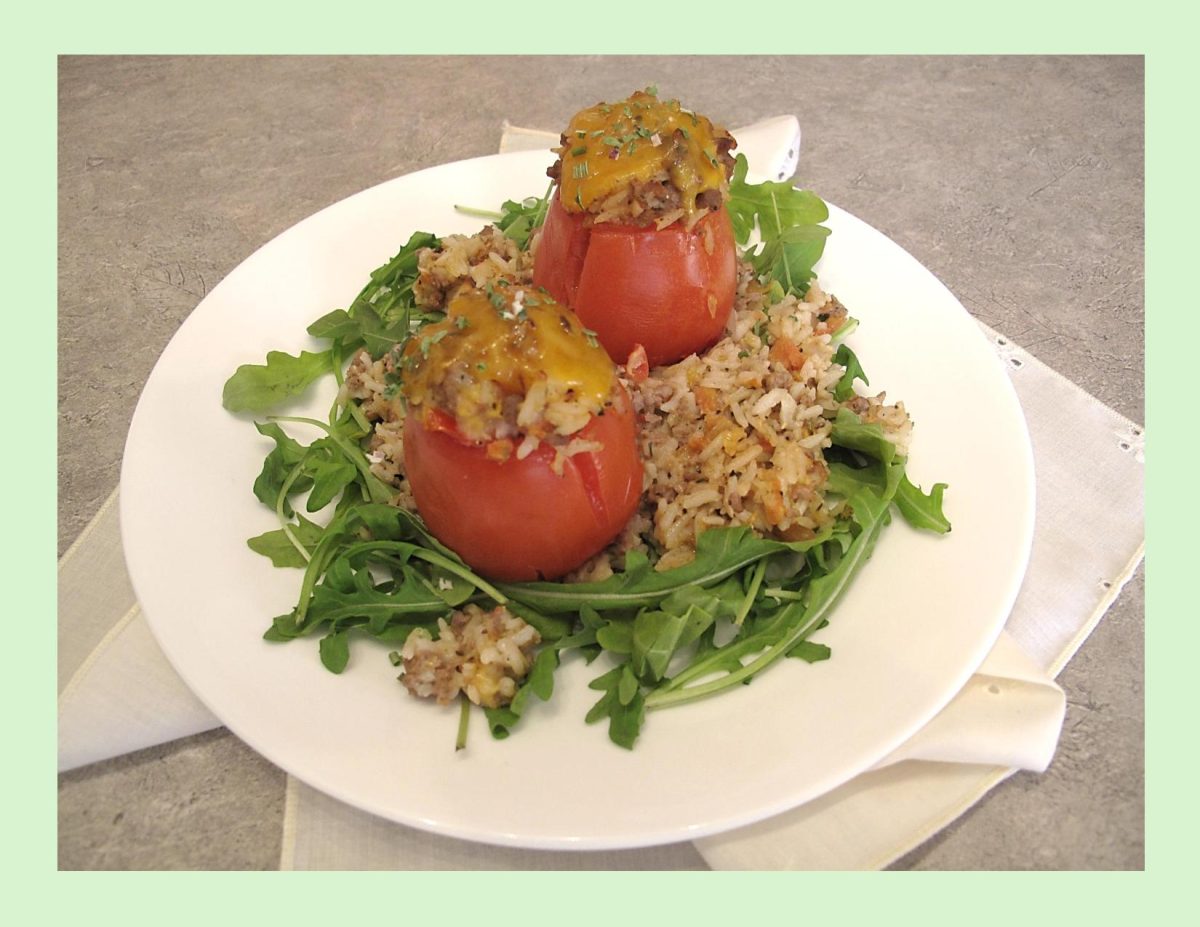
Anyone growing a vegetable garden will now be reaping the benefits of all your hard work. Have you ever stopped and thought about how many summer vegetables are fantastic for hollowing out and stuffing? Any vegetable with a fairly sturdy shape can become an edible vessel for dinner. All we need to do is scoop out the middle and fill the inside with a stuffing of our choice. A little time in the oven until everything is heated through and dinner is ready!

When my siblings and I were growing up, my mother had many unique ways of teaching us how to take responsibility. On one side of her huge farm vegetable garden, she designated a ‘strip’ each for the three of us older siblings. The strips were each about 4 feet (1.22 m) wide and the length of her garden. The deal was that we could grow whatever we choose to, but it was ours to weed and care for all summer. At the end of the season, it was fun to see who had the most success. One of my sisters absolutely loved to grow pumpkins as they grew fast and large. I can’t really remember my mother stuffing a lot of vegetables but the idea of stuffing ‘things’ always appeals to me.

It’s hard to beat a summer tomato. They’re plump and juicy and filled with sweet and savory notes. You can certainly eat tomatoes in the wintertime, but this is one of those vegetables that showcases its best aromas and flavors in the summertime.

Aside from the visual presentation of a stuffed tomato, there’s the matter of flavor. I think the real beauty of a stuffed tomato is what you put inside it. And to be honest, the sky’s the limit. Any manner of meats, cheeses, carbs, and veggies can make for  great choices. The blended flavors make for some pretty tasty meals.

Whether it’s stuffed cabbage, stuffed zucchini or these stuffed tomatoes, food just tastes better when it comes in an edible package!

Print Recipe
Stuffed Roasted Romas
Votes: 1
Rating: 5
You:
Rate this recipe!
Servings
Votes: 1
Rating: 5
You:
Rate this recipe!
Instructions
  1. In a large saucepan, heat olive oil & add ground meat, breaking up the meat with a spatula. Cook for 5-6 minutes or until meat is browned. Drain off any excess grease then add the onion, Italian seasoning & salt to the pan. Cook 3-4 minutes or until translucent. Add the garlic & cook for 30 more seconds.
  2. Preheat oven to 350 F. Lightly butter an 8-inch baking dish.
  3. Turn tomatoes blossom side down to give you a flat bottom. Trim a thin slice off the 'top'. Hollow out the insides of the tomatoes with a knife or grapefruit spoon. Chop pulp finely to be used in filling.
  4. Stir the rice, most of the cheeses (save a bit to top tomatoes with) & tomato pulp into meat mixture. Season to taste with salt & pepper.
  5. Mound the filling mixture evenly into tomato shells. Place remaining filling in the baking dish. Nestle the stuffed tomatoes into it so they will stay upright during baking time.
  6. Bake tomatoes about 15-20 minutes then top with remaining grated cheese. Bake for another couple of minutes until cheese is melted.
  7. Place a bed of arugula on serving plate & top with loose baked ground meat mixture. Place the roasted Romas on top & serve hot.

Asiago Shrimp Risotto

Risotto is one of those dishes that’s purely Italian in nature. Most traditionally made with Parmesan cheese, which is stirred in right at the very end of cooking to not only boost the rice’s creaminess but also lend its signature salty, nutty flavor to the dish. Don’t get caught up in tradition though, because risotto is one of the most flexible meals you can make.

While there is nothing wrong with Parmesan, the cheese possibilities for risotto are nearly endless and you quickly discover that the world of this comfort-food staple really has no boundaries.

Risotto is one of those gourmet meals that is really not difficult to make, and it doesn’t take long either. You can have it on the table in 30 minutes or less. It takes some work stirring — not the kind of stirring where you must stand at the stove and stir constantly. You can step away for brief moments, but you do want to do lots and lots of stirring. It’s the stirring that breaks up the starches in the rice and makes the risotto so incredibly wonderfully amazingly creamy.

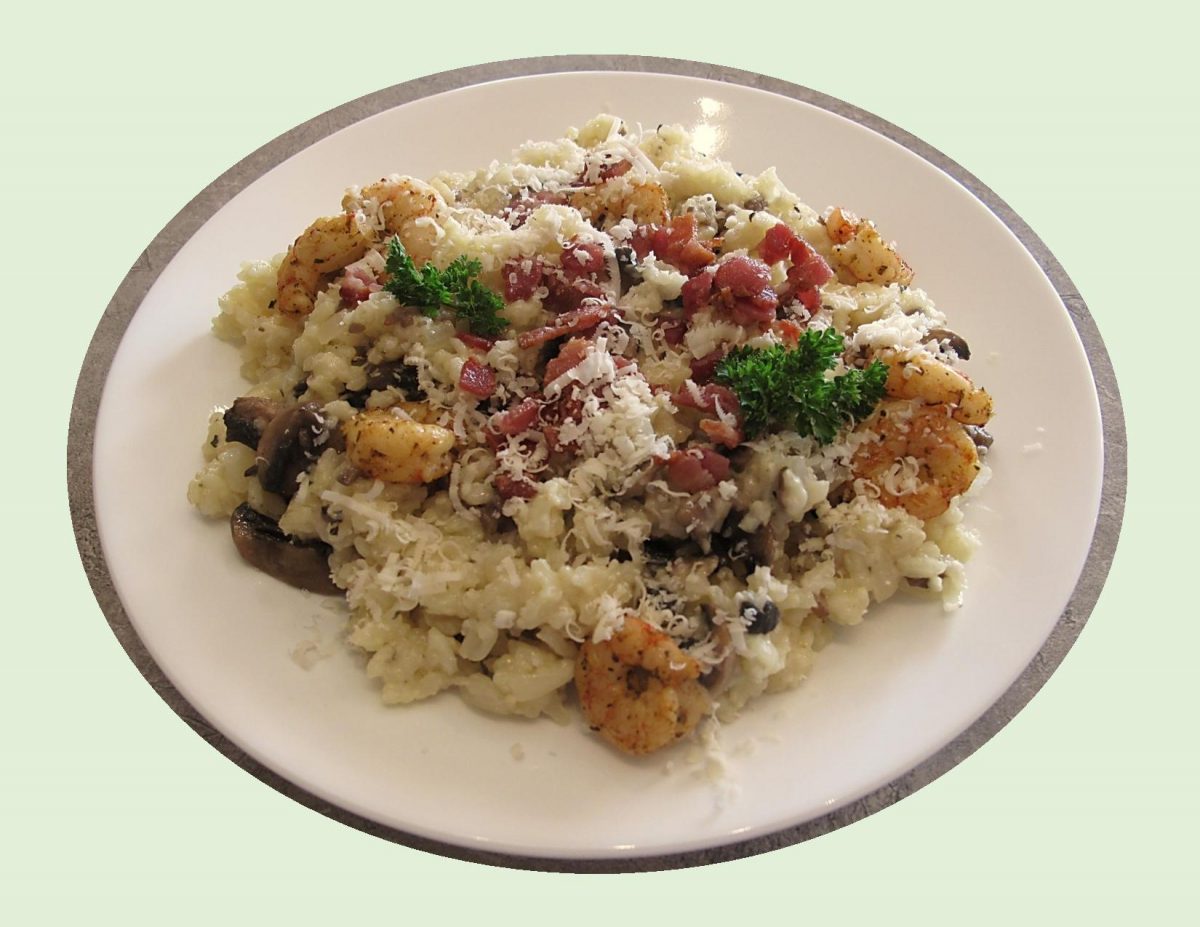
This rich and creamy risotto with tender shrimp, uses Asiago over Parmesan cheese for a semisweet touch, plus tarragon and flat leaf parsley to give the dish some freshness.

Asiago is a whole milk cheese that originated in Northern Italy, around the Po River Valley where Italy borders Austria. Coming from the mountains, Asiago is similar to other mountain cheeses, such as Switzerland’s Gruyere or France’s Beaufort. Asiago is made in large wheels designed for long-term aging to get through tough winters. Dense and flavorful, Asiago’s flavor profile changes as time polishes the wheels over the course of several months or years. Taken from the milk of cows grazing on the grasses and wildflowers of the mountains, Asiago can have a fresh, fruity flavor or a savory, zesty taste on the palate.

Print Recipe
Asiago Shrimp Risotto
Votes: 1
Rating: 5
You:
Rate this recipe!
Course Main Dish
Cuisine Italian
Servings
Ingredients
Course Main Dish
Cuisine Italian
Servings
Ingredients
Votes: 1
Rating: 5
You:
Rate this recipe!
Instructions
Risotto
  1. Heat 1 tsp oil in a LARGE POT or DEEP SKILLET over high heat. Add bacon & cook until fairly crisp. Blot on paper towel & crumble. Transfer to a small microwave-proof bowl. Leave about 1 Tbsp bacon drippings in pot & discard the rest. Add mushrooms & cook until browned. Remove to a dish, set aside.
  2. Turn heat down to medium & return pot to the stove. Add butter & melt; then add garlic & onion. Sauté for 3 minutes or until softened. Turn up heat, add rice & stir until grains become partially translucent, about 1 minute (do NOT overcook).
  3. Add wine & cook, scraping the bottom of the pot to get any brown bits, about 2 minutes. Turn down heat to medium-low; add about 3 cups of chicken stock. Leave, uncovered, stirring just once or twice, until most of the liquid has been absorbed.
  4. Check firmness of rice & add 1/2 cup of broth at a time, stirring in between until absorbed & rice is cooked to YOUR taste.
Spicy Shrimp
  1. While the risotto is cooking, combine spice mix in a plastic bag. Add shrimp & shake to coat well. In a skillet, heat butter & olive oil; add shrimp & sauté for 2-3 minutes, just until cooked. Keep warm.
  2. Add the mushrooms back into the risotto towards the end, just to heat through. Right at the end when the risotto is ready, add a 'splash' more chicken broth to make the risotto slightly soupy, then take it off the stove.
  3. Add butter & Asiago cheese, then stir vigorously (this will activate the starch & make it super creamy). Add shrimp & gently stir to incorporate them into the risotto.
  4. Serve immediately. Garnish with reheated bacon & extra Asiago if you wish.

Shrimp & Chicken Pelmeni

Though they come in all shapes and sizes, dumplings are a near-universal culinary constant as almost every culture has one. So naturally, dumpling recipes are incredibly versatile, coming with a wide array of fillings, wrappers, shapes and sizes. Eaten as an appetizer, dessert, side dish or for the main meal, they might just be the ultimate comfort food.

Chicken and shrimp go together surprisingly well, and this dish is no exception. In March of this year (2021), I posted a blog about Russian Pelmeni. Since then, Brion & I have had ‘pelmeni’ numerous times in which I’ve experimented with various fillings. In case you’re not familiar with these dumplings, traditional Russian pelmeni consist of a filling wrapped in thin, unleavened dough. The word “pelmeni” describes the ear-shaped appearance of these dumplings.

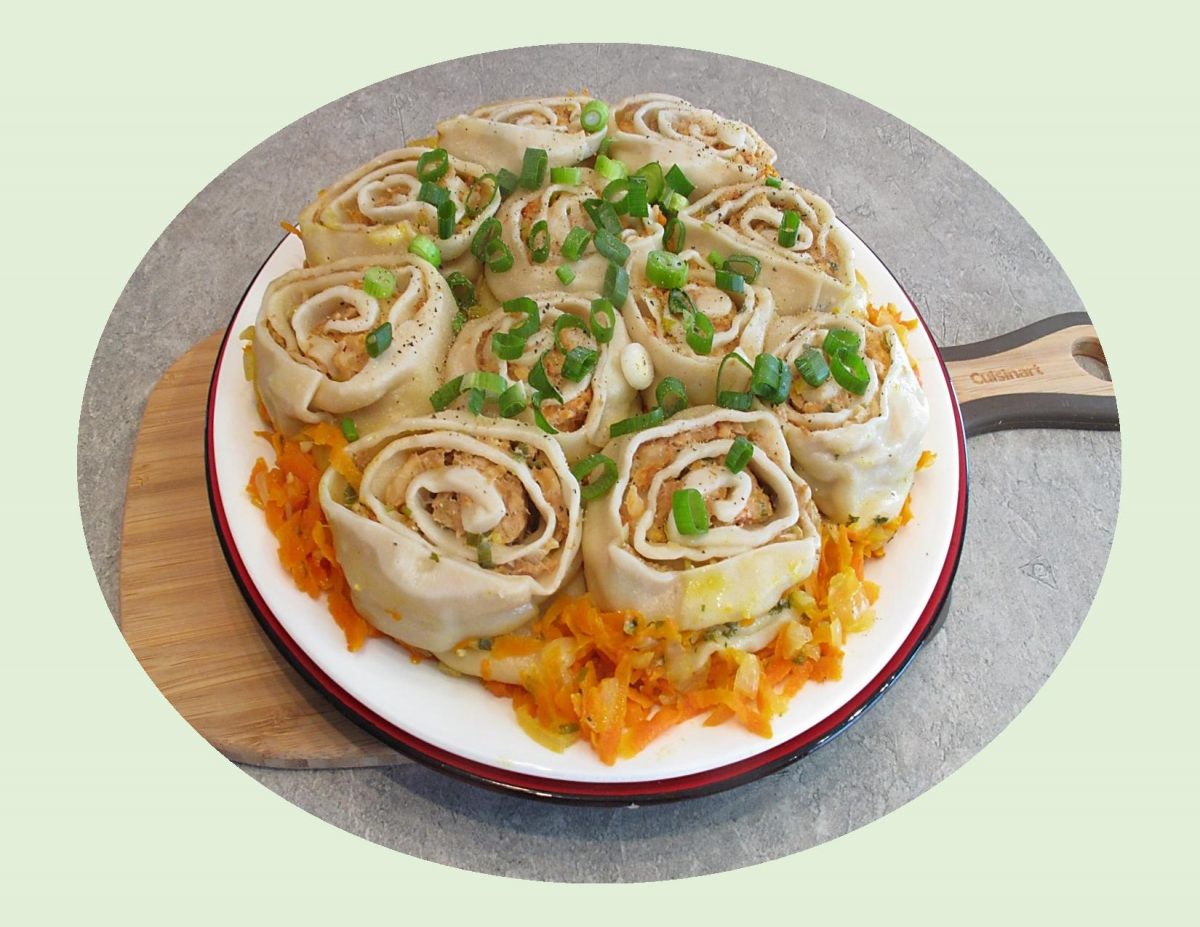
When I made them for the March blog, I used a different technique for preparing them. Instead of making them into the traditional ear shape, I rolled the dough out into a large rectangle. I then spread the raw meat filling over it very thinly and rolled it up in a jelly roll fashion. After slicing the roll into 2-inch pieces, they were steam cooked in broth in a skillet. It’s a quick and easy take on authentic pelmeni.

Since Brion & I eat a lot of chicken and shrimp, I could see no reason to ‘develop’ a new version with an almost oriental twist on it.

Print Recipe
Shrimp & Chicken Pelmeni
Votes: 1
Rating: 5
You:
Rate this recipe!
Servings
Ingredients
Servings
Ingredients
Votes: 1
Rating: 5
You:
Rate this recipe!
Instructions
Dough
  1. In a bowl, combine all dough ingredients & knead until a smooth dough ball forms, about 10 minutes. Cover with plastic wrap & set aside to rest until your filling is prepared.
Filling
  1. Chop mushrooms & mince garlic. In a skillet, heat butter & add garlic. When aromatic & light golden, add mushrooms & a light sprinkle of salt. Cook for about 2 minutes, until fragrant, soft & roughly a third of the original volume. Set aside in a bowl to cool.
  2. Chop shrimp into pieces the size of large peas. Add to the mushrooms with the chicken, green onion, water chestnuts & ginger. Combine with a fork.
  3. Stir together salt & white pepper, sugar, soy sauce & water. Pour over the filling; stir to mix & firm up. Cover & set aside to rest for 30 minutes.
Assembly
  1. Once dough has rested, transfer to a floured surface. Roll out the dough into a large, THIN rectangle. Spread filling over the dough, leaving a 1/4-inch at the far side of the dough.
  2. Tightly roll dough up, starting from the wider side, forming a log. Put seam side down to seal the edges. Seal ends of the dough as well. Using a very sharp knife, cut the dough log into 2-inch sections.
  3. In a large skillet that will accommodate all pelmeni, heat oil & cook onion until translucent. Add garlic & continue cooking until fragrant. Add grated carrot; cook about 1-2 minutes more.
  4. Place pelmeni rolls on top of veggies, add vegetable broth, salt & pepper. Cover with a lid & simmer for 30 minutes on a low heat. Check pelmeni from time to time, to make sure there is still some broth in the skillet. Add more broth if it evaporates too fast. Garnish with extra sliced green onions if desired. Serve.
Recipe Notes
  • A nice condiment for these dumplings would be a sweet chili sauce.