Focaccia w/ Pork, Apple & Apricot Filling

CELEBRATING LABOR DAY!

Once again, the last long weekend of summer has arrived. Here in Canada, families with school age children, take it as the last chance to travel before the end of summer. Others enjoy the company of family and friends at barbecues, picnics, fairs, festivals and fireworks displays. Canadian football fans may spend a large portion of their weekend watching the Labor Day Classic matches live on television. Whatever your choice of relaxation is, you know good food will be a part of the holiday.

This stuffed focaccia came into my thoughts for a tasty choice. If you’re barbecuing, it can be wrapped in foil and heated on the grill. If a picnic is your preference, add a nice potato salad (or salad of choice) and of course, a beer. Perfect, easy and delicious!

I can’t quite remember when my love for ‘sandwiches’ began. I have memories of my brother and I having cold, leftover mashed potato sandwiches with my mother’s homemade bread after school. To me, anything is fair game for making a sandwich with.

The sweet potato focaccia I’m using in this recipe is adapted from the Focaccia Pugliese idea using the regional tradition of adding mashed potatoes to the yeasted dough for focaccia. The result is worth the extra effort — yeasty and spongy with a delicious tenderness and crusty edge.

Regional cuisine in Italy is a big deal. Focaccia recipes differ in many regions: Liguria, Puglia, Sicily, each region has its own version. Every tiny little village in Italy has its own recipes and everyone has their own ideas on how you should cook this or that.

Puglia’s cuisine is a mirror to its soul, simple yet flavorful, and deeply rooted in local produce. Its unique location ensures an abundance of seafood, and its fertile land blesses it with high-quality vegetables, grains, and olive oil.

The bread dough is not difficult to work with, it stretches easily to make focaccia pockets. This recipe is another idea that I developed into handheld stuffed focaccia pockets for picnics or lunch on the go. It consists of sweet potato focaccia filled with pork, apple & apricot filling. What’s not to love!

Print Recipe
Focaccia w/ Pork, Apple & Apricot Filling
Votes: 1
Rating: 5
You:
Rate this recipe!
Servings
POCKETS
Servings
POCKETS
Votes: 1
Rating: 5
You:
Rate this recipe!
Instructions
Filling
  1. To a skillet add butter & melt. Add onion, apples, celery & spices as well as salt & pepper. Sauté until vegetables are tender. Add garlic & cook until fragrant, 30-60 seconds. Remove from pan.
  2. Place ground pork in skillet & cook, breaking it up into small pieces, until no longer pink. Drain on paper towel. Return to skillet & add veg combo along with apricots & grated cheese. Set aside until ready to use.
Focaccia
  1. In a large bowl, combine yeast, 1/2 cup flour & 1/2 cup lukewarm water. Allow to sit for about 20 minutes until frothy.
  2. Cook & mash sweet potato; add it along with the remaining 3/4 cup lukewarm water, 3 Tbsp olive oil, 1 1/2 tsp salt & 4 cups flour. When dough forms, knead for about 7-8 minutes until the dough is soft & satiny. Place dough in a greased bowl, cover with plastic wrap & allow to rise in a draft fee place until doubled in size, about an hour.
  3. Preheat oven to 375 F.
  4. Spread work surface with olive oil. Place risen dough on it & roll out to about 1/4-inch thickness. Cut into 12 pieces. Form each piece into a ball. Roll each ball into a 6-inch circle. Divide filling between 6 of the circles leaving a border on each one. Top each one with remaining circles of dough. Pinch edges to seal in filling.
  5. On 2 parchment lined baking sheets, place filled focaccia. Sprinkle with dried rosemary & coarse sea salt if using.
  6. Bake for about 20 minutes or until slightly browned. Remove from oven & cool on wire racks.

Turkey w/ Bacon & Stuffing Focaccia Pockets

It always amazes me how some simple foods can taste so incredible. Focaccia is one of those foods, it has few ingredients, yet it’s almost magical how great it tastes! Focaccia is not pizza and is about 2000 years older, a sort of missing link between traditional flat bread and pizza. Above all it is distinctly Italian. Focaccia has undergone many upgrades and evolutions; however, the basic recipe has remained unchanged.

Today, focaccia is a flat oven-baked Italian bread similar in style and texture to pizza. The interesting part, however, is that Focaccia started out as a side dish but over time it became part of the main dish as sandwich bread. If we go further back in time, focaccia was the only star of the show and was originally the prototype of early pizza.

A few years ago, Brion & I got ‘hooked’ on focaccia bread. I experimented with various recipes until I landed on the sweet potato focaccia. Experiment no more! For our liking this was the ultimate focaccia. Of course, I couldn’t just leave it at bread. My next thought was to make it into handheld stuffed focaccia pockets for picnics or lunch on the go.

Today, I’d like to share my newly ‘developed’ focaccia pocket. It consists of sweet potato focaccia filled with roast turkey, bacon & stuffing served with cranberry sauce on the side. We just loved this ‘next level’ of focaccia bread.

Print Recipe
Turkey w/ Bacon & Stuffing Focaccia Pockets
Instructions
Filling
  1. In a skillet, cook bacon until just crisp, then remove to a paper towel lined plate to drain; chop when cooled. Remove all but 1 Tbsp of the bacon drippings from skillet.
  2. Add butter to the skillet, sauté onions, garlic & mushrooms with herbs & spices, scraping up any brown bits, until the onions have softened & mushrooms have lost most of their size & moisture. Stir in the bacon & shredded cooked turkey, taste for seasoning. Cook for another minute or two, then remove from heat & set aside.
Dough
  1. In a large bowl, combine yeast, 1/2 cup flour & 1/2 cup lukewarm water. Allow to sit for about 20 minutes until frothy.
  2. Cook & mash sweet potato; add it along with the remaining 3/4 cup lukewarm water, 3 Tbsp olive oil, 1 1/2 tsp salt & 4 cups flour. When dough forms, knead for about 7-8 minutes until the dough is soft & satiny. Place dough in a greased bowl, cover with plastic wrap & allow to rise in a draft fee place until doubled in size, about an hour.
Boursin Sauce
  1. In a saucepan, melt the butter over low heat. Stir in the spices. Add the milk and adjust heat to steaming -- do not simmer or boil. Add Boursin to the milk mixture, break it up into pieces with the side of a large spoon and stir until Boursin has melted into the mixture. Remove from heat. Add to turkey/veg mixture.
Assembly/Baking
  1. Preheat oven to 375 F.
  2. Spread work surface with olive oil. Place risen dough on it & cut into 12 equal pieces. Form each piece into a ball. Roll out each ball into a 6-inch circle. Divide the filling between the 12 circles of dough. Top each one with about a 1/4 cup stuffing. Fold to form a turnover & pinch edges to seal in filling.
  3. On 2 parchment lined baking sheets, place filled focaccia. Sprinkle with dried rosemary & coarse sea salt if using.
  4. Bake for about 20 minutes or until slightly browned. Remove from oven & cool on wire racks. Serve with cranberry sauce on the side if desired.

Savory Sweet Potato Donuts

Crullers. Fritters. Old-fashioned. Cake. Twist. Glazed. Jelly-filled. Whatever style and flavor of donut comes to mind when you’re craving one, odds are that it is something decadently sweet and sugary. But have you ever tried a savory donut? Instead of glazing your donut with sugar or filling it with cream, top it with some herbs and coarse sea salt for a change.

Donuts are a perfect food. Whether they’re raised or cakey, frosted or glazed, stuffed or iced, they are grand. Each and every one of them. We could subsist on sweet donuts for days, only we would miss the taste of salt (and the ability to see our toes).

Enter the savory donut. Savory donuts are not new to the world. People have been experimenting with making donuts viable lunch or dinner options for a long time. I personally am not a fan of deep-fried things whether they are sweet or savory. So, my recipe challenge today was to make a savory raised baked donut. Since potato dough is one of my favorites, why not go with a savory sweet potato donut!  

Print Recipe
Savory Sweet Potato Donuts
Votes: 1
Rating: 5
You:
Rate this recipe!
Servings
Ingredients
Dough
Servings
Ingredients
Dough
Votes: 1
Rating: 5
You:
Rate this recipe!
Instructions
  1. In a bowl, combine yeast, 1/2 cup flour & 1/2 cup lukewarm water. Let sit for about 20 minutes until frothy.
  2. Cook & mash sweet potato; add it along with the remaining 3/4 cup lukewarm water, 4 cups flour, olive oil & salt to the yeast mixture. When dough forms, knead for about 7-8 minutes until the dough is soft & satiny. Place dough in a greased bowl, cover with plastic wrap & allow to rise in a draft free area until doubled in size.
  3. Lightly grease your work surface with olive oil. Put the dough on it & pat it out with your hands or rolling pin into a 12 x 14-inch rectangle. Using a donut cutter make 12 donuts. With the remaining scraps, divide equally into 8 portions and form into balls. You can either leave them as is or cut holes in the centers for the donut 'look'.
  4. Place the donuts in 'donut' pans or on a parchment lined baking sheet. Cover and allow to raise until doubled in size.
  5. 1. Preheat oven to 375 F.
  6. Add the rosemary to the olive oil. Very lightly brush the tops with the olive oil and rosemary mixture. Sprinkle with sea salt.
  7. Bake for about 20 minutes. The tops will be lightly browned. Remove to a rack to cool.
Recipe Notes
  • Beauregard is the most common sweet potato sold at grocery stores. The skin is reddish, and the flesh is bright orange and is the sweetest for orange types. The slightly stringy, soft, and moist texture makes it great for mashing into a puree for baking.

Benedictine Liqueur Christmas Braid

Christmas bread has a lot of different interpretations. The most traditional iterations involve sugar and spice, and often—but not always—yeast, and ultimately have strong cultural associations and country ties. One thing we can all agree on is that Christmas bread is celebratory, whether or not we observe the holiday. From the unleavened matzo of Passover to the German stollen of Christmas, from the British hot cross buns baked on Good Friday to the Russian kolach baked for any special occasion, bread in its many forms brings people together, linking traditions and generations.

The scent of Christmas spices, bread baking, and fresh-cut pine define holiday memories. Generations ago, the rich dough itself – lush with butter, eggs, dried fruit, sugar – relayed a cook’s generosity, her willingness to share the most precious ingredients in her pantry. The time and effort it took to make and bake the Christmas loaves expressed the cook’s devotion and love.

Last year, I was introduced to the liqueur known as Dom Benedictine. After doing much research into this interesting liqueur, I incorporated it in some savory and sweet recipes. We really enjoyed them so this year I was interested in doing a bit of recipe development to create a Christmas bread with it.

The story of Benedictine dates back to 1510 when a Venetian monk of the Abbey of Fécamp, Dom Bernardo Vincelli, created an elixir intended to support good health. It includes a combination of 27 herbs and spices derived from plants from around the globe, including juniper, myrrh, saffron, vanilla, thyme, coriander and more. The liqueur tastes primarily of honey and baking spices, with citrus peel, herb, and stone fruit notes.

So here you have it, my newly created Christmas bread tradition. Hope you can try it and enjoy it as much as Brion & I have.

Print Recipe
Benedictine Liqueur Christmas Braid
Votes: 1
Rating: 5
You:
Rate this recipe!
Servings
SERVINGS
Ingredients
Bread Dough
Lemon Glaze
Servings
SERVINGS
Ingredients
Bread Dough
Lemon Glaze
Votes: 1
Rating: 5
You:
Rate this recipe!
Instructions
  1. Marinate raisins, candied fruit & cranberries in Benedictine liqueur overnight, Stir occasionally.
  2. Dissolve yeast in 1/4 cup lukewarm water with 1 tsp sugar. Set aside for 5 minutes.
  3. In a large bowl, sift 2 cups of the flour. Stir in yeast mixture & lukewarm milk. Cover with plastic & let stand in a draft free place until doubled in volume, about 1 hour. Punch down firmly & work in beaten eggs, 1/2 cup sugar, lemon zest, vanilla & pieces of softened butter.
  4. Sift remaining 3 cups of flour with salt, cinnamon & cardamom & work 2 cups in to form a soft dough. Turn dough onto a lightly floured work surface. Knead in remaining cup of flour & fruit mixture. This becomes a very soft & buttery dough but is not sticky.
  5. Invert the dough onto a lightly floured work surface & dust with flour. Cut the dough into four equal pieces & then stretch & roll each piece into a rope about 20 inches long. Lay the ropes parallel to one another (vertically). Pinch them tightly at the top, then fan them out.
  6. Begin by taking the strand farthest to the right & weave it toward the left through the other strands using this pattern: over, under, over. Take the strand furthest to the right & repeat the weaving pattern again: over, under, over. Repeat this pattern, always starting with the strand farthest to the right, until the whole loaf is braided, Tuck the ends under to give the loaf a finished look.
  7. Carefully transfer the braided loaf to a parchment-lined 13x18-inch baking sheet, brush with egg wash. Cover the loaf loosely with plastic wrap & allow to rise in a warm, draft-free spot until about 1 1/2 times the size, about 1-2 hours. Toward the end of the rising time, preheat the oven to 350 F. & set an oven rack in the middle position.
  8. Gently brush risen dough again with egg wash. Place in an air-bake pan to prevent the bottom crust from browning too much.
  9. Bake 40-45 minutes or until a nice golden brown. Cool on a wire rack. Combine powdered sugar & lemon juice/zest to make glaze. When braid is completely cool, brush loaf with lemon glaze & decorate to your liking.
Recipe Notes
  • To see a more in-depth article on Dom Benedictine Liqueur, check out my blog from December 21/2022 - Benedictine Liqueur Cupcakes.

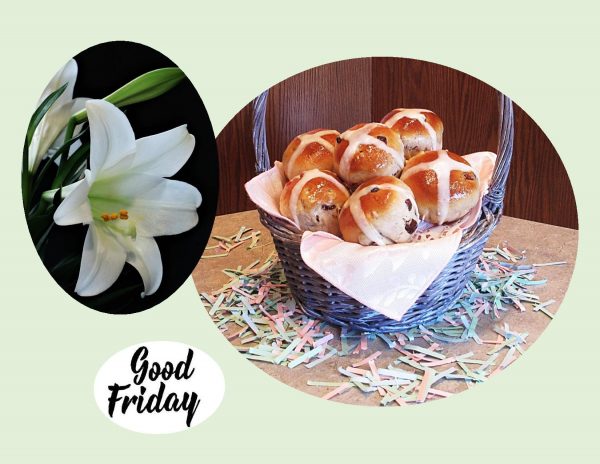
Hot Cross Bun French Toast/Buns

CELEBRATING GOOD FRIDAY!

I find the aroma of the hot cross buns baking, is so intoxicating. Brion & I have always loved these soft, spicy little buns. Each year, at Easter time, I really enjoy making some version of Easter bread or buns (of course, trying to make it just a bit better than the year past). While I was giving this some thought, I read a comment where someone was complaining that they had too many hot cross buns leftover from Easter. Is there really such a thing as having too many hot cross buns … seriously!

For me, brunch is never an afterthought, especially on a holiday. I think a decadent French toast made with light and fluffy hot cross bread, in an orange and vanilla scented milk bath, topped with raspberry compote and Greek yogurt is the perfect Easter brunch idea.

While hot cross buns are now sold and enjoyed throughout the year, they were once reserved for Good Friday alone. There is no one clear explanation … some theories rest in Christian symbolism while there are also more than a few stories that indicate hot cross buns were baked on Good Friday for superstitious reasons.

Since I have become a huge fan of Dom Benedictine Liqueur not only as a drink but in sweet & savory recipes, I’m using it in this hot cross bun bread to kick it up one notch higher. I think it will be the perfect choice for an amazing Easter brunch French toast.

Print Recipe
Hot Cross Bun French Toast/Buns
Votes: 1
Rating: 5
You:
Rate this recipe!
Course Brunch
Cuisine American
Servings
Ingredients
Hot Cross Bun/Loaf Dough
Icing for Hot Cross Buns
Orange Scented Milk bath for French Toast
Raspberry Compote
Course Brunch
Cuisine American
Servings
Ingredients
Hot Cross Bun/Loaf Dough
Icing for Hot Cross Buns
Orange Scented Milk bath for French Toast
Raspberry Compote
Votes: 1
Rating: 5
You:
Rate this recipe!
Instructions
Hot Cross Bun/Loaf Dough h
  1. Marinate raisins & candied fruit in Benedictine liqueur overnight. Stirring occasionally.
  2. Dissolve yeast in 1/4 cup lukewarm water with 1 tsp sugar. Set aside for 5 minutes.
  3. In a large bowl, sift 2 cups of the flour. Stir in yeast mixture & lukewarm milk. Cover with plastic & let stand in a draft free place until doubled in volume, about 1 hour. Punch down firmly & work in beaten eggs, 1/2 cup sugar, lemon zest, vanilla & pieces of softened butter.
  4. Sift remaining 3 1/3 cups of flour with salt, cinnamon & cardamom & work 2 cups in to form a soft dough. Turn dough onto a lightly floured work surface. Knead in remaining 1 1/3 cup of flour & fruit mixture. This becomes a very soft & buttery dough but is not sticky. Invert the dough onto a lightly floured work surface & dust with flour. Cut the dough into 2 equal portions.
  5. With the first portion, roll out the dough into a 9x12-inch rectangle. Roll dough up in jelly-roll fashion & place in a 12 x 5-inch cylinder baking pan. With the second piece of dough, cut into 12 pieces & form into balls to make hot cross buns. Place in a 9-inch round baking pan. Brush loaf & buns with egg wash.
  6. Cover both loosely with plastic wrap & allow to rise in a warm, draft-free place until 1 1/2 times the size, about 1-2 hours. Toward the end of the rising time, preheat the oven to 350 F. & set an oven rack in the middle position.
  7. Gently brush risen dough again with egg wash. Bake 30-35 minutes or until both loaf & buns are a nice golden brown. Cool on a wire rack.
Icing for Hot Cross Buns
  1. To pipe a cross on the top of the buns, wait until the buns have cooled. Whisk together the lemon juice & some of the powdered sugar. Keep adding powdered sugar until you get a thick consistency. Place in a plastic sandwich bag. Snip off a small piece from the corner of the bag and use the bag to pipe crosses on buns.
Orange Scented Milk Bath
  1. Heat pan or skillet over medium heat. Mix eggs, milk, vanilla and orange zest in a shallow flat bowl or dish until well combined. Dip the bread in the egg mixture allowing the bread to soak up some of the mixture. Turn the bread and repeat on the other side. Grease preheated pan with butter. Fry toast until golden brown on one side. Flip toast and fry until golden on remaining side. Serve immediately with raspberry syrup.
Raspberry Syrup
  1. In a small pot, combine the syrup ingredients. Place over a medium heat & cook for 5-7 minutes or until the sugar has dissolved & the raspberries have become syrupy. Press through a sieve. Serve with French toast along with yogurt if preferred.
Recipe Notes
  • The story of Benedictine dates back to 1510 when a Venetian monk of the Abbey of Fécamp, Dom Bernardo Vincelli, created an elixir intended to support good health. It includes a combination of 27 herbs and spices derived from plants from around the globe, including juniper, myrrh, saffron, vanilla, thyme, coriander and more. The liqueur tastes primarily of honey and baking spices, with citrus peel, herb, and stone fruit notes.

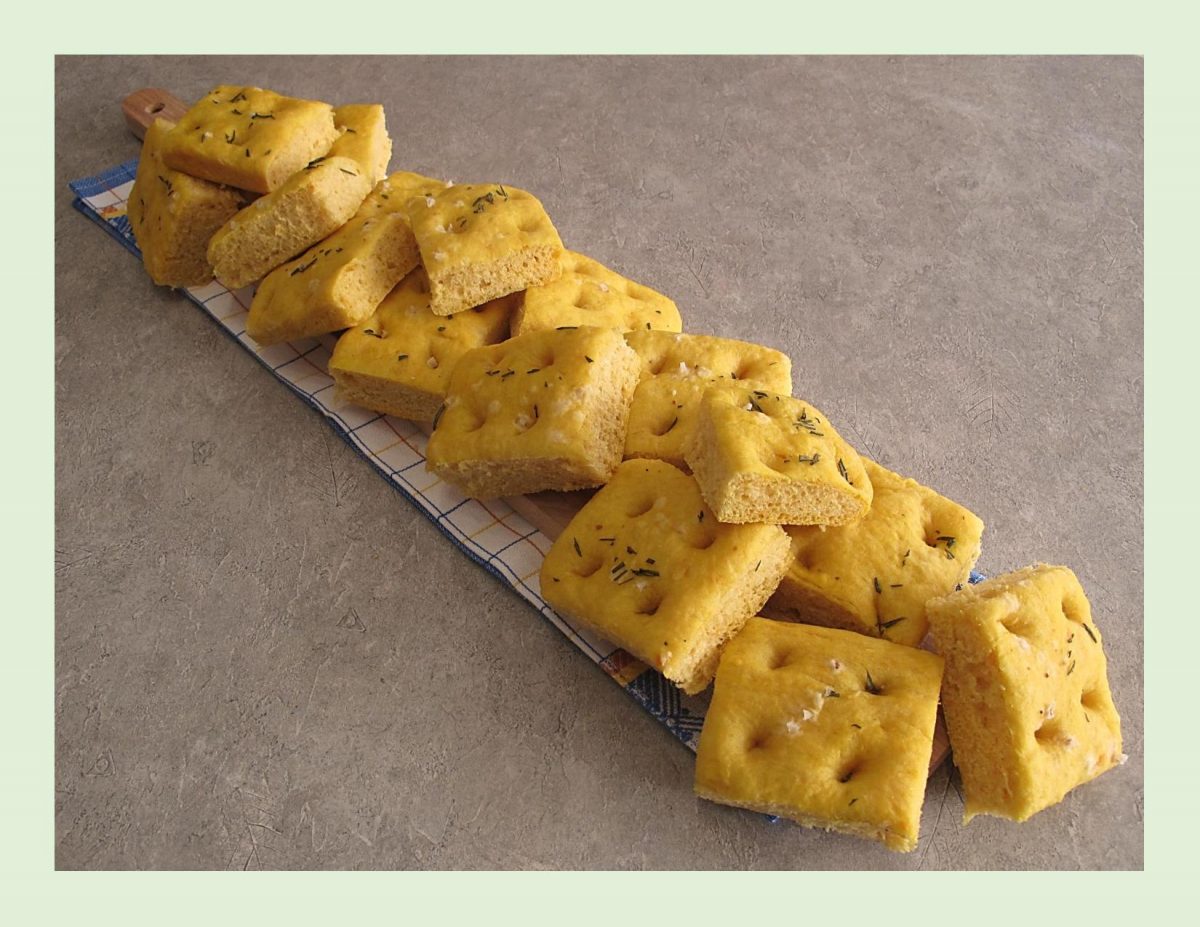
Sweet Potato Focaccia

Focaccia, known and loved in Italy and abroad, is yeasted flat bread which belongs essentially to the northern shores of the Mediterranean and has its origin in classical antiquity. Early versions were cooked on the hearth of a hot fire, or on a heated tile or earthenware disk, like the related flatbreads. Bakers often puncture the bread with a knife to relieve bubbling on the surface of the bread. Also common is the practice of dotting the bread. This creates multiple wells in the bread by using a finger or the handle of a utensil to poke the unbaked dough. As a way to preserve moisture in the bread, olive oil is then spread over the dough, by hand or with a brush prior to rising and baking.

The Latin root of the word focaccia is ‘focus’ and refers to cooking by a fireplace or hearth, literally a focal point for the family, a place where dough was baked over hot stones, fire and ashes.

Focaccia is not pizza and is about 2000 years older, a sort of missing link between traditional flat bread and pizza. Above all it is distinctly Italian. Focaccia has undergone many upgrades and evolutions, however, the basic recipe has remained unchanged.

Today, focaccia is a flat oven-baked Italian bread similar in style and texture to pizza. The interesting part, however, is that Focaccia started out as a side dish but over time it became part of the main dish as sandwich bread. If we go further back in time, focaccia was the only star of the show and was originally the prototype of early pizza.

This sweet potato focaccia with fresh rosemary and sea salt is perfect for making turkey sandwiches.

Print Recipe
Sweet Potato Focaccia
Votes: 1
Rating: 5
You:
Rate this recipe!
Course Lunch
Cuisine American
Servings
Ingredients
Dough
Course Lunch
Cuisine American
Servings
Ingredients
Dough
Votes: 1
Rating: 5
You:
Rate this recipe!
Instructions
  1. In a bowl, combine yeast, 1/2 cup flour & 1/2 cup lukewarm water. Let sit for about 20 minutes until frothy.
  2. Cook & mash sweet potato; add it along with the remaining 3/4 cup lukewarm water, 4 cups flour, olive oil & salt to the yeast mixture. When dough forms, knead about 7-8 minutes until the dough is soft & satiny. Place dough in a greased bowl, cover with plastic wrap & allow to rise in a draft free area until doubled in size.
  3. Add a little bit of additional flour to your cutting board. Put the dough on it & pat it out with your hands into a 12 x 16-inch rectangle. Cut the dough into 16 pieces.
  4. Place the pieces on a parchment paper lined baking sheet. Cover and allow to raise until doubled in size.
  5. Preheat oven to 375 F.
  6. Punch holes in the dough. Add the rosemary to the olive oil. Brush the tops with the olive oil and rosemary mixture. Sprinkle with the sea salt.
  7. Bake for about 20 minutes. Tops will be lightly browned. Remove to a rack to cool.

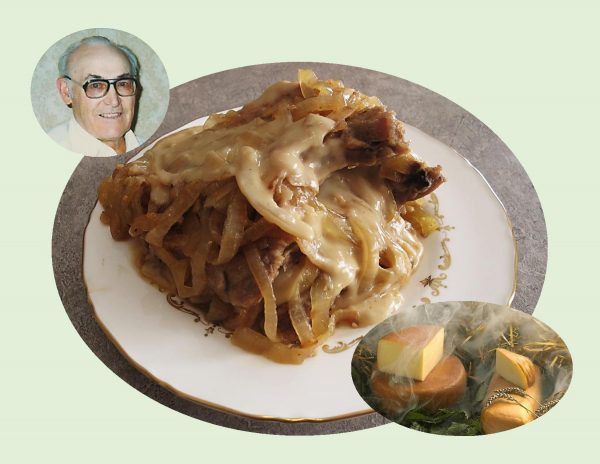
Smoked Gouda Pork Chops w/ Caramelized Onions

Today, March 21, our family celebrates the birth date of my father. Although he left this earth many years ago, I have so many memories of the wonderful childhood I enjoyed due to the parents I had. As my life unfolds, I realize more each day the impact having had a strong role model has made on my life. The word ‘thank you’ is so inadequate.

This meal seems so fitting to have today in honor of my father’s birthday. I’m sure he would have loved it. Brion & I seem to have a natural affinity to smoked cheeses. I had first thought I would make some pork chops stuffed with smoked gouda & bacon but then the caramelized onions started were calling me ….

Smoked Gouda is a semi-hard to hard, cow’s milk cheese which is creamy and mild with a natural smoked flavor and rich musky aftertaste. The rind is typically brown rather than the yellow rind on the unsmoked version. Only cheese exposed to real smoke may be called ‘smoked’. Cheese that has only had liquid smoke added to it must be labeled with ‘smoke flavor’.

Smoking cheese imparts a unique flavor, everything from the intensity of the heat or kind of wood chips used, can effect the flavor outcome. Every part of the process, no matter how small it may seem, has some bearing on the final taste of the product.

Print Recipe
Smoked Gouda Pork Chops w/ Caramelized Onions
Votes: 3
Rating: 5
You:
Rate this recipe!
Servings
Votes: 3
Rating: 5
You:
Rate this recipe!
Instructions
  1. Preheat oven to 350 degrees F
  2. Heat 3 tablespoons oil in heavy large skillet over high heat. Season pork with salt and pepper then dredge in 1 cup flour; shake off excess flour and place pork in skillet.
  3. Sauté pork for 3 minutes on each side then place pork in a baking dish. Sprinkle 1 teaspoon paprika over pork.
  4. Clean skillet and add 2 tablespoons oil; heat over medium-high heat. Add onions and brown sugar; sauté for 15 minutes or until brown and tender. Add garlic and sauté for another minute. Add the remainder 1 tablespoon of paprika. Place onions and broth over pork. Cover with foil and bake until pork is tender, about 35 to 45 minutes.
  5. Remove pork from oven and use tongs to transfer pork to plate; cover plate with foil. Reserve onion and liquid content from baking dish.
  6. In a large saucepan, over medium heat, melt butter. Add 4 tablespoons flour and cook for 4 minutes or until flour just starts to brown. Whisk in reserved contents from baking dish and half-and-half. Whisking constantly, bring to a boil, about 5 to 8 minutes, or until thick. Remove from heat and whisk in Gouda cheese. Season with salt and pepper.
  7. Transfer pork to plates and spoon sauce over pork.

Rum & Raisin Hot Cross Buns

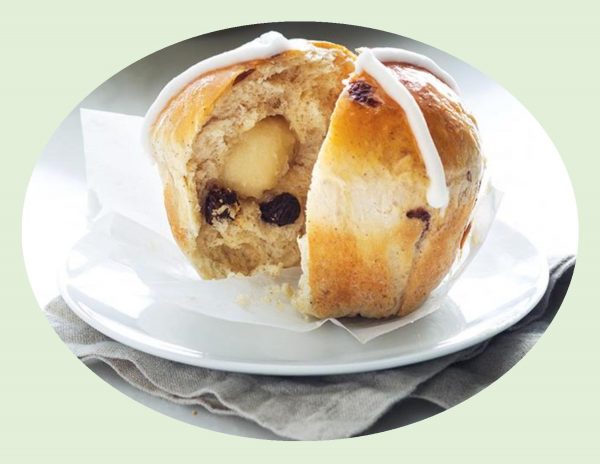
The ultimate Easter bun! Who doesn’t love hot cross buns?! Given the baked good’s long history, legends and superstitions have had ample time to develop and grow around them.

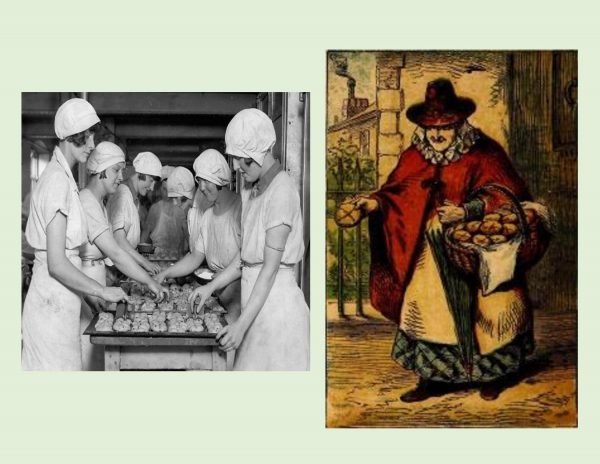
Hot cross buns are inseparably linked to Easter and to Christianity. But in reality, they probably have pre-Christian origins. Cross buns were baked to celebrate ‘Eostre’, the Germanic Goddess after which the season of Easter is said to be named.

Over the years, the bun has evolved and changed. Victorian recipes suggest various glazes to top the bun with after baking, including molasses or a honey/turmeric combo. The buns have become spicier too, with the addition of mace, caraway seeds and even coriander.

While some hot cross buns appear on grocery and bakery shelves as early as New Year’s Day, the sweet bun is usually associated with the end of Lent.

Every year I like to try and make a different version of these traditional, seasonal treats. This year I’m going with a ‘rum raisin‘ idea. Should be good!

Print Recipe
Rum & Raisin Hot Cross Buns
Votes: 1
Rating: 5
You:
Rate this recipe!
Servings
BUNS
Ingredients
Rum/Raisin filling
Bun Dough
Cream Cheese Filling
Egg Wash
Rum Glaze
Cross Paste
Servings
BUNS
Ingredients
Rum/Raisin filling
Bun Dough
Cream Cheese Filling
Egg Wash
Rum Glaze
Cross Paste
Votes: 1
Rating: 5
You:
Rate this recipe!
Instructions
Rum & Raisin Filling
  1. In a bowl, combine raisins, warm rum & sugar. Cover with plastic wrap & allow to sit for at least 40 minutes. Strain, discarding liquid.
Bun Dough
  1. In a large bowl, combine lukewarm milk, yeast & 1/4 cup sugar. Let stand until mixture is frothy, about 10 minutes.
  2. In a bowl, whisk together 5 1/3 cups flour, remaining 1/4 cup sugar, salt, cinnamon, nutmeg & allspice. When yeast mixture is ready, add half of the flour mixture to it, beating until just combined. Beat in melted butter, eggs & rum/raisin mixture. Gradually add remaining flour mixture, kneading until smooth dough forms. Add remaining 1/3 cup flour if needed as the dough should not be sticky.
  3. Grease a large bowl, place the dough in it& turn to grease top. Loosely cover & allow to rise in a warm, draft-free place until doubled in size, about 1 hour.
Cream Cheese Filling (Balls)
  1. In a shallow dish, combine sugar & cinnamon. Cut cream cheese into 12 cubes. Roll each into a ball shape then roll them in the cinnamon sugar, coating evenly. Divide dough into 12 pieces. Place a cream cheese ball in the center of each piece of dough, pinching to seal seam. Roll each piece of dough into a ball & place in PARCHMENT lined muffin cups. Cover & let stand in a warm, draft-free place for about 20 minutes.
  2. Preheat oven to 350 F.
  3. In a small dish, whisk together egg & a Tbsp milk. When buns are ready to bake, brush with egg wash. Bake until golden brown, about 15-20 minutes. While the are baking prepare RUM GLAZE & CROSS PASTE.
Rum Glaze & Cross Paste
  1. In a small saucepan, place water, spiced rum & sugar. Over medium heat, bring ingredients to a simmer & allow to bubble gently for 3-5 minutes. The volume of the mixture should drop by at least half. Remove from heat & set aside until ready to use.
  2. In a small dish, whisk together cornstarch, flour, sugar & water until a thick paste forms. You want your paste to be stiff enough to be able to pipe in a clean line, but still manageable.
Finishing Touches
  1. Brush warm rolls with rum glaze & allow to cool. Using a pastry bag fitted with a piping tip, pipe paste over top of buns to form a cross.
Recipe Notes
  • If you prefer, don't hesitate to make these buns without the cream cheese inside. I'm sure they will be just as good --- they're hot cross buns!!

Norwegian Rhubarb Cake

I have to be honest, I don’t really know a lot about Norwegian cooking as of yet. Since food history is always top priority for me, I seem to find my way into every country at some point. You might have known, another rhubarb recipe would catch my eye.

This one is a very traditional summer cake, more of an everyday cake as opposed to a party cake. It seems Norwegians prefer creamy cakes for parties instead of light fruity ones. Many old Norwegian cookbooks and newspapers featured rhubarb cake on their weekly menus. Nothing fancy or anything that requires an extra step or two. No layers of cream, custard or crumble on top. Just merely a simple and incredibly delicate cake with a bit of tang from the rhubarb.

You don’t need to make these little cakes inverted. If you prefer, place the rhubarb on top of the batter instead. Using pure vanilla gave such amazing flavor and the incredible texture of the cake is provided by the addition of sour cream. I’m sure this recipe has been updated from the original but it is certainly good.

Print Recipe
Norwegian Rhubarb Cake
Votes: 1
Rating: 5
You:
Rate this recipe!
Course Brunch, dessert
Servings
Ingredients
Course Brunch, dessert
Servings
Ingredients
Votes: 1
Rating: 5
You:
Rate this recipe!
Instructions
  1. Preheat oven to 350 F. Butter bottom & sides of 4 (1-cup) mini bundt cake pans.
  2. In a bowl, whisk together 1 1/4 cups flour, baking powder & salt. In a larger bowl, cream together butter & 3/4 cup sugar for about 2 minutes until light & fluffy. Add eggs & pure vanilla extract; stir to combine.
  3. Alternately stir flour mixture & sour cream into the butter mixture, beginning & ending with the flour mixture, stirring well after each addition. Toss chopped rhubarb with remaining tablespoons of flour & sugar. Divide rhubarb evenly between the 4 mini bundt pans. Top evenly with cake batter
  4. Bake cakes about 20 -25 minutes until golden & a toothpick inserted comes out clean. Remove from oven & invert on a cooling rack for a few minutes. Remove pans, replacing any of the rhubarb that has stuck to the pans.
  5. Serve warm or cold with whipped topping or just a sprinkle of powdered sugar.

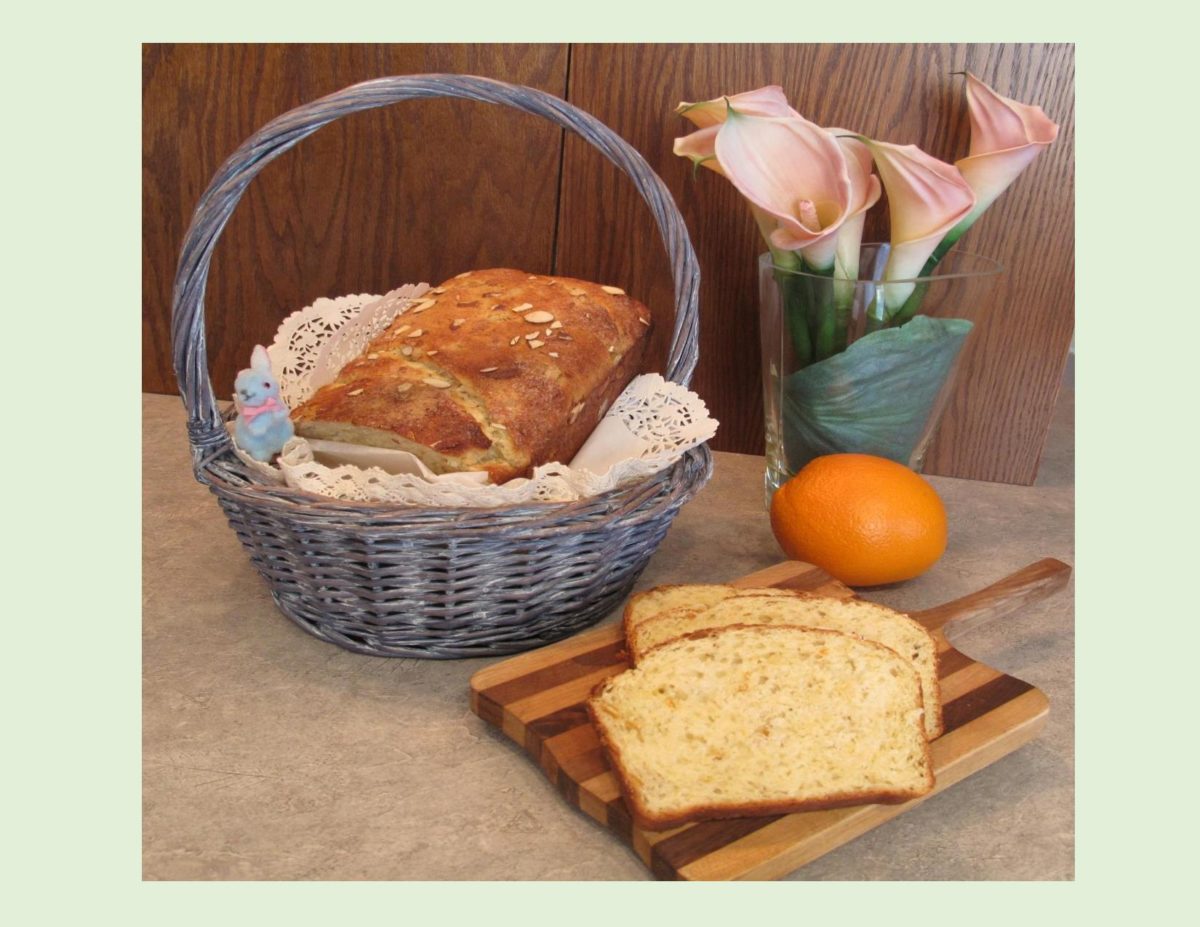
Easter Bread with Anise & Orange Blossom Water

Rich with tradition, symbolism and treasured ingredients, Easter breads figure prominently in many cultures’ Easter celebrations. These yeast breads, full of eggs, butter, fruits, nuts and spices are a symbol of breaking the Lenten fast on Easter morning. Each ethnic group seems to have its own unique version of this sweet bread. Bread has long played an important role in religious ceremonies and holidays and is often baked in symbolic shapes. It has been said that bread is the ‘staff of life’ with Easter being the ‘celebration of life’.

I have wonderful memories of my mother’s Easter bread. It wasn’t iced or decorated but it had such a glorious flavor. She would bake it in tall cylinder shaped loaves and it always had a nice yellow color. Oh, the taste of a memory!

Every Easter I like to try something slightly different from the previous year when making Easter bread. Lately I have been using orange blossom water in different recipes with good success. So why not in Easter bread with anise seeds and almonds? The method is a little different in that the egg whites are beaten separately. Brion and I both thought it tasted real good.


Print Recipe


Easter Bread with Anise & Orange Blossom Water

Votes: 1
Rating: 5
You:
Rate this recipe!

Course Brunch

Servings


Ingredients

Course Brunch

Servings


Ingredients

Votes: 1
Rating: 5
You:
Rate this recipe!


Instructions
  1. In a large mixer bowl, combine 1 cup flour, yeast, 2 Tbsp sugar & salt; mix well. Add lukewarm water, butter & egg YOLKS. Blend at low speed until moistened; beat about 3 minutes at medium speed. By hand, stir in orange zest, mixed peel, aniseed, almonds & orange water.

  2. In a small bowl, beat egg WHITES until stiff; gradually add 1/4 cup sugar. Fold into flour mixture. Gradually stir in enough remaining flour to make a SOFT dough. Knead on floured surface until smooth & elastic, 3-5 minutes. Place dough in a lightly oiled bowl & turn to grease top. Cover & let rise until doubled in size.

  3. Punch down dough. On a lightly floured work surface, pat to a 14 x 7-inch rectangle. Starting with shorter side, roll up tightly, pressing dough into roll with each turn. Pinch ends & edge to seal. Place in a greased 9 x 5-inch bread pan. Cover; let rise in a warm place for about 30 minutes.

  4. Preheat oven to 350 F. If you wish, you can glaze the loaf with egg wash before baking. Bake about 35-40 minutes until golden brown. Remove from pan & cool on a wire rack before slicing.