CELEBRATING HERITAGE DAY!
In 1974, the first Monday of August was made an official provincial holiday to recognize and celebrate the varied cultural heritage of Albertans. Businesses can choose whether or not to recognize the day as a general holiday, which most do.
The Heritage Festival held in our city of Edmonton, Alberta Canada is a three-day event to sample delicious food, see creative performances and celebrate Canada’s multiculturalism. Thousands of visitors come to enjoy the tastes, smells and sounds of different nations around the world.
Even though many people will take in the day’s events and cultural food at the festival, some choose to pack a picnic lunch and take a drive somewhere just to relax.
I am posting a seafood stromboli today that should work well with that idea.
Heritage Festival in our city of Edmonton, Alberta Canada is one of the world’s largest multicultural events, taking place every August. It features over 70 pavilions representing almost 100 countries set up in William Hawrelak Park. All ethnic minorities of Canada come together to exchange experiences, entertainment, cultures and to celebrate Canada’s diversity. Thousands of visitors come to enjoy the tastes, smells and sounds of different nations around the world.
Print Recipe
Everything Bagel Seafood Stromboli
Votes: 1
Rating: 5
You:
Rate this recipe!
Ingredients
Everything Bagel Seasoning
Ingredients
Everything Bagel Seasoning
|
Votes: 1
Rating: 5
You:
Rate this recipe!
|
Instructions
Seasoning
Mix everything bagel seasoning ingredients together & set aside.
Seafood Filling
In a large saucepan, heat olive oil over medium heat. Sauté onion, garlic, mushrooms & seasonings in the oil. When onions are slightly softened, stir in shrimp & scallops. Let simmer uncovered for 5 minutes, stirring occasionally.
Add alfredo sauce & cheese, stirring until cheese is melted. Let simmer uncovered for another 5 minutes Taste & add salt & pepper if necessary. Remove from heat & let cool for 10 minutes or until ready to use.
Dough
In large bowl, dissolve sugar in warm water. Sprinkle yeast into water & let sit until frothy. In a separate bowl, combine flour, Italian seasoning & salt.
Stir oil into yeast mixture. Add flour & with a fork, combine into a shaggy dough. When dough is completely combined, turn dough out onto a work surface & knead dough for about 5 minutes, until smooth and elastic. Place dough in a lightly greased bowl, cover with plastic wrap & let rise in a warm place until doubled in size, about 1 hour.
Assembly/Bake
-
Remove risen dough from bowl, turn onto a large piece of parchment paper. Roll dough out to about a 12" X 14" rectangle. With a straight edge, make parallel horizontal cuts in the dough at 1" intervals down both sides. Your strips should be cut in 4" from outer edge on both sides, leaving a 1" border at the top and bottom.
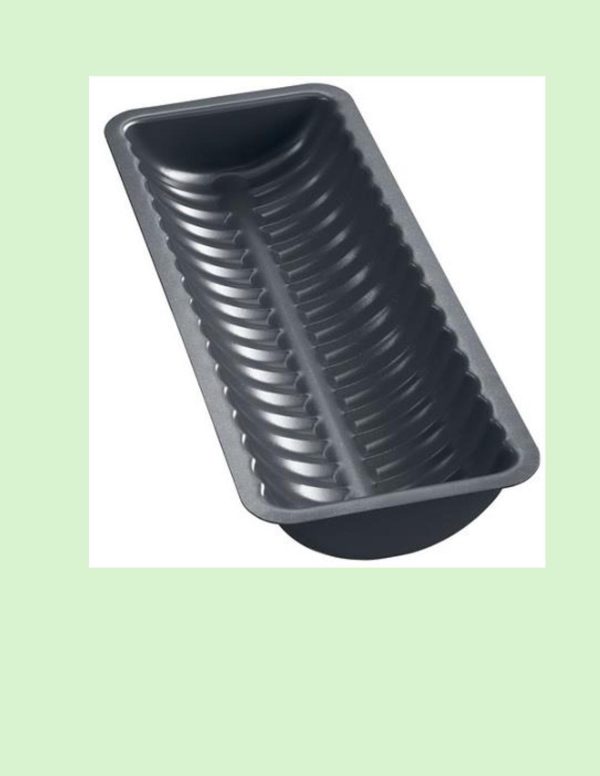
Leaving the pastry on the parchment, move it to an 11 3/4 x 4-inch ribbed semi-circle bread pan. The strips will now be hanging down the sides of the pan. Gently press the pastry to conform to the shape of the pan making sure your pastry comes all the way to the top of the pan at the ends.
Place filling in the pastry. Starting with the top right-hand strip of dough, fold it over the filling. Cross the top left-hand strip over the filling. Continue alternating strips to create a braided effect.
Make sure both ends are sealed well then brush the top of stromboli with egg wash & sprinkle with bagel seasoning.
Bake 45 minutes until golden brown.
Recipe Notes
• For this seafood stromboli I used a European ribbed semi-circle bread/cake pan. The size is bigger than a 9 x5-inch loaf pan so it is quite easy to fit dough/filling into it. If a ribbed pan is not available just go with the contemporary style of rolling the stromboli.
• Brush a simple egg wash over the exposed edges of the dough to help ensure the stromboli seals well & doesn’t burst open as it bakes. To fold, tuck the short sides towards the center, then fold the long side with the thinner border towards the side with the wider border. Aim to fold the stromboli twice, creating 3 layers.
• Once assembled, carefully transfer to a parchment-lined baking sheet. Brush the tops with egg wash for a golden finish, then place in the oven. Be sure to rest the baked stromboli a few minutes before slicing & serving!

A calzone is a savory Italian turnover. It traditionally consists of a cheesy filling in a leavened dough and is served with marinara sauce on the side. The calzone originated in Naples in the 18th century.
The best results come when the filling is not too moist because it can make the dough soggy. Like with a stir-fry, it is also better to have a filling where the ingredients are broken down into bite-size pieces, so the filling is easy to eat.
There is nothing better this time of year than fresh corn and tomatoes. This easy corn, tomato & bacon calzone is the perfect way to celebrate fresh summer produce! Don’t overload the filling with ingredients; make your point with a mixture of a few simple flavors then load it with cheese!
Eating vegetables during their seasons really gives you the best flavors.
Print Recipe
Summer Calzones w/ Corn, Tomatoes & Bacon
Votes: 1
Rating: 5
You:
Rate this recipe!
Ingredients
Filling
- 4 slices bacon, chopped
- 1 shallot, minced
- 2 cloves garlic, minced
- 2 ears corn, husked & kernels cut from cobs
- 1 cup cherry tomatoes, halved
- 4 large mushrooms, sliced & sauteed
- 1/4 cup fresh basil, chopped
- 1 tsp red pepper flakes
- salt & pepper to taste
- 125 gm ricotta cheese
- 150 gm (about 1 1/2 cups) monterey jack cheese, grated
- Cornmeal for sprinkling, optional
- Marinara sauce, for serving
Ingredients
Filling
- 4 slices bacon, chopped
- 1 shallot, minced
- 2 cloves garlic, minced
- 2 ears corn, husked & kernels cut from cobs
- 1 cup cherry tomatoes, halved
- 4 large mushrooms, sliced & sauteed
- 1/4 cup fresh basil, chopped
- 1 tsp red pepper flakes
- salt & pepper to taste
- 125 gm ricotta cheese
- 150 gm (about 1 1/2 cups) monterey jack cheese, grated
- Cornmeal for sprinkling, optional
- Marinara sauce, for serving
|
Votes: 1
Rating: 5
You:
Rate this recipe!
|
Instructions
Dough
In a large bowl, place lukewarm water, honey & yeast; allow to stand for a few minutes until frothy. In another bowl, flour & salt.
When yeast is ready, add the 2 Tbsp of oil. Add flour, mixing with a fork until a shaggy dough forms. Turn onto a work surface & knead dough for about 5-8 minutes, until smooth & elastic. Place dough ball in a lightly greased bowl, cover with plastic wrap & let rise in a warm place until doubled in size while you prepare filling.
Filling
In a large skillet, cook the bacon until crispy. Remove the bacon from the pan & set aside to drain on a plate lined with paper towels.
To the bacon drippings, add the mushrooms, shallot & garlic. Sauté over medium heat for a few minutes then add the corn, red pepper flakes & a pinch of salt & pepper.
Cook for a few minutes then add the halved cherry tomatoes & basil. Cook, stirring frequently, for a couple minutes. You want the tomatoes to just warm through, not to completely break down. Stir in the crisped bacon & remove the pan from the heat so the mixture can cool to room temperature.
Assembly/Baking
On a lightly greased work surface, divide the risen dough into 8 even balls. Roll each ball into an OVAL shape, about 7 x 6-inch size. Divide filling into 8 portions.
On each oval, spoon a couple tablespoons of the ricotta in a straight line on the middle of the dough. Next, spoon a couple tablespoons of the corn-tomato filling on top of the ricotta. Finally, add about 2-3 tablespoons of grated Monterey Jack cheese.
Keep one side free & cut the other side of the dough into thin strips using a knife. Fold the uncut side over the filling first, then continue rolling over the cut side.
Line a large baking sheet with parchment paper & place the ‘calzones’ on it, curving them into a C shape. (Place the side with the ‘strips’ curving to the outside). Brush calzones lightly with egg wash, sprinkle with cornmeal if you wish. Cover with plastic wrap & allow to rise for about 20 minutes.
-
Bake for 25 minutes or until the dough is golden and crisp and the filling is gooey. Allow to cool slightly before serving with warmed marinara sauce.

I love making these German streuseltaler pastries because the flavor combination possibilities are endless. Switch up the ingredients in the filling and the streusel by adding different spices, nuts, and fruits. I posted various versions on the blog such as rhubarb, pumpkin, black forest and today I’m making blackberry/rhubarb.
The name of today’s pastry was inspired by the round shape of the ‘taler’, a silver coin used throughout Europe for almost four hundred years. Its name lives on in the currency called ‘dollar’.
Taler is a German word for ‘coin’, so the name of the dessert literally translates to ‘streusel coin’. Basically, a free form tart made with a yeast dough topped with a huge amount of streusel, sometimes filled with custard and often with a sugar glaze.
A traditional German streusel (streusel meaning something ‘strewn or scattered’ in German) bakes up into shortbread balls. It makes a crunchy, cookie-like top but is soft on the bottom where it meets the cake or fruit.
Streusel was first popularized in Germany. In its simplest form, it consists of flour, sugar and butter but gets even better with the addition of oatmeal, cinnamon and nuts …. just my opinion of course!
I can’t tell a lie; Brion & I love streuseltaler so I’m sure I’ll keep on coming up with another flavor combination to try.
Print Recipe
Blackberry Rhubarb Streuseltaler
Votes: 1
Rating: 5
You:
Rate this recipe!
Ingredients
Blackberry/Rhubarb Compote
Ingredients
Blackberry/Rhubarb Compote
|
Votes: 1
Rating: 5
You:
Rate this recipe!
|
Instructions
Blackberry / Rhubarb Compote
Place the rhubarb, blackberries, sugar, salt, & vanilla into a medium pan & simmer over medium-low heat for about 30-40 minutes, stirring often, until the rhubarb & blackberries have broken down & the compote has thickened. The compote will cling to a wooden spoon when it is done. Remove from the heat & allow to cool to room temperature. (Taste your compote – if it is a little flat, you can add a squeeze or two of lemon juice – about 1/2 teaspoon at a time, until it brightens the flavor.)
Streusel Topping
In a bowl, place COLD, cubed butter, add flour, cinnamon, sugar & vanilla. With your fingertips work streusel until crumbles form. Spread out on a large tray & set aside in freezer until ready to use.
Dough
In a small dish, combine yeast with lukewarm water & 1 teaspoon of sugar. Allow to sit for a few minutes until frothy.
In a large bowl, slightly melt butter; cool for a couple of minutes then whisk in egg. In another bowl, whisk together flour, salt & remaining sugar. Add yeast mixture to butter mixture, whisking together. Add flour mixture, combine then turn on a floured work surface & knead for about 5 minutes. Dough will be very soft but not sticky.
Lightly grease bowl, place dough ball in it & cover with a towel. Place in a draft-free place & allow to rise for about 20 minutes.
Line a baking sheet with parchment paper.
Place dough on a lightly floured work surface & divide into 12 pieces. Form each piece into a ball & allow it to rest for about 5 minutes.
Space out the balls on parchment lined baking sheet. With fingertips, press out each ball to about 4-inch diameter. Add about 1 Tbsp of blackberry/rhubarb compote to each dough piece & spread leaving a border around the outside.
Divide streusel topping evenly between the pastries & allow to rise for about 15-20 minutes.
-
Bake for about 10-12 minutes. Allow to cool completely on a wire rack. In the meantime, you can prepare the glaze.
Glaze
In a small dish, whisk powdered sugar & lemon juice to a thick glaze. When streuseltaler are cooled, drizzle with glaze.
Recipe Notes
- Being lovers of cardamom spice, I dusted our streuseltaler with it using a wire mess strainer.
- I should mention, making the compote the day before needed will speed up your baking process.
- These streuseltaler are incredibly soft & so good!

French toast is a breakfast staple for the ages. It has a long history and is eaten in many forms all over the world. It is often enjoyed much like we usually serve it, but many countries give it a local twist. In India, savory French toast with spices, green chili, chopped onions, and salt is popular. Scottish French toast is often served with sausage between two slices like a sandwich. In Hong Kong, French toast doubles as a decadent peanut butter sandwich. New Zealand French toast is enjoyed with bananas, bacon, cinnamon, and maple syrup. Creole French toast kicks it up a notch — the milk and egg soaking mixture is spiked with alcohol, often whiskey.
When you hear the word ‘cornbread,’ what comes to mind? The next question is ‘have you ever tried cornbread French toast’? Over the years I’ve made a lot of different versions of French toast and cornbread, but I’ve never combined the two. Although cornbread might be considered simple and dated, it is the cornerstone of soul food. I’ve always been a cornbread fan. Undeniably, I love it! The smell and taste of fresh cornbread are definitely nostalgic for me.
Traditional cornbread is a quick bread leavened with baking powder, but this loaf is leavened with yeast. It works like all other yeast breads, mixed and kneaded by hand or a stand mixer, and left to rise and ferment before being shaped and eventually baked.
Unlike traditional quick bread, this yeast-based version rises beautifully, creating a light yet sturdy loaf with a golden crust.
Using cornbread for making French toast today, turned out to be amazing! There’s something so comforting about thick slices of egg-soaked bread cooked on a hot griddle, making the outside golden and crispy while its custard-like inside stays soft and rich.
Whether you’re in the mood for a simple slice of toast or a sandwich loaded with your favorite meats and vegetables, this bread will elevate your meal, believe me.
Print Recipe
Cornbread French Toast
Votes: 1
Rating: 5
You:
Rate this recipe!
|
|
Votes: 1
Rating: 5
You:
Rate this recipe!
|
Instructions
Cornbread
In a small saucepan, combine milk, 1 tablespoons butter & salt. Over medium heat, bring to a simmer. It's ok if the butter does not completely melt. Remove from heat. Slowly whisk in cornmeal, stirring until smooth. Stir in honey. Set this cornmeal mixture aside to cool.
In the bowl of a stand mixer, combine brown sugar & yeast in water. Stir to dissolve. Let stand until foamy, 5 to 10 minutes. Add eggs, cooled cornmeal mixture & 1/2- 3/4 cup flour. Beat at medium speed for about 2 minutes. Stir in enough remaining flour to make a soft dough. As soon as the dough pulls away from the pan, stop adding flour.
Turn out dough onto a lightly floured surface. Knead dough 8 to 10 minutes or until smooth & elastic. Place dough in greased bowl, turning to coat all sides. Cover with a slightly damp towel. Let rise in a warm place, free from drafts, until doubled in bulk, about 1 hour.
When risen, punch down dough; knead 30 seconds. Grease a 9”x5” loaf pan. Sprinkle 1 1/2 tsp cornmeal over bottom and sides of each pan. Shape dough into a loaf & place in prepared pan. Allow to rise 30 to 45 minutes, or until doubled in size.
Preheat oven to 375 F. Slash top of loaf as desired. Brush with melted butter; sprinkle with remaining cornmeal. Bake 30 to 35 minutes or until bread sounds hollow when tapped on bottom. Remove loaf from pan. Cool on a wire rack.
French Toast
In a small bowl, combine the milk, eggs, cinnamon & brown sugar. Whisk until well combined. Slice cornbread
Heat a non-stick griddle to a medium-low heat. Lightly butter the griddle. Carefully dip the cornbread into the egg mixture, gently shake off the excess & place on griddle. Don't allow the cornbread to soak in the mixture - just a quick dip.
Cook for 3-4 minutes on each side, adjusting the temperature to keep it from burning. Repeat until all cornbread has been cooked, adding additional butter if necessary. Hold the other pieces in a warm oven to keep them warm.
Serve with bacon & poached eggs or maple syrup, fresh berries & a sprinkling of powdered sugar.

When it comes to desserts, I’ve always liked the idea of the mini sizes or smaller amounts. Small batch recipes have become popular because they align with modern lifestyle needs for portion control, reduced food waste, flexibility, and the desire for fresh, homemade quality.
For single people, couples, or small families, large recipes often yield more food than needed. Smaller portions mean you can try a wider range of recipes without being stuck eating the same dish for days, allowing individuals and small households to enjoy freshly baked goods and diverse meals without the commitment or excess of a full-sized recipe.
One small batch recipe that really appeals to me is this one for these nostalgic little caramel sour cream buns. Baked in a caramel sour cream sauce, these buns are a specific type of caramel roll with origins tied to German and Scandinavian immigrants. The cream provides moisture and a rich, distinct flavor that differentiates these from other sticky buns or cinnamon rolls, which might use different kinds of syrup or frosting.
A defining characteristic of these baked goods is how they are prepared: the caramel sour cream sauce is placed at the bottom of the pan before baking. After baking, the pan is immediately inverted, so the gooey, self-saucing caramel topping cascades over the top of the finished rolls.
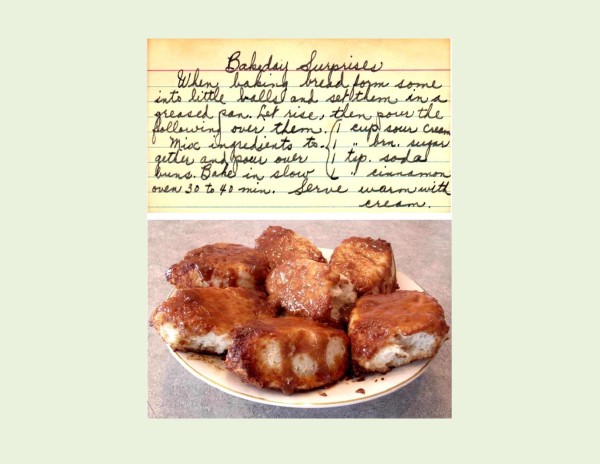
In today’s post, I would like to share a recipe my mother called ‘Bake Day Surprises’. I remember this dessert being so incredibly good. Since she baked bread once a week, an extra treat stemming from that bread dough was something we could always count on. Since there are just the two of us, it’s nice to be able to try and replicate this special dessert without having to make a large pan of them (that we really don’t need, right!)
Print Recipe
Small Batch Caramel Sour Cream Buns
Votes: 1
Rating: 5
You:
Rate this recipe!
|
|
Votes: 1
Rating: 5
You:
Rate this recipe!
|
Instructions
Caramel Sour Cream Sauce
In a small bowl combine all sauce ingredients; pour into a small round baking dish. Set aside.
Bun Dough
In a bowl, combine water , yeast & sugar. Allow to proof for 5 minutes. Add oil, flour, salt & egg. With a fork or a wooden spoon, mix into a shaggy dough.
Turn dough out onto a floured surface & knead for 5 minutes.
Divide the dough into 4 equal pieces & shape into balls. Place balls on top of sour cream sauce mixture in small round baking dish, cover with a towel & let rise for 40 minutes.
-
Bake for about 20-25 minutes. Remove from oven & immediately invert pan over a serving platter. Be VERY CAREFUL that the HOT sauce does not burn your hands when inverting the pan.

Chicken parmesan stuffed garlic bread, a perfect fusion of cheesy goodness and garlicky delight. It’s a scrumptious twist on the classic Italian favorite.
Chicken parmesan, also known as ‘chicken parm’, is a dish that originated in the United States from Italian immigrants. The most widely accepted theory is that chicken parm was created in the 1950s, when Italian immigrants began to adapt their traditional dishes to American ingredients and cooking methods. The dish became a popular staple in restaurants serving Italian American cuisine by the 1950s. The first recorded instance of the dish is in a 1953 recipe book called ‘The Italian Cook Book’ by Ada Boni.
Chicken parmigiana as we know it always contains the same basic ingredients: chicken breast, often butterflied, breadcrumbs, Italian seasonings, tomato sauce, and mozzarella cheese. But it wasn’t always that way. In the Old World, that’s Italy prior to the Italian diaspora, the large-scale emigration of Italians from Italy to America, proteins like chicken were not widely available. As such, the original chicken parmigiana was actually made with breaded, fried slices of eggplant in place of chicken for a dish called melanzane alla Parmigiana. This form of the dish originated in Southern Italy, where the poor soil made it difficult to raise animals for food but where enterprising — and thrifty — peasants could scratch out a living growing hardier crops like eggplant. It also thrived in the hot climate of the South.
In North America, most of the time eggplant parmesan is thought of as just the vegetarian version of an Italian American classic. However, it is actually the other way around — eggplant is the original version of this dish.
You would expect a recipe for something with the word ‘parmesan’ in its name to contain just that, but you would be wrong. The cheese most associated with this dish is mozzarella.
This recipe certainly takes chicken parm & garlic bread up a notch. Yum!
Print Recipe
Chicken 'Parm' Stuffed Garlic Bread
Votes: 1
Rating: 5
You:
Rate this recipe!
|
|
Votes: 1
Rating: 5
You:
Rate this recipe!
|
Instructions
Chicken
Slice chicken lengthwise. In a large resealable plastic bag, combine salt, spices & oil; add chicken breast slices. Seal bag & turn to coat.
Preheat oven to 375 F. Line a baking tray with foil paper.
Spread chicken out evenly & bake about 45 minutes or until no longer pink inside. Don't overcook. Remove from oven, cool & chop. Set aside.
Other
Cook bacon & process in food processor for a few seconds, just until a LARGE crumbly texture is reached.
Grate the two different cheeses & combine. Set aside.
Garlic Bread
Cook potato, mash & cool. In a small bowl, combine yeast with lukewarm water; whisk until yeast is dissolved. Let stand about 3 minutes until foamy. Add butter, minced garlic, salt, sour cream & potato; mix well.
Stir in flour, one cup at a time. When dough is completely blended, turn onto a lightly floured surface. Knead dough about 10 minutes, until smooth & elastic. Place dough in a lightly greased bowl, cover with plastic wrap & let rise in a warm place until doubled in size, about 1 hour.
Remove risen dough from bowl, turn onto lightly floured surface; roll dough to about a 9" x 20" rectangle. Place a large piece of parchment on a sheet pan. Roll dough onto your rolling pin then unroll onto parchment paper. Place 1/2 of the cheese down the center of dough, top it with crumbled bacon, chicken & remaining cheese.
Starting from the long side , bring the two sides up to meet in the center & pick dough together firmly. Fold the short ends in about 1-inch & pinch together. Using the parchment paper, roll 'baguette' over so the pinched seam side is on the bottom.
Cover with plastic wrap; allow to rise for 15 minutes while preheating oven to 375 F. Brush with egg wash if preferred. Bake for 25-30 minutes until golden.
Serving
Remove from oven & serve hot with 'pizza sauce' for dipping.

The name of today’s pastry was inspired by the round shape of the ‘taler’, a silver coin used throughout Europe for almost four hundred years. Its name lives on in the currency called ‘dollar’.
Taler is a German word for ‘coin’, so the name of the dessert literally translates to ‘streusel coin’. Basically, a free form tart made with a yeast dough topped with a huge amount of streusel, sometimes filled with custard and often with a sugar glaze.
A traditional German streusel (streusel meaning something ‘strewn or scattered’ in German) bakes up into shortbread balls. It makes a crunchy, cookie-like top but is soft on the bottom where it meets the bread/cake or fruit.
Streusel was first popularized in Germany. In its simplest form, it consists of flour, sugar and butter but gets even better with the addition of oatmeal, cinnamon and nuts …. just my opinion of course!
While the origins of the black forest cake aren’t all that clear, some historians believe that its origins can be traced back to the Black Forest Region of Germany. This part of Germany is well known for its sour cherries and ‘Kirschwasser‘ … a clear cherry brandy.
This iconic creation is a layered confection of a liqueur ‘soaked’ chocolate cake with rich whipped cream and sour cherries between its layers. The liqueur and cherries give the cake an intense and unique fruity flavor. It’s these sour cherries which gave it its German name: Schwarzwald Kirsch Kuchen or Black Forest Cherry Cake.
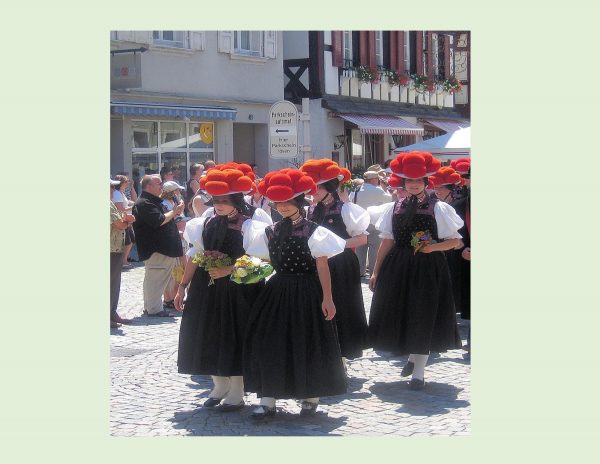
There are many origin stories about the cake. Some sources claim that the name of the cake is inspired by the traditional custom of the women of the Black Forest region, with a characteristic hat with big red pom-poms on top called a ‘Bollenhut’. The earliest published written record of black forest cake was in 1934, by a German confectioner. Today, the cake is well known worldwide and probably one of the most popular cakes in Germany.
This black forest streuseltaler is a fusion recipe I developed combining a chocolate yeast bun with some sour cherries and streusel topping. Since we just happen to have a nice little sour cherry tree growing in our garden, why not put some of them to good use in a German dessert?!
Print Recipe
Black Forest Streuseltaler
Votes: 1
Rating: 5
You:
Rate this recipe!
|
|
Votes: 1
Rating: 5
You:
Rate this recipe!
|
Instructions
Sour Cherry Filling
In a saucepan, place & stir together sugar, cornstarch & salt. Add the water mixture & stir to thoroughly combine. Bring to a boil over medium-high heat, Stirring frequently, & simmer until thickened, about 2 minutes. Gradually fold in cherries. Set aside to cool.
Streusel
In a bowl, place COLD butter. Add flour, sugar & Kirsch if using. With your finger tips work streusel until crumbles form. Spread out on a large tray & set aside in freezer until ready to use.
Dough
In a small dish, combine yeast with lukewarm water & 1 teaspoon of the sugar. Allow to sit for a few minutes until frothy.
In a large bowl, slightly melt butter; cool a couple of minutes then whisk in egg. In another bowl, whisk together flour, cocoa, salt & remaining sugar. Add yeast mixture to butter mixture, whisking together. Add flour mixture, combine then turn on a floured work surface & knead for about 5 minutes. Dough will be soft but not sticky.
Lightly grease bowl, place dough ball in it & cover with a towel. Place in a draft-free place & allow to rise for about 20 minutes.
Line a baking sheet with parchment paper.
Place dough on a work surface, & divide into 12 pieces. Form each piece into a ball & allow to rest for about 5 minutes.
Space out the balls on parchment lined baking sheet. With fingertips, press out each ball to about 3-4-inch diameter. Add about 1 Tbsp of cherry filling to the center of each dough piece, leaving a border around the outside.
Divide streusel topping evenly between the pastries & allow to rise for about 15-20 minutes.
-
Bake for about 10-15 minutes. Allow to cool completely on a wire rack. In the meantime, you can prepare the glaze.
Glaze
In a small dish, whisk powdered sugar & Kirsch into a thick glaze. When streuseltaler are cooled, drizzle with glaze.
Recipe Notes
- Kirschwasser is German for 'Cherry Water', and while it may be as clear as water, it packs quite a punch. This double distilled brandy made from the sour Morello cherries is, more often than not, simply referred to as Kirsch. This 'not too sweet with a subtle cherry/almond flavored' liqueur is a vitally necessary ingredient to make a traditional Black Forest Cake; for that is where both the cake and Kirschwasser hail from... The Black Forest, or Schwarzwald, in southwestern Germany.
- Pomegranate juice: A rich and slightly tangy juice can act as a kirsch substitute, particularly in recipes requiring a deep red color. It offers a unique flavor that can add complexity to your dish.

CELEBRATING THE LONG WEEK-END!
For many Canadians, Victoria Day marks the unofficial beginning of summer. It is Canada’s oldest non-religious holiday and although we still hang on to the British Queen’s name (for old times’ sake), this truly Canadian holiday has everything to do with the end of the cold weather and short days and a lot to do with some great food.
Canadians jokingly refer to this holiday as May ‘two-four’ day. This is an inside joke which refers to a case of beer, containing 24 cans. For many, this is the first (warm-ish) long weekend since Easter, so they head to campsites armed with a 24 (can) case of beer to celebrate the beginning of Summer.
Wherever you live across Canada, this May long weekend – typically marks the start of grilling season. It’s time to get outside in the sunshine, fire up the BBQ, and enjoy savory grilled food with family and friends.
Brion & I are enjoying some interesting burgers which are served on ‘swirly burger buns’.
Print Recipe
Burgers in Loaded Potato/Bacon Buns
Votes: 1
Rating: 5
You:
Rate this recipe!
|
|
Votes: 1
Rating: 5
You:
Rate this recipe!
|
Instructions
Buns
In a large bowl, combine yeast with lukewarm water; whisk until yeast is dissolved. Let stand for about 3 minutes until foamy.
Add butter, salt, sour cream & potato; mix well. Add bacon, chives & sun-dried tomatoes; mix until just combined. Stir in flour, one cup at a time. When dough is completely blended, turn onto a lightly floured work surface.
Knead dough for about 10 minutes, until smooth & elastic. Place dough in a lightly greased bowl, cover with plastic wrap & let rise in a warm place until doubled in size, about an hour.
Assembly/Bake
Line a baking sheet with parchment paper, set aside.
Remove risen dough from bowl, turn onto lightly floured surface; roll dough to about a 12 x 15-inch rectangle. From the long side, roll the dough like you would for a cinnamon roll & seal the edges. Using a piece of floss, cut roll into 10 pieces.
Place buns on lined baking sheet & lightly brush with egg wash. Sprinkle with everything bagel seasoning. Allow to rise while oven is heating.
-
Bake for about 25-30 minutes until light golden brown.
Burgers
In a large bowl, place all burger ingredients. Mix ONLY until combined. Divide mixture into 10 equal portions & form into patties.
Prepare all burger toppings. When buns are baked, grill burger patties, adding cheese slices toward the end so they can melt. Slice buns (grill for a few minutes if you wish) then 'load' burgers & serve.