Oktoberfest Dampfnudel w/ Blackberry & Vanilla Sauce

CELEBRATING OKTOBERFEST (SEPT 19-OCT 4 /2026)

Come Autumn and Oktoberfest celebrations will be cropping up all over Canada.  It’s come to be known as a beer festival in modern culture that lasts for 16 to 18 days from the period between mid or late September lasting until the first weekend of October.

Oktoberfest in Munich, Germany started back in the 1800s and was quite unlike the dancing-on-benches festival of today. The very first Oktoberfest was actually the wedding celebration of King Ludwig I and Princess Therese on October 12th, 1810. During that particular celebration, the citizens of Munich were invited to the party as well and they just never wanted it to end. The ‘Oktoberfest’ tradition has carried on ever since. 

The world’s largest Oktoberfest is held annually in Munich, Germany but Oktoberfest is also quite popular around the world. The largest Oktoberfest celebration in Western Canada is being held for the fourth year here, in our city of Edmonton, Alberta from September 18–26 and October 2+3. Edmonton’s Ice District was transformed into a ‘Bavarian wonderland’ with a 30,000-square foot tent where visitors could sample traditional German dishes, including schnitzels, sausages, sauerkraut, pretzels and strudels provided by local and international chefs. Beer and beverages are being provided by Fahr Brewery, Erdinger, Wild Rose & Big Rock Brewery, Blindman Brewing, Rival Trade Brewing, Troubled Tea/Troubled Monk and Molson Canadian. The all-ages event included a number of family-friendly activities and live music by a mix of traditional German bands and other entertainers.

From pork sausages and roast chicken to potato pancakes and Oktoberfest desserts like Dampfnudel, there’s something for everyone at Oktoberfest.

The connection between the Dampfnudel and Oktoberfest is rooted in Bavarian-style cultural tradition, practical festival dining, and local family heritage. Dampfnudel is a traditional German dumpling that is soft and fluffy on top with a golden, caramelized crust on the bottom. They are served warm, swimming in a rich, creamy vanilla custard sauce and occasionally paired with fruit compotes. While you generally will not find these yeast dumplings inside the high-energy main beer tents, they are a staple at traditional food stalls, coffee tents, and pastry kitchens situated around the festival grounds.

The history of the dampfnudel dates back centuries and is rooted in Southern German folk tradition. According to a famous German legend from the Thirty Years’ War (1618–1648), a Swedish cavalry unit arrived at the small town of Freckenfeld in the Palatinate (Pfalz) region. The soldiers threatened to plunder and destroy the village unless they were given a steep ransom. A master baker named Johannes Muck stepped up to save the town. Utilizing limited resources of flour, water, and yeast, he and his wife frantically cooked 1,286 dampfnudeln to feed the entire hungry army. The soldiers were so satisfied with the hot meal that they spared the town and moved on (the regional variation of dampfnudel popular in the Palatinate, is steamed in salted water and served alongside potato soup or gravy). Today, the town’s historical gate (Dampfnudeltor) features 1,286 stone bumps mimicking the buns, and the dumpling is proudly featured on Freckenfeld’s official coat of arms.

In Bavarian culture, there is a concept called Boden erschaffen (creating a base or lining the stomach) before or during a heavy drinking session. Dampfnudeln are dense, yeast-heavy, carbohydrate-loaded sweet rolls that excel at absorbing alcohol. While savory foods like pork knuckles and pretzels do most of the heavy lifting during the day, the dampfnudel acts as the ultimate evening comfort food. It satisfies sugar cravings induced by hours of drinking while mitigating the effects of the strong Oktoberfest beer on the stomach.

At a festival that serves millions of people in just over two weeks, efficiency is key. However, dampfnudel cannot easily be pre-made or mass-produced in a factory because they dry out and lose their signature pillowy texture. To maintain authenticity, Oktoberfest dessert kitchens and specialized bakery stalls set up massive, heavy-lidded steaming stations. They bake fresh batches continually throughout the day. The resulting scent of caramelized sugar, warm yeast, and bubbling vanilla sauce wafts through the fairgrounds, acting as a natural magnet for hungry festival-goers looking for an alternative to roasted meats.

Brion & I are acknowledging the tradition today with some Oktoberfest Dampfnudel with blackberry & vanilla sauces. Festive flavor in every bite!

Print Recipe
Oktoberfest Dampfnudel w/ Blackberry & Vanilla Sauce
Votes: 1
Rating: 5
You:
Rate this recipe!
Course dessert
Cuisine German
Keyword dampfnudel
Servings
Ingredients
Blackberry Sauce
Vanilla Sauce
Poaching Liquid
Course dessert
Cuisine German
Keyword dampfnudel
Servings
Ingredients
Blackberry Sauce
Vanilla Sauce
Poaching Liquid
Votes: 1
Rating: 5
You:
Rate this recipe!
Instructions
Dough
  1. Warm the ⅔ cup of full-fat milk until it is lukewarm. Stir a pinch of sugar into the warm milk, then stir in the yeast. Leave it undisturbed for 5 to 10 minutes until a frothy.
  2. In a large mixing bowl, combine flour & the remaining ½ cup sugar. Make a well in the center. Pour in the frothy yeast milk, lightly beaten eggs, & melted butter.
  3. Using your hands, bring the ingredients together into a rough dough. If the dough feels too wet, sprinkle in an extra tablespoon of flour. If it feels too stiff, add a tiny splash of extra milk.
  4. Turn the dough out onto a lightly floured surface. Knead for 5 to 10 minutes until it forms a soft, smooth, elastic skin. Flatten the dough slightly, scatter the finely grated lemon zest on top & knead for another minute until evenly distributed.
  5. Grease a bowl with a small amount of vegetable oil. Place the dough ball inside, turning it once to coat it in the oil. Cover the bowl tightly with plastic wrap or a clean damp towel. Leave it to rise in a warm, draft-free area for 1 to 1 1/2 hours until it has visibly doubled in size.
Blackberry Sauce
  1. Meanwhile, put blackberries, orange juice, sugar & a pinch of cinnamon directly into a medium saucepan. Place the pan over medium-high heat & stir gently until the sugar completely dissolves and the liquid starts to bubble. Lower the heat to a gentle simmer & cook for 8 to 10 minutes. Use the back of a wooden spoon or a potato masher to lightly crush the blackberries to release their juices. The sauce is ready when the berries are soft & the liquid has reduced into a glossy, pourable sauce. (Note: Blackberry seeds are quite large. If you prefer a completely smooth sauce, press the finished mixture through a fine-mesh sieve with a spoon before serving). Keep the sauce warm or let it cool slightly to serve at room temperature. Set aside.
Vanilla Sauce
  1. Heat the milk & cream in a heavy-based saucepan over a medium heat to just below boiling point then remove from the heat. In a large bowl, whisk the egg yolks, vanilla, flour, sugar & cardamom together until pale and fluffy. Pour over the warmed milk, whisking continuously. Pour the mixture back into the pan and cook over a very low heat for 3–4 minutes stirring continuously until smooth & thick enough to coat the back of a spoon. Remove from the heat & set aside. Cover the surface of the sauce with cling film, to prevent skin forming.
Shape & Rise Dumplings
  1. Gently press your fist into the center of the risen dough to deflate it & knock the large air bubbles out. Turn the dough onto a lightly floured surface. Divide it evenly into 12 separate pieces. Roll each piece against the counter using a cupped hand to shape them into smooth, tight balls.
  2. In a large, cold, non-stick sauté pan, add the POACHING LIQUID ingredients. Place the pan over medium heat for about 5 minutes, stirring until the butter melts & the sugar dissolves completely. Remove from the heat. Place the 12 dough balls into the warm liquid, leaving a bit of space between them. They must all sit flat on the base of the pan. Cover the pan with its tight lid & let them sit off the heat for 15 minutes. They will expand & puff up.
Steam/Caramelize
  1. Place the tightly covered pan over a low-to-medium heat setting. Cook covered for 25 to 30 minutes. CRITICAL RULE: Do NOT open the lid at any point during these 30 minutes. If you lift the lid, the trapped steam will escape instantly, causing the pillowy dumplings to collapse and turn dense.
  2. Toward the end of the cooking time, you will hear a distinct crackling or sizzling sound. This means the milk liquid has fully evaporated & the dumplings are beginning to fry in the remaining butter & sugar. Once the 30 minutes are up, remove the lid. Cook for an additional 5 to 10 minutes. The tops will remain snowy white & pillowy-soft, while the heat fries the bottom of the dumplings into a rich, dark-golden, crunchy caramel crust.
  3. Carefully lift dampfnudel out of pan with a spatula & serve immediately with warm blackberry & vanilla sauces.

Stuffed Mushroom Casserole

Revisiting Stuffed Mushrooms!

I’m sure the appeal of mushrooms isn’t for everyone. Brion & I love that earthy taste. There is hardly anything you can’t use mushrooms in from appetizers to main course.

I remember when I was growing up on the farm, we would sometimes find edible mushrooms especially on humid days. My father had an area where hay bales were kept for feeding the cattle in the winter. It seemed this was where these mushrooms would pop up. There was never any great amount — just enough so we each had a taste. My mother would fry them in butter, and they were so good.

When it comes to party appetizers, stuffed mushrooms have to be one of the all-time favorites. Earthy, buttery mushrooms filled with creamy cheese and topped off with crispy breadcrumbs… what’s not to love? Really, the only thing I don’t love about this appetizer is the assembly. But, you can save yourself the hassle of stuffing individual mushrooms and make this casserole instead. You get all the flavors of the classic dish with a fraction of the prep time.

I always love a good recipe shortcut, and this delicious stuffed mushroom casserole transforms this classic appetizer into a super easy casserole!

Earthy mushrooms are harmonized with creamy cheeses, aromatic garlic, and crispy breadcrumbs for the ultimate stuffed mushroom ‘casserole‘ experience.

Print Recipe
Stuffed Mushroom Casserole
Instructions
  1. Preheat oven to 350 F.
  2. In a large saucepan, warm oil over medium heat. Place quartered mushrooms & sliced leeks in the saucepan. Season with salt & pepper. Saute until veggies are softened & most of the moisture has evaporated, approximately 7-9 minutes.
  3. Add garlic & sauté about 1 more minute. Add cream cheese, stirring until mushrooms are uniformly coated with the melting cheese.
  4. Remove saucepan from heat & mix in mozzarella, 1/2 cup breadcrumbs & 1/4 cup parmesan cheese. After combining, transfer the mixture into a lightly greased 8 X 8-inch baking dish, ensuring even distribution.
  5. In a separate small bowl, combine finely chopped parsley, melted butter, remaining parmesan & breadcrumbs. Once mixed, evenly sprinkle this topping over the mushroom mixture.
  6. Bake until breadcrumb topping is golden, about 25-30 minutes.

Sweet Red Bean Twists

Red bean bread is a Chinese bakery classic, the quintessential Asian bread. Be it Chinese, Japanese, Korean, or just about any other Southeast Asian and East Asian countries, this bread is a staple. The bread is light, fluffy, slightly sweet and filled with creamy sweet red bean paste.

In many Asian cultures, beans such as red beans, mung beans and black beans are commonly used in desserts. This tradition likely developed due to the availability of beans as a staple food, as well as the natural sweetness and creamy texture they can add to dishes when cooked and sweetened. Beans are also high in protein and fiber, making them a nutritious addition to desserts. Over time, the use of beans in desserts has become a cherished part of Asian culinary traditions, offering a unique and delicious alternative to more common dessert ingredients.

Red bean paste also called adzuki bean paste or anko is prepared by boiling the beans, then mashing or grinding them. At this stage, the paste can be sweetened or left as it is.

Over the years I have used another interesting vegetable known as a purple yam in many breads and desserts which puts me very much in mind of the sweet bean taste. The purple yam is cooked and sweetened like the red bean paste and has a similar texture. It is called Ube halaya and in the Philippine culture it to is a cherished staple.

One of the nice things I found with the red bean paste is if you’re not interested in making your own from scratch it is readily available at the Asian grocery stores in refrigerated packages or tinned. I know red bean isn’t exactly for everyone, but it’s hard to just ignore how well it goes with the Asian fluffy bread. 

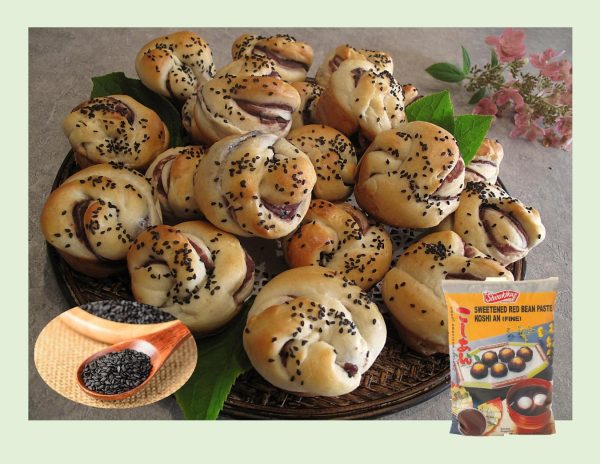
Today I’m making some red bean twists with my version of a ‘milk’ bread. For the filling this time, I purchased a tinned chunky red bean paste. It all came together quite nicely and tasted so good!

Print Recipe
Sweet Red Bean Twists
Votes: 1
Rating: 5
You:
Rate this recipe!
Course dessert
Cuisine Chinese
Servings
SERVINGS
Ingredients
Course dessert
Cuisine Chinese
Servings
SERVINGS
Ingredients
Votes: 1
Rating: 5
You:
Rate this recipe!
Instructions
  1. In a small bowl, dissolve yeast & 1 tsp sugar in lukewarm milk. Let stand for 5 minutes to allow yeast to activate. In a large bowl, whisk together 2 Tbsp sugar, melted butter, sour cream & egg. Add yeast mixture, stirring to combine.
  2. In another bowl combine flour & salt. Add flour mixture, 1 cup at a time, combining with wet mixture. Once all the flour has been added, knead dough for about 2 minutes until smooth & elastic consistency. Place dough in a greased bowl & cover with plastic wrap & a towel. Allow to rise in a draft free place until doubled in bulk, about an hour.
  3. Punch the risen dough down & divide the dough into 3 equal parts. Lay a piece of parchment paper over the removeable bottom of a 10-inch tart pan on your work surface. Place first portion of the dough on the parchment paper & roll or press out dough the size of the bottom of the tart pan. Carefully spread the circle with half of the bean paste. Roll out the second portion the same size & transfer with your rolling pin to top of the first portion. Carefully spread it with the remaining bean paste.
  4. Roll out the third portion of dough to the same size & place it on top of the other two layers. Pinch the dough around the outer edge to seal. Place a small glass in the center & press down. Cut from outside edge just to the glass, forming 12 wedges.
  5. Remove the glass. Twist each wedge 3-4 times. Tuck edge under. Place bottom of tart pan ( with parchment paper & twists) inside tart pan ring. Cover with plastic wrap & a towel. Allow to rise for about 15-20 minutes.
  6. Preheat oven to 350 F.
  7. Lightly brush twists with a bit of egg wash & sprinkle with black sesame seeds before baking. Bake 25-30 minutes or until golden brown. Remove from pan to a wire cooling rack.
Recipe Notes
  • When you purchase red bean paste, make sure the ingredients do not include maltose. The type that contains maltose is for making mooncakes. It is quite sticky, and it is hard to work with when making red bean bread. 

Everything Bagel Pull-Apart Bread

Pull-Apart Bread …. an interesting concept that has been called many names such as bubble bread or loaf, jumble bread, monkey bread etc. Initially it was formed pieces of yeast dough dipped in butter and baked in a loaf to be served with jam or preserves. In 1942, General Mills (Betty Crocker) promoted ‘Hungarian Coffee Cake’, which consisted of balls of yeast dough dipped in melted butter, then in sugar frequently mixed with cinnamon and/or chopped nuts. It was baked in a ring pan because the central tube helped prevent the center from being under baked and sinking due to all the butter. ‘Betty Crocker’ had a real way of turning unknown recipes into mainstream ideas.

By the 1990’s, General Mills promotions began entitling this sugar-coated treat as ‘Monkey Bread’. However, it may have been silent-screen movie star, ‘Zasu Pitts’, who provided this whimsical name. The term and recipe initially appeared in the Thursday, February 8th, 1945 edition of the Winnipeg Free Press (Canada) in the column ‘Culinary Clinic’. Zasu was most often remembered for her extraordinary name, huge eyes and fluttering fingers. Besides acting, she had a passion for cooking and published a 93-page cookbook in 1963.

Most of the early recipes called for rolling out the dough and cutting it into diamond shapes instead of forming balls. The widespread popularization of money bread corresponded to the advent of the commercial refrigerated biscuit dough in the 1950’s. One of the later innovations is to insert a little cinnamon-sugar coated cube of cream cheese in the center of each dough ball or drizzle with a cream cheese glaze.

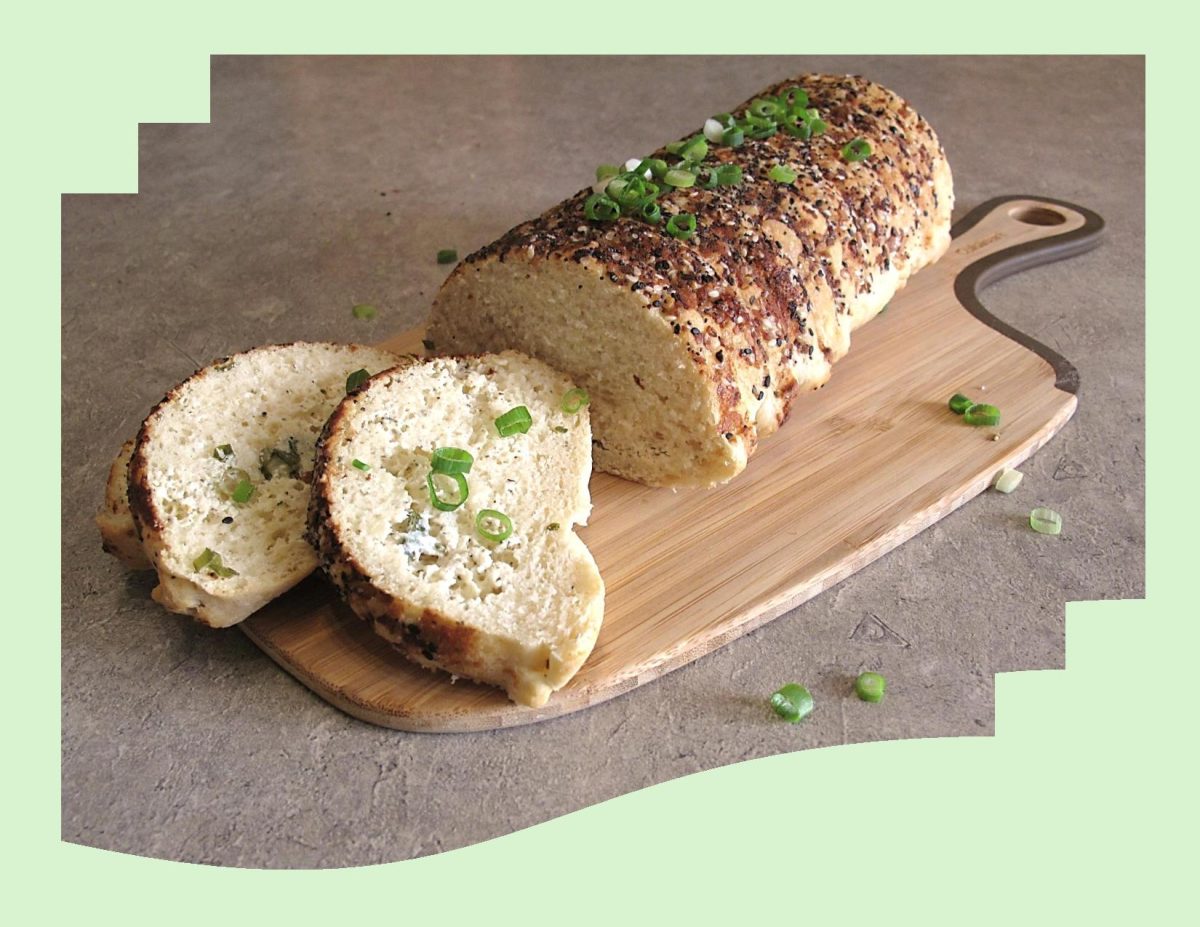
Today, I’m taking the idea in a savory direction, combining buttery homemade dough, garlic herb cream cheese filling and my ‘go-to’ favorite – everything bagel seasoning!

Print Recipe
Everything Bagel Pull-Apart Bread
Votes: 1
Rating: 5
You:
Rate this recipe!
Servings
LOAF
Servings
LOAF
Votes: 1
Rating: 5
You:
Rate this recipe!
Instructions
Dough
  1. In a large bowl, combine lukewarm milk with sugar & yeast. Allow to sit for 5-10 minutes until frothy.
  2. Add butter, egg, flour & salt. With an electric mixer, beat on low for about 3 minutes. Dough will be soft. Transfer to a lightly floured work surface. Using lightly floured hands, knead for 1 minute then shape into a ball.
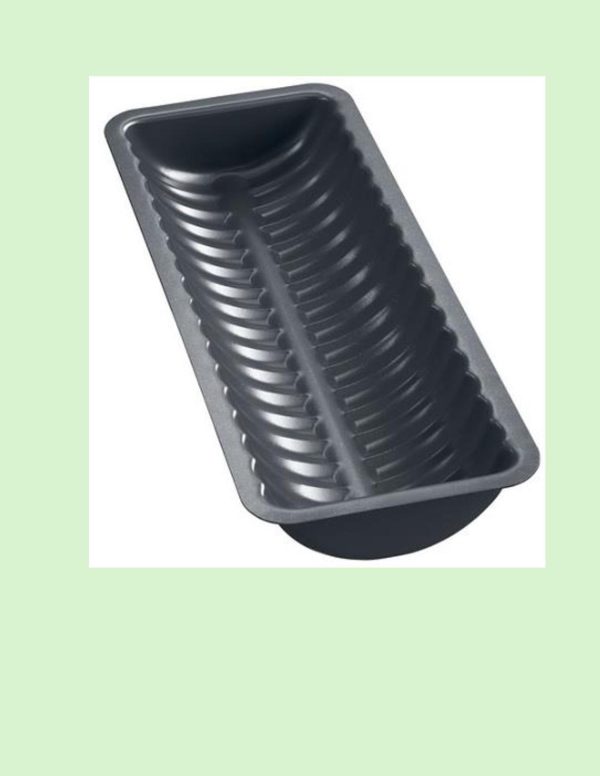
  3. Place the dough in a greased bowl & cover with plastic wrap. Place in a draft-free area to rise until doubled in size about 1 1/2 hours. As dough rises, prepare filling. Butter a 11 3/4 x 4-inch ribbed semi-circle bread pan. Sprinkle with everything bagel seasoning making sure to get the seasoning up the sides & on the ends of the pan. Set aside.
Filling
  1. In a small bowl, using a hand mixer, beat all of the filling ingredients together until combined. Set aside but don't refrigerate unless making well in advance.
Assembly
  1. Flip dough on a lightly floured work surface & with a rolling pin, roll out the dough until it is 1/4-inch thick. Spread cream cheese filling on top & sprinkle with sliced green onions. Using a 3 1/2-inch circle cookie cutter, cut into circles. Fold circles in half & line prepared pan, round side down fitting into the 'ribs' of the pan. Tuck the remaining pieces that are leftover into the crevice's between the folded circles.
  2. Cover with oiled plastic wrap & allow to rise once again in a draft-free area until puffy, about 30 minutes.
  3. Preheat oven to 350 F. when bread is nearly finished rising.
  4. Bake until golden brown, about 30-35 minutes. Remove from oven & place on wire cooling rack. Cool for 10 minutes in the pan then remove from pan, slice or pull apart & serve.
Recipe Notes
  • If you prefer, you can make your own everything bagel seasoning with 1 Tbsp each poppy & sesame seeds, 1 1/2 tsp each dried minced onion & garlic flakes & 1 tsp coarse salt.
  • For this pull-apart loaf I used a European ribbed semi-circle bread/cake pan. The size is bigger than a 9 x5-inch loaf pan so it is quite easy to fit all the dough into it.
  • Brion & I really enjoyed this bread made into a savory French toast for brunch.

Shrimp Boil Foil Packs

CELEBRATING MAY LONG WEEKEND!

Wherever you live across Canada, this May long weekend – typically marks the start of grilling season. It’s time to get outside in the sunshine, fire up the BBQ, and enjoy savory grilled food with family and friends. This distinctly Canadian holiday serves as the official marker to end winter. For Canadians, this is the first long weekend since Easter and a good excuse to celebrate the beginning of the summer season.

Seafood boils likely began with the Acadian Exile, which displaced thousands of Acadians from Canada’s Maritime provinces in the 1700’s to various regions of the U.S.A. Many settled in South Louisiana, where they became known as ‘Cajuns,’ and shared their tradition of boiling shellfish with seasonings and vegetables.

A shrimp boil is a dish that displays a medley of seafood, sausage, and vegetables, ultimately revolving around shrimp seasoned and cooked to perfection. Shrimp boil foil packet meals are everything great about a quintessential seafood boil neatly wrapped in individual packets without the mess.

Foil packets are the ultimate summer BBQ or camping meal! These shrimp boil foil packets are easy to make and quick to cook on the grill or over a fire but can also be made in the oven. There are lots of things to love about foil packet dinners. They can be made in advance (the day before or morning of), they travel well, and they require virtually no clean-up. There’s just something about the ingredients cooking and steaming all together over the fire, whether you’re camping or just in your own backyard (or cooking them in the oven), that makes these so good. Just assemble your ingredients, seal them inside using aluminum foil and parchment paper, and place them over your heat source.

This is an amazing recipe that’s full of flavor, perfect for the May long weekend.

Print Recipe
Shrimp Boil Foil Packs
Instructions
  1. Preheat the oven to 400 F. or the grill to medium-high (about 400 F). If using frozen shrimp place the package under cold water for 10 minutes to thaw.
  2. Bring 2 quarts of water to a boil and add the potatoes and corn. Reduce the heat & bring to a simmer. Cook for 10 minutes on simmer then drain into a colander. Set aside.
  3. While the potatoes & corn are cooking, prepare 4 sets of 12-inch by 24-inch long aluminum foil sheets. Fold each in half, forming a square. If using industrial aluminum foil simply prepare sheets measuring 12-inches square. Slightly fold up the edges of the sheets.
  4. In a large bowl, combine the drained potatoes & corn, sausage, thawed shrimp, onion, and garlic. Drizzle with the 4 tablespoons of melted butter, season with salt, pepper (if using), & Old Bay seasoning. Mix very well to coat all of the ingredients.
  5. Divide the shrimp boil ingredients between the four aluminum foil sheets. Neatly fold into packets, ensuring a good seal.
  6. Place them onto a baking sheet & bake for 15 minutes. If grilling, place the packets directly onto the grill surface & cook for 15 minutes, flipping once after about 8 minutes.
  7. Serve the packets slightly opened up, garnished with chopped parsley, a pinch of Old Bay seasoning, and a few lemon wedges. Serve the melted butter on the side for optional drizzling over the shrimp boil or for dipping.
Recipe Notes
  • For our meal, I did not add any salt or pepper. We found the Old Bay seasoning was enough for our liking. Just personal preference!

Banana Cream Pie Cookie Cups

It’s hard to pin down the origin of banana cream pie, but it seems adding bananas to the pie happened around the end of the 19th century, when bananas went from exotic to commonplace. Until then, most North Americans have never seen, never mind eaten, a banana.

The turning point in the banana business came with technological advances in transportation and refrigeration. Steamships and railroad cars brought the fruit to market faster, and refrigeration slowed the ripening process. The combination was a bonanza for the industry.

One of the earliest known published recipes for banana cream pie called for sliced bananas and powdered sugar placed in a pre-baked pie shell. The ‘Woman’s Exchange Cook Book’ from 1901 advises cooks to then put the filled pie in the oven for a few minutes and then remove it once the bananas have been softened. After the pie is removed from the oven, the cookbook instructs the cook to cover the filling with whipped cream and to flavor it with lemon juice.

A recipe published just five years later in ‘The Blue-Ribbon Cookbook’ provided a banana and custard filling, but the two were not blended together into today’s familiar, creamy banana filling. Instead, sliced bananas lined the bottom of the crust, and the custard was poured over it. By 1950 we get a version covered with whipped cream and toasted coconut.

An old fashioned dessert , but one of the most comforting treats, banana cream pie offers a rich, sweet and velvety filling. If you like bananas like I do, it’s one of those desserts where you put a spoonful in your mouth and can’t help but lean back and close your eyes as you savor the buttery crust and creamy filling.

Print Recipe
Banana Cream Pie Cookie Cups
Votes: 1
Rating: 5
You:
Rate this recipe!
Servings
Ingredients
Banana Cream Mousse Filling
Servings
Ingredients
Banana Cream Mousse Filling
Votes: 1
Rating: 5
You:
Rate this recipe!
Instructions
Base
  1. Preheat oven to 350° F. Line 12 muffin tins with paper cups.
  2. Use a food processor to grind gingersnap cookies into a fine crumb. Melt butter in a microwave-safe bowl until melted. Combine melted butter with cookie crumbs and stir until there are no dry crumbs left. Divide ginger snap crumbs between the 12 muffin cups. Press down with a spoon or tart shaper.
Banana Cream Mousse Filling
  1. While the cookie cups are cooling, prepare the banana cream mousse filling. Whisk together the box of dry pudding mix and the milk. Add in the whipped topping and stir GENTLY until combined. Transfer to a pastry bag or a zip lock bag and store in the fridge until the cookies are fully cool.
  2. Take cookie cups out of muffin tin. Pipe banana cream mousse into each cup and top with a slice of banana. Sprinkle with a small amount of gingersnap cookie crumbles.
  3. Store in the refrigerator.

Sweet Red Bean Buns/ Anpan

Many people are often surprised to hear that beans can be enjoyed as dessert. But ‘anko’, a paste made from red beans called ‘azuki’, is a staple in traditional Japanese confectionery, and has been enjoyed by Japanese people for centuries. Anko, or sweet red bean paste, is the equivalent of chocolate in the western world. 

The origin of red bean paste dates back to the Heian period when Chinese travelers visited Japan with recipes for steamed buns. Japan adopted the recipe and incorporated meat and vegetables; however, Buddhist priests were unable to eat the meat-filled buns, so they opted for a substitute of boiled azuki beans. The beans only began to be sweetened during the Muromachi period when Dutch traders started importing sugar to Japan.

Anpan is a sweet roll that was first made in 1874 by a samurai named Mr. Kimura. He lost his job due to the dissolution of the samurai as a social class back in Meiji period. During that time, Japan was becoming more westernized, and bakeries started to appear. His new job was as a baker.

Soon after Mr. Kimura founded the well-known bakery called ‘Kimuraya’, which still exists today. Kimura created a bread that was more suited to Japanese tastes. He replaced the traditional Japanese red bean mochi (a Japanese rice cake made from short-grain glutinous rice) with western bread instead of mochi and it is here where anpan, the traditional soft Japanese bread roll filled with red bean paste, was first invented.  

Anpan, derived from anko red bean paste, and pan, taken from the French word for bread (pain), is undoubtedly one of Kimuraya’s most famous products, and one of the most popular types of bread in Japan. Like true artisans, their original recipe has not changed since their first conception. Kimuraya have also not patented their recipe, allowing other bakers to make the same product as they please.

You can find anpan in bakeries and convenience stores all throughout Japan. Anpan is almost always filled with azuki bean paste in varying textures. Some are smooth, and others are chunky. Zunda beans (green beans) and white soybeans are common fillings. Other non-azuki bean paste flavors are pumpkin, chocolate, and cream, to name a few.

Red Bean paste comes in many shapes and forms, but one thing is constant: the ingredient is a special and meaningful component of different East Asian cultures. With its creamy texture, red bean paste is suitable for a multitude of desserts. Its flavor is sweet and savory at the same time, with notes of chocolate and walnuts.

Just for fun, I thought I would try making some anpan buns to see if we would like them. Of course, what’s not to like …. there sweet and soft!!

Print Recipe
Sweet Red Bean Buns
Votes: 1
Rating: 5
You:
Rate this recipe!
Servings
Ingredients
Sweet Red Bean Filling
Servings
Ingredients
Sweet Red Bean Filling
Votes: 1
Rating: 5
You:
Rate this recipe!
Instructions
  1. In a small bowl, dissolve yeast & 1 tsp sugar in lukewarm milk. Let stand for 5 minutes to allow yeast to activate. In a large bowl, whisk together 1/4 cup sugar, melted butter, sour cream & egg. Add yeast mixture, stirring to combine.
  2. In another bowl, combine flour & salt. Add flour mixture, 1 cup at a time, combining with wet mixture. Once all flour has been added, knead dough for about 2 minutes until smooth & elastic consistency, Place dough in a greased bowl & cover with a towel or plastic wrap. Allow to rise in a warm place until doubled in bulk, about an hour.
  3. Lightly butter 2 muffin pans using only 20 cups total.
  4. Punch the risen dough down & transfer to a lightly buttered work surface. Divide the dough into 20 equal portions with about 50 grams each. Take one portion of the dough, shape it round, flatten it with a rolling pin, put a ball of red bean paste and seal it properly. Shape the ball, use a rolling pin to flatten (not too forceful or it will break the dough) it into a rectangular shape, use a sharp knife to cut 4 lines in the middle of the dough about ½-inches apart.
  5. Roll up, starting at the longest side of dough, twist & attach ends together. Place each bun in a muffin cup.
  6. Brush egg wash over tops of buns & sprinkle with sesame seeds. Cover buns with a tea towel & allow to rise for about 30 minutes or until doubled in size.
  7. Preheat oven to 350 F.
  8. Bake for 20 minutes or until golden in color. Remove from oven. Take buns out of pans & cool on wire racks.
Recipe Notes
  • If you prefer your bun dough a bit sweeter use 1/4 cup as opposed to 2 Tbsp as I did.

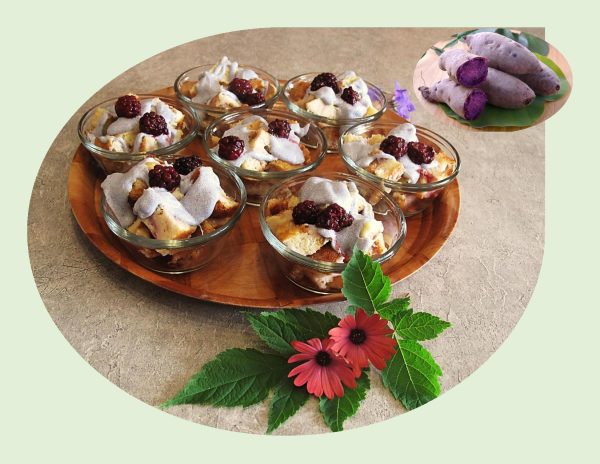
Ube Bread Pudding w/ Ube Cream Cheese Drizzle

Ube (pronounced OO-bay), is a purple yam native to the Philippines and other areas of Southeast Asia. Ube is a very versatile ingredient. It is not a purple sweet potato or taro, it is a purple yam. Its special taste reminds one of vanilla, pistachios or chestnuts. The vibrant purple color inside and out is uniquely photogenic.

Ube has been used for decades in Filipino cuisine and has now caught on in North America, especially in the form of desserts.

When I first tried using it sometime back, it was in some sweet rolls that were filled with ube ‘halaya’ or jam and topped with Edam cheese. We absolutely loved them. My next adventure was some ube cheesecake for Easter (2019). Both of these recipes have been published here on the blog.

Now, I’m taking it another step further and making an Ube Bread Pudding. This dessert is best made over two days due to that fact that you are making the ube bread from scratch. Should be interesting!

Print Recipe
Ube Bread Pudding w/ Ube Cream Cheese Drizzle
Votes: 1
Rating: 5
You:
Rate this recipe!
Servings
Ingredients
Ube Halaya (jam) Filling for Bread
Ube Bread Pudding
Ube Cream Cheese Drizzle
Servings
Ingredients
Ube Halaya (jam) Filling for Bread
Ube Bread Pudding
Ube Cream Cheese Drizzle
Votes: 1
Rating: 5
You:
Rate this recipe!
Instructions
Ube Halaya
  1. In a medium, heavy saucepan, melt butter. Add coconut & condensed milks; stir until heated. Add thawed, grated ube & stir everything together. This process takes about 40-50 minutes until the ube is cooked. The mixture will be thick & sticky. It is important to stir the mixture often during cooking to prevent it from forming a crust. Transfer the ube halaya to a container & set aside.
Ube Bread
  1. In a small dish, heat milk to lukewarm. Add yeast & 1 tsp sugar; let sit for 5 minutes to allow yeast to activate. In a large bowl, whisk together remaining 1/4 cup sugar, melted butter, sour cream & egg. Add yeast mixture & stir to combine.
  2. In another bowl, whisk flour & salt. Add flour mixture to yeast mixture 1 cup at a time, combining after each addition. Once all the flour has been added, knead on a lightly floured surface for about 2 minutes.
  3. Lightly grease the large bowl, place dough in it & cover with plastic wrap & a tea towel. Allow to rest for at least one hour, in a draft-free place until dough has doubled in volume. Grate cheese & set aside in refrigerator until needed.
  4. Grease 2 loaf pans. Punch dough down & divide in half. Roll each piece out to about 7x7-inch (18x18 cm) square. Spread ube halaya over each one leaving about 1/2-inch border all the way around. Sprinkle each square with Edam cheese then roll up in jelly-roll style. Pinch to seal seams & place seam side down in loaf pans. Cover with plastic wrap & a tea towel. Allow to rise for an hour or until doubled in size.
  5. Preheat oven to 350 F. Bake bread for about 50 minutes until golden brown. Remove from oven; cool for just a few minutes then pat with butter. Sprinkle with more grated cheese.
Ube Bread Pudding (ON THE FOLLOWING DAY)
  1. Preheat oven to 350 F. Butter a 8 x 8-inch baking dish. Cut thick slices of ube bread into 1-inch cubes & spread out in baking dish. In a saucepan, melt butter into milk on medium-high; do not let it boil. Remove from heat when butter is melted.
  2. In a small bowl, whisk eggs & coconut extract together. Slowly pour egg mixture into butter/milk mixture & begin whisking immediately to avoid scrambling the egg mixture. Pour custard over the ube bread pieces; use a spoon to work liquid between the pieces.
  3. Bake for about 30-45 minutes or until the top is springy. While the bread pudding is baking, make the ube drizzle.
Ube Drizzle
  1. In a bowl, using a mixer, beat butter for 2 minutes then add cream cheese & beat for another minute. Add powdered sugar slowly then beat thoroughly; add vanilla. Mix in ube halaya until well combined. Add enough milk to make a drizzle consistency. Either drizzle bread pudding before or after cutting into serving pieces.
Recipe Notes
  • You will have extra Ube Bread & Ube Halaya but it will no doubt be eaten before you have a chance to freeze it. Other than just enjoying it by the slice, it makes great French toast as well.

Blueberry Lemon Poke ‘Bread’

The ‘poke cake‘ is an advertising invention of the late 1970s, when Jell-O created it to increase sluggish sales. The Jell-O salads of the ‘50s and ‘60s were outmoded and on the wane so this was a way to bring it back. These cakes were colorful and easy to make. A fork, chopstick or the handle of a wooden spoon is used to poke deep holes all over the top of the baked cake. Next, it is topped with a colorful Jell-O syrup, which trickles into the cake looking like brightly colored streamers.

But, like all successful desserts, even the poke cake has undergone numerous reinterpretations over time. Starting from the base no longer cooked only in vanilla flavor but also made with coconut, lemon, chocolate, with fruit & yogurt, arriving at the holes that are filled in other choices such as chocolate, cream, jams, etc. etc.

Although it would seem like poke cakes are a phenomenon born in corporate American kitchens, drenching cake in flavorful liquids is not new, or an entirely an American creation. England’s sticky toffee pudding, a single layer date cake, is poked all over while still warm from the oven with a fork or skewer and drenched in sticky butterscotch sauce. Genoise, the classic French sponge cake, is almost always soaked in sugar syrups spiked with liqueur, not just for flavor, but to keep the cake fresh and prevent it from drying out. Pastel de tres leches, or ‘three-milks cake’, is a beloved Latin American classic. Made from sponge cake soaked in a milky syrup combining evaporated milk, sweetened condensed milk and heavy cream. All three called for this hole-poking action long before the 1970’s.

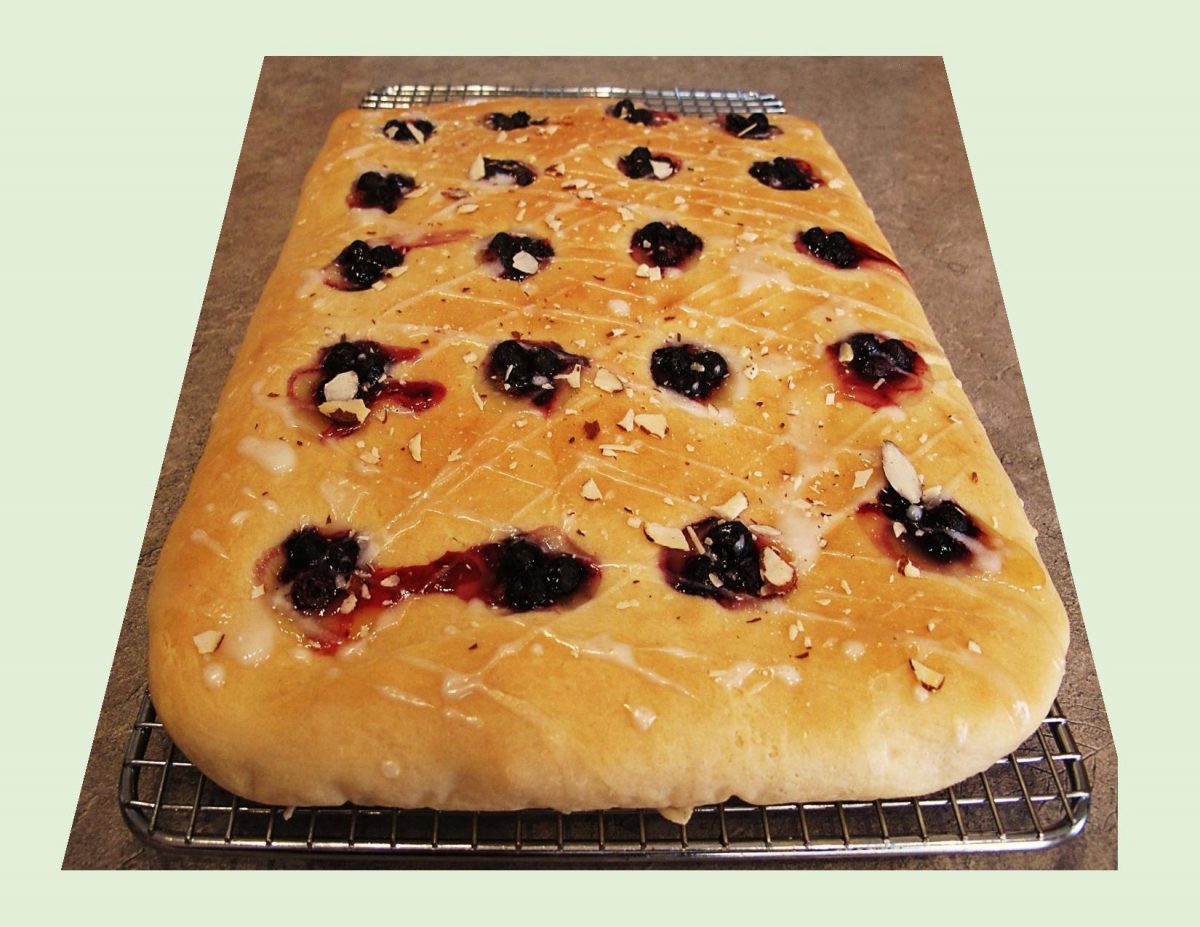
Of course, getting back to my German heritage, brings to mind a German butter cake or butter kuchen. This classic yeasted cake (actually more like bread), seems to be very closely aligned with the poke cake idea. After the dough has risen and been rolled out, deep impressions are made for the filling to nestle in. I think some blueberries and lemon curd will work nicely here.

Print Recipe
Blueberry Lemon Poke 'Bread'
Votes: 1
Rating: 5
You:
Rate this recipe!
Servings
Ingredients
Dough
Glaze
Servings
Ingredients
Dough
Glaze
Votes: 1
Rating: 5
You:
Rate this recipe!
Instructions
Dough
  1. In a small dish, heat milk to lukewarm. Add yeast & 1 tsp sugar; let sit for 5 minutes to allow yeast to activate. In a large bowl, whisk together remaining 1/4 cup sugar, melted butter, sour cream & egg. Add yeast mixture & stir to combine.
  2. In another bowl, whisk flour & salt. Add flour mixture to yeast mixture 1 cup at a time, combining after each addition. Once all flour has been added, knead on a lightly floured surface for about 2 minutes.
  3. Lightly grease the large bowl, place dough in it & cover with plastic wrap & a tea towel. Allow to rest for at least one hour, in a draft free place until dough has doubled in volume.
Assembly & Bake
  1. Line a 15" X 10"-inch jellyroll pan with parchment paper. Place dough on paper & press out evenly in pan. Make about 20 deep impressions in dough with your fingertips. Fill each one with a spoonful of lemon curd & top with a couple of large blueberries. Allow cake to rise 10 minutes.
  2. Preheat oven to 350 F.
  3. Bake bread/cake for about 20 minutes or until golden. Meanwhile, combine glaze ingredients. Remove from oven: cool for just a few minutes then drizzle with glaze. Sprinkle with sliced almonds. Cut into 15 serving pieces.

Pear & Gruyere Bread Pudding

It’s become that time of year. Our warm summer nights have slowly given way to crisp air. Layers have started to enter our daily fashion. Food preparation starts to gravitate towards warmth and comfort food. Pears of all shapes and colors, are waiting for us to pull out our oven mitts and get cooking. And, like so many fruits, there is the right variety for every job.

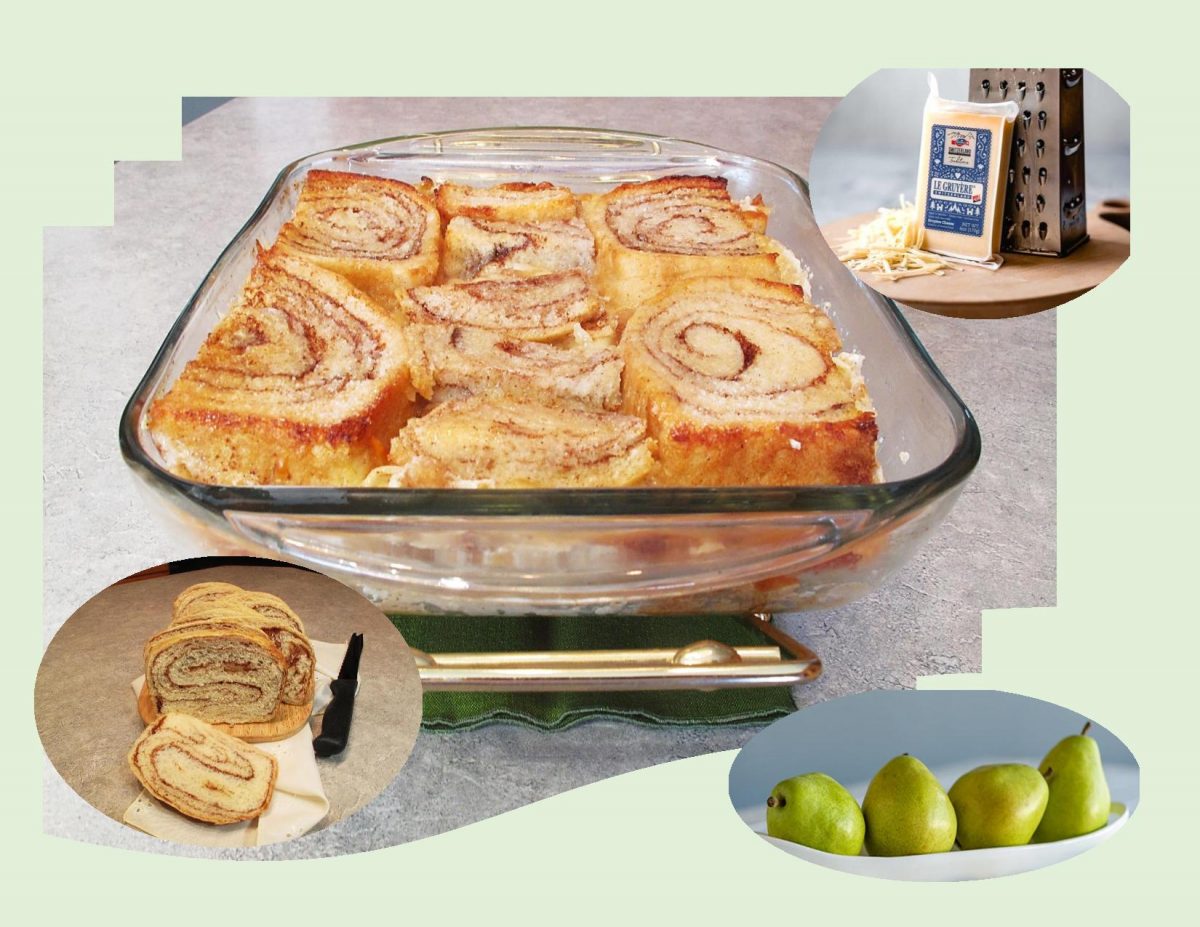
Here, sweet cinnamon bread meets juicy pears and the savory bite of Gruyere cheese. You want a pear variety that will hold its shape and won’t exude too much moisture as the bread pudding bakes, such as Anjou.

The nutty flavor of Gruyere compliments the pears and the cinnamon bread base. Its all bathed in a milk and egg mixture and left to sit in the fridge overnight. The next morning, simply bake and enjoy with the addition of something salty like you guessed it …. bacon!!

In 2015, ‘The Taste of a Memory’, a memorabilia/cookbook I wrote as a tribute to my wonderful parents, was published. It contained a compilation of stories, articles, recipes and reflections that evoke an intimate memory, a special time period and fond emotion brought about by the aroma and taste of food. Writing them down not only put them in print but allowed me to take a mental journey back to a gentler time.

This bread pudding recipe comes out of the low calorie section of that book. Who says bread pudding can’t be diet food !!

Print Recipe
Pear & Gruyere Bread Pudding
Votes: 1
Rating: 5
You:
Rate this recipe!
Servings
Ingredients
Servings
Ingredients
Votes: 1
Rating: 5
You:
Rate this recipe!
Instructions
Cinnamon Swirl Bread
  1. In a small bowl, whisk together yeast, 1 tsp sugar & lukewarm water. Set aside until mixture begins to form a frothy foam, about 5 minutes.
  2. In a large bowl, whisk together flour, dry milk powder & salt. Add yeast mixture, melted butter, vanilla, raisins (if using) & beaten egg. Combine until dough comes together in a ball & no longer sticks to the sides of the bowl. Place dough in a lightly greased bowl, cover with plastic wrap & allow to rise until nearly doubled in bulk, about 1 hour.
  3. Grease a 9 x 5-inch loaf pan. In a small dish combine 1/4 cup sugar with 1 Tbsp cinnamon.
  4. On a lightly floured work surface, roll dough into a 9 x 24-inch rectangle. Brush the dough with egg wash mixture & sprinkle with cinnamon /sugar mixture. Starting with a short end, roll the dough into a tight log & place seam-side down into greased 9 x 5-inch loaf pan.
  5. Allow to rise, covered, for 40-60 minutes until loaf has crested 1/2-inch over the rim of the pan. Preheat oven to 350 F. while the bread is rising. Brush the loaf with egg wash & bake for 45-60 minutes, until golden. Cool the loaf in pan for 10 minutes, then transfer to a rack to cool completely.
Bread Pudding
  1. In a large bowl, combine pears, butter & 1 Tbsp sugar; toss gently. Butter a 9 x 9-inch glass baking dish & arrange half of the bread in it. Spoon pear mixture evenly over bread & top with shredded cheese. Arrange remaining bread over cheese.
  2. In a bowl, whisk together remaining 5 Tbsp sugar, milk, egg substitute & cinnamon. Pour milk mixture over bread pudding, pressing down lightly to submerge. Cover & chill 8 hours or overnight.
  3. Preheat oven to 350 F. Uncover, sprinkle with 1 Tbsp sugar evenly over pudding. Bake for 55 minutes or until golden & set. Allow to rest 10 minutes before serving.
Recipe Notes
  • If you are making the cinnamon swirl bread, it helps to do this the day before making the bread pudding.
  • Alternately you could make your life easier & just purchase the cinnamon loaf at a good bakery.