Cheddar Bay Biscuit Shrimp & Lobster Pot Pie

The Red Lobster Cheddar Bay Biscuit Shrimp & Lobster Pot Pie was first introduced as a limited-time menu item by the restaurant chain in May 2013. The pot pie was part of its ‘Seaside Mix & Match’ promotion. This marked the first time the iconic biscuits were used as a topping for a main dish in the restaurant’s history. The dish featured a creamy sauce with shrimp, lobster, peas, and carrots, topped with the biscuit dough, then baked until golden brown.

The specific Red Lobster menu item was a unique, promotional creation designed to leverage the immense popularity of their free, unlimited biscuits. It has inspired numerous copycat recipes and variations that circulate online, allowing fans to recreate the dish at home using the store-bought Red Lobster biscuit mix.

The biscuits are made with a blend of medium cheddar cheese, garlic, and herbs, finished with a melted butter topping. This rich, savory flavor profile makes them highly addictive and distinct from typical bread or rolls. Being a ‘drop biscuit,’ it gives them a light, fluffy, and airy texture, as opposed to the denser, rolled biscuits. This unique consistency makes them melt-in-your-mouth delicious when served warm.

This copycat recipe checks all the boxes for Brion & I so I had to try it.

Print Recipe
Cheddar Bay Biscuit Shrimp & Lobster Pot Pie
Votes: 1
Rating: 5
You:
Rate this recipe!
Servings
RAMEKINS
Ingredients
Servings
RAMEKINS
Ingredients
Votes: 1
Rating: 5
You:
Rate this recipe!
Instructions
Pot Pie Filling
  1. Preheat oven to 400 F.
  2. In a saucepan over medium heat, melt butter. Add garlic, onion, & celery. Cook until soft, about 5 minutes. Stir in flour & cook 1 minute, forming a roux.
  3. Slowly whisk in seafood broth & cream. Stir until smooth & slightly thickened, 5–7 minutes. Season with Old Bay, salt & pepper.
  4. Add shrimp & cook 2–3 minutes until pink. Stir in lobster parsley. Remove from heat.
Biscuits
  1. In a bowl, whisk together flour, baking powder, garlic powder & salt. Cut in the grated cold butter until crumbly. Stir in cheddar & herbs. Add milk & mix until just combined. The dough will be sticky.
Assembly
  1. Spoon seafood mixture into 4-12 oz. ramekins or a baking dish. Drop biscuit dough over the top, spreading gently. Bake 20–25 minutes, until biscuits are golden & cooked through. Let rest 5–10 minutes before serving.

Swedish Meatball Noodle Bake

Swedish meatballs are more than just food; they represent a piece of Swedish heritage that has found its way into kitchens and restaurants globally.

The Swedish word for meatball, ‘Kottbullar’, first appeared in print around 1754. They are traditional Swedish ‘old-world’ fare at Smorgasbords and other festive occasions. Initially Swedish meatballs were only enjoyed by upper class Swedes but the increased availability of wood stoves and meat grinders in the 1850’s made meatballs accessible to the middle class as well. In northern Scandinavian countries beef was considered a luxury item, which meant meatballs were highly prized.

The meat content can vary based on geography. In southern Sweden, they are most often a 50/50 mix of beef and pork whereas further north in Sweden 70/30 of beef to pork is typical. Likely other options would be veal, venison, lamb or moose. Size-wise, they are smaller than those of Italy or Germany, typically not larger than a golf ball or smaller than ¾-inch across.

Traditional Swedish meatballs are seasoned with a hint of nutmeg, that adds warmth and depth to the meatballs, along with allspice that complements the nutmeg as well as salt & pepper. This blend of spices gives them their distinctive flavor.

In America, Swedish meatballs were very popular in the beginning of the 20th century and again in the 1950’s-1960′. But as is with many dishes, they continue to be re-invented into new concepts such as this Swedish meatball noodle bake. They are cherished for their rich blend of flavors and are a testament to the intersection of history, culture, and cuisine.

Print Recipe
Swedish Meatball Noodle Bake
Votes: 1
Rating: 5
You:
Rate this recipe!
Servings
Votes: 1
Rating: 5
You:
Rate this recipe!
Instructions
Meatballs
  1. Preheat oven to 375 F. Line a baking sheet with foil & spray with baking spray.
  2. In a bowl, combine all meatball ingredients & form into balls. Place on foil lined baking sheet & bake for 10 minutes or until cooked. Remove from oven & place on paper towel to drain off any excess drippings.
  3. Cook noodles until al dente. Drain & set aside.
Sauce
  1. In a saucepan, melt butter. Cook the onions & mushrooms until tender, approximately 3-5 minutes. Mix in flour & cook for one minute. Slowly whisk in the beef broth & Worcestershire sauce. Heat to simmer & cook until thickened. Reduce heat to low & add sour cream & heavy cream. Season with salt & pepper.
  2. Add the noodles, sauce & meatballs to a prepared baking dish. Bake for 20-30 minutes, or until sauce is thickened & bubbling.
  3. Garnish with sliced green onion. Nice to serve with roasted cherry tomatoes on the side.
Recipe Notes
  • You will probably notice I haven't used the traditional spices (nutmeg & allspice). Brion & I love Swedish meatballs but with a different combo of spices. Feel free to use what works for you.

Baby Potatoes w/ Bacon, Onions & Smoked Gouda Cheese

Just like red wine with chocolate, and milk with cookies, some combinations are enduring classics. Here’s another: meat and potatoes. But not just any potatoes — ‘little potatoes’ have reinvigorated this duo.

Little Potatoes are the brainchild of Jacob van der Schaaf and his daughter Angela Santiago. Unlike a big, bland, starchy potato, the small creamers have a distinctive, naturally buttery flavor—with some varieties more pleasantly nutty, and others more mineral in taste. Little Reds, for example, are slightly sweet with notes of asparagus and artichoke, and a velvety texture. Little Fingerlings, in addition to their spunky shape, are firm yet fluffy with an earthy taste and nutty finish.

Potatoes have taken a lot of flak in recent years. Fad diets and sub-par preparation methods have steered the health conscious away from these tuberous little root veggies. But, these little potatoes are such versatile vegetables, flavorful, naturally buttery tasting, and creamy. You can bake, microwave, roast, barbecue, fry, mash, purée or boil them.

The Little Potato Company was co-founded by Jacob van der Schaaf and his daughter Angela Santiago in 1996 in Edmonton, Alberta, Canada. They aimed to popularize small, flavorful ‘creamer’ potatoes, inspired by Jacob’s childhood memory of working in his father’s fields back in Holland. They started with a single acre of hand-dug potatoes, washing them in a bathtub and selling them at farmers’ markets. These tubers, although tiny, deliver a big, buttery flavor, and because these small creamer potatoes are purposefully pulled from the patch early, their skins are tender enough to skip the peeling step altogether.

The company quickly expanded, driven by Angela’s leadership and strategic vision. Within a few years, the company grew to 30 employees and secured widespread distribution across Western Canada. 

Today, The Little Potato Company is a leader in North America’s creamer potato market, with 14,000 acres of contracted crop, 400 employees, and multiple facilities, including a flagship 95,000-square-foot plant in Edmonton, Alberta. They are expanding with a new, sustainable site equipped with solar panels and water conservation technology.

I prepared this recipe using the ‘garlic & parmesan’ little potatoes as the base. After they were roasted, I topped them with caramelized onions, bacon and smoked gouda cheese. The combination is a stunning balance of spice, smokiness, and creaminess making the ultimate comfort food!

Print Recipe
Baby Potatoes w/ Bacon, Onions & Cheese
Votes: 1
Rating: 5
You:
Rate this recipe!
Servings
Votes: 1
Rating: 5
You:
Rate this recipe!
Instructions
  1. Preheat your oven to 425 F. Line a large baking sheet with parchment paper or lightly grease it with cooking spray.
  2. In a large mixing bowl, toss the little potatoes & spice packet with olive oil, smoked paprika, garlic powder, cayenne pepper, salt & black pepper. Mix well to ensure the potatoes are evenly coated.
  3. Spread the seasoned potatoes out in a single layer on the prepared baking sheet. Roast the potatoes in the preheated oven for 30-35 minutes, flipping them halfway through, until they are cooked through.
  4. While the potatoes are roasting, cook the bacon in a large skillet over medium heat until crispy. Transfer the cooked bacon to a paper towel-lined plate to drain, then crumble it into small pieces. Reserve about 1 tablespoon of the bacon grease in the skillet & discard the rest.
  5. Thinly slice the onion. In the same skillet with the reserved bacon grease, add the butter & sliced onions. Cook over medium-low heat, stirring frequently, for 10-12 minutes, or until the onions are soft & caramelized. Remove from heat & set aside.
  6. Once the potatoes are roasted, remove the baking sheet from the oven & top them with the crumbled bacon & caramelized onions. Lay the slices of smoked gouda cheese evenly over the potatoes. Return the baking sheet to the oven for 2-3 minutes, just until the cheese melts.
  7. Remove the potatoes from the oven and transfer them to a serving dish. Serve immediately.

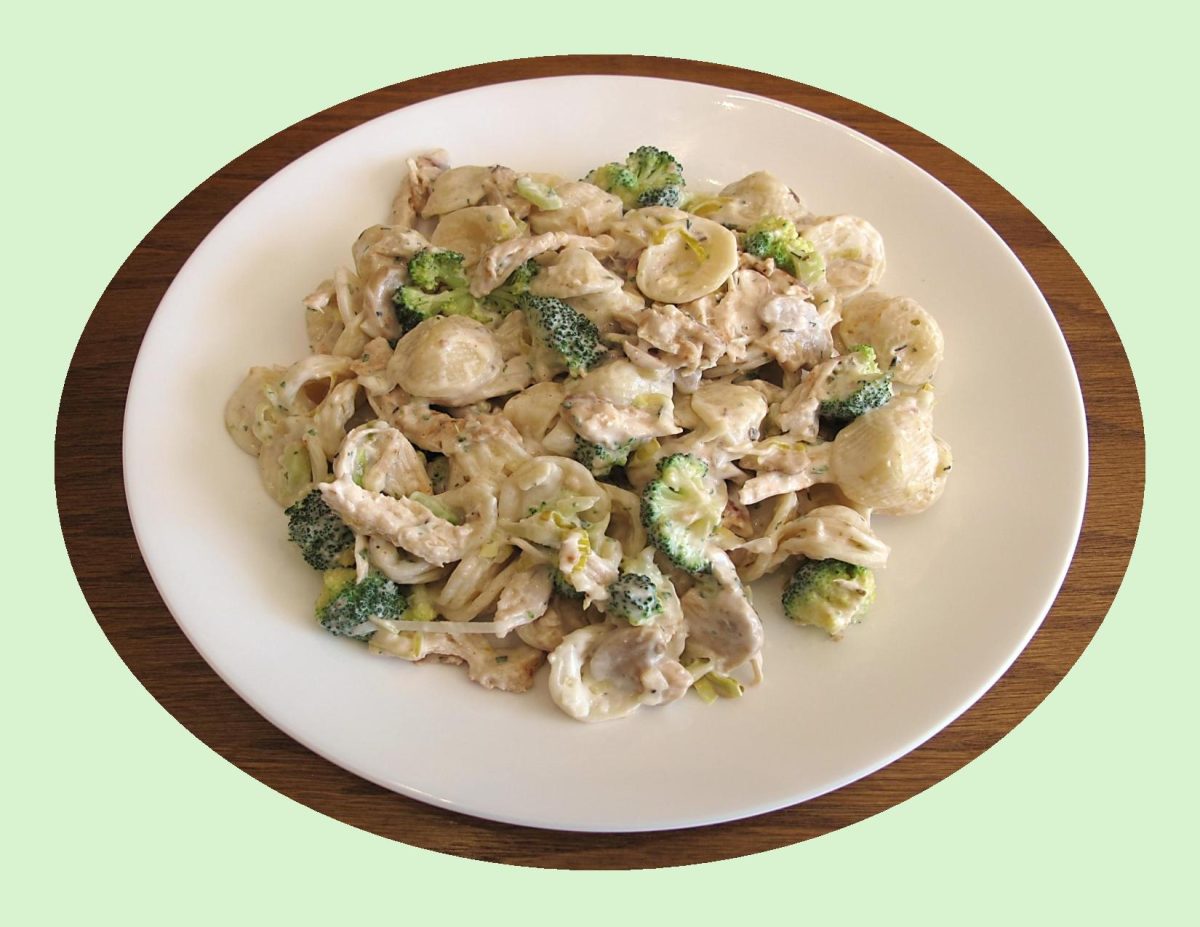
Chicken Broccoli Orecchiette

As far as vegetables are concerned, broccoli is a bit divisive, people either love it or hate it.  Broccoli is native to the Mediterranean and has been considered a very valuable food by the Italians since the Roman Empire, but when first introduced in England in the mid-18th century, broccoli was referred to as ‘Italian asparagus’. There’s a misconception that Italians only eat pasta. While they do eat a lot of pasta, they also eat a ton of vegetables.

Orecchiette with broccoli is a wonderfully simple Italian comfort food. Stretched between the Adriatic and Ionian seas, Puglia’s sun-soaked landscape in southern Italy is where orecchiette pasta hails from. Meaning ‘little ears’ in Italian, the dish is made by flattening out dough and simply rolling your thumb like a fingerprint onto the dough. This creates an ear-shaped disc that resemble small bowls that have grooves from the fingerprint that are perfect at holding all types of sauces.

A classic combination for orecchiette is broccoli with sausage. Creamy sauces also go well with orecchiette, as do fresh tomato and pesto sauces. Orecchiette is also often served with tomato-based sauces such as marinara.

To make this a bit more of a hearty meal, I’m adding some chicken breast today. I think it should be really good!

Print Recipe
Chicken Broccoli Orecchiette
Votes: 1
Rating: 5
You:
Rate this recipe!
Servings
Votes: 1
Rating: 5
You:
Rate this recipe!
Instructions
  1. Bring a medium pot of salted water to boil. Pour the dry orecchiette pasta into the water, stir with a wooden spoon & bring the water back to a boil. Boil the pasta until it is just barely tender, between 10 -15 minutes. Pull one piece of orecchiette out of the water with the wooden spoon after 10 minutes to check for doneness. Orecchiette should be cooked al dente, tender but firm.
  2. When the pasta is done, carefully scoop 2 cups cooking water out of the pot with a measuring cup & set aside. Set a strainer over the sink & pour the orecchiette into the strainer to drain the remaining water. Do not rinse. Return to pasta pot.
  3. Place fresh broccoli in a microwave steamer dish & cook for a couple of minutes until tender crisp. Drain & add to pasta pot with orecchiette.
  4. Heat the oil in a large skillet over medium-high until sizzling. Pat the chicken breasts very dry with paper towels & season the tops generously with salt & pepper. Add the chicken to the pan, seasoned side down (season the sides facing up once you place them in the pan); do not disturb the chicken once it is in the skillet. Once you can see a bit of golden color forming around the sides, after about 2 minutes or so, take a peek — the goal is to achieve a deep golden brown shade.
  5. Once you flip the chicken, take its temperature with an instant-read thermometer. Pull it from the pan when the temperature is between 155°F & 160°F. If the chicken is very thin, it may be almost done. If it's on the thicker side, it may need a few more minutes. Checking early allows you to gauge the remaining cooking time. Once the chicken is done, slice into thin strips & add to pasta pot.
  6. Add the butter to the skillet. Once melted, add the mushrooms. Sprinkle with salt & cook, stirring occasionally, until tender & golden, 7 to 10 minutes. Add the garlic & cook for 20 to 30 seconds. Add the cream cheese & stir until melted & smooth. Whisk in 1 cup of the reserved pasta water, a little at time, until smooth, followed by the parmesan. Pour the sauce over the noodles, broccoli & chicken, toss to coat. If it's not quite creamy enough, add a little of the remaining pasta water. Taste & adjust seasoning.
  7. Garnish with additional Parmesan.

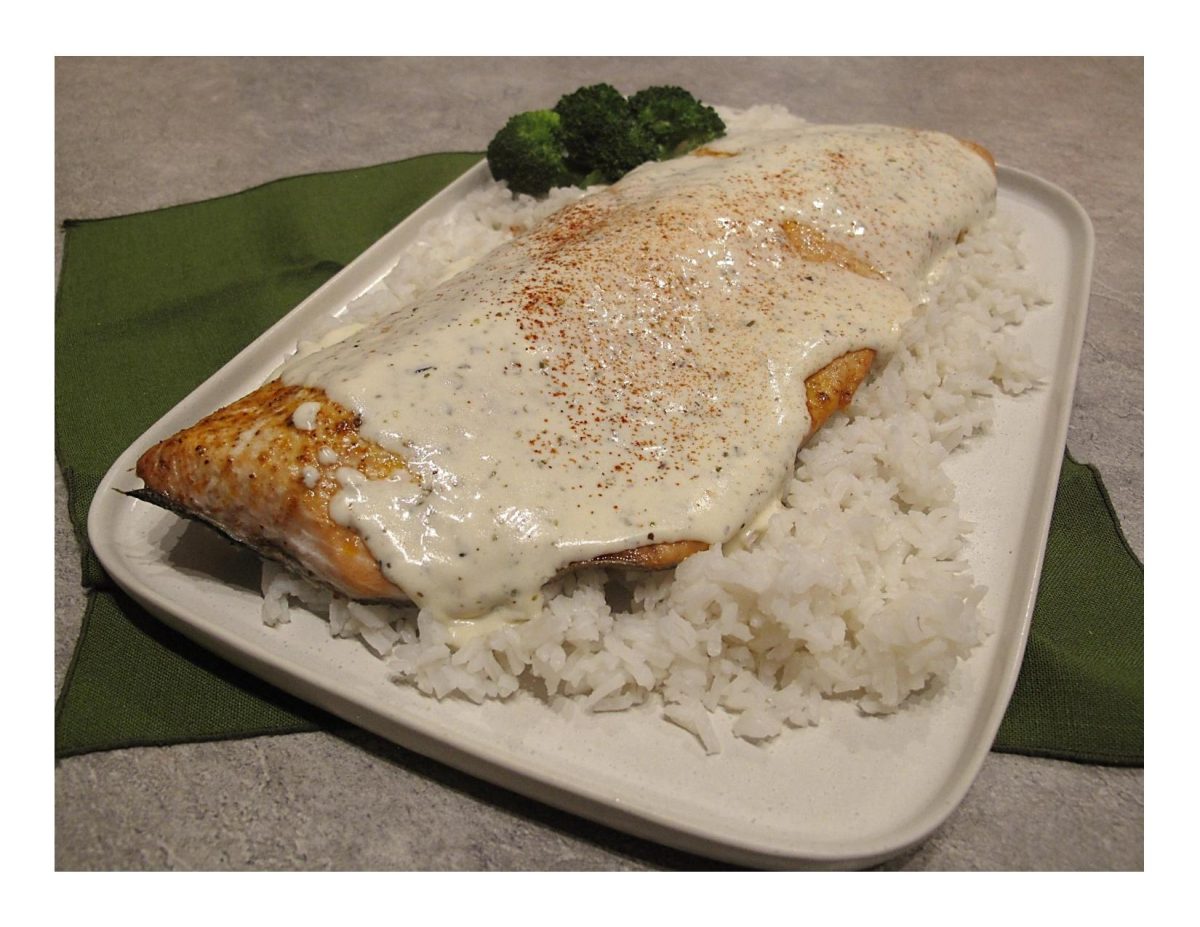
Roasted Boursin Salmon

When it comes to creating delicious and sophisticated flavor combinations, Boursin cheese and salmon are a match made in culinary heaven. The creamy and tangy taste of Boursin perfectly complements the rich flavor of the salmon.

Boursin Garlic & Herbs was launched in 1963 and quickly became a household name across France. Its unique texture and taste revolutionized the fresh cheese market, especially after being the first cheese brand to be the subject of a television campaign in 1968.

For those unfamiliar with it, Boursin cheese is known for its smooth, creamy texture and fresh herbs. That’s what makes it so versatile and perfect for sauces! With a variety of flavors to choose from, Boursin recipes open a world of possibilities.

Print Recipe
Roasted Boursin Salmon
Instructions
Salmon
  1. Preheat oven to 425 F. Lightly grease a baking dish.
  2. Pat the salmon dry with a paper towel. Mix together the lemon juice, olive oil, garlic, & Dijon mustard in a small bowl. Place the fillets in the baking dish & rub with this mixture. Season with a generous pinch of salt & pepper.
  3. Bake for 10-12 minutes, or until the salmon is cooked through.
Boursin Sauce
  1. As the salmon bakes, melt butter in a small pot over medium heat. Pour the chicken stock into the mixture & blend in the Boursin until it's thoroughly incorporated with the stock. Allow it to simmer for a few minutes until the sauce begins to thicken. Take off the heat & stir in the lemon juice & any natural pan juices from the salmon.
Serving
  1. Place cooked salmon on a serving plate & pour sauce over top.
  2. Garnish with parsley & lemon slices if desired.

Rhubarb Cardamom Thumbprint Cookies

The thumbprint cookie’s roots trace back to Sweden, where it is traditionally called Hallongrotta, which translates to ‘raspberry cave’ in Swedish. Made since the 1800s and probably earlier, they are a versatile cookie that can be made with any kind of dough you can shape into balls and press down in the center.

Thumbprint cookies, also known by various names in different cultures, are a timeless favorite.

  • In Germany, thumbprint cookies, are called Engelsaugen (angel’s eyes)
  • In Romania, they are called ochi de pisica (cat’s eyes)  
  • In France, they are known as niçois suns.
  • Polish thumbprint cookies, or teacakes, are typically filled with jam or fruit preserves.
  • Swiss thumbprint cookies are named vogelnestli (bird’s nests). The jam-filled centers resemble little nests.
  • Eastern European Jewish bakeries offer thumbprint cookies known as butter balls.
  • In the United States and Canada, thumbprint cookies are simply called thumbprint cookies.

It’s one of my favorite times of the season when rhubarb becomes available so bring on the rhubarb recipes! These cookies combine the classic thumbprint cookie concept with the seasonal goodness of rhubarb. The cookie dough is flavored with cardamom, a spice commonly used in Swedish baking and desserts. The jam filling is a rhubarb compote, which adds a tangy and fruity flavor. What’s not to love!

Print Recipe
Rhubarb Cardamom Thumbprint Cookies
Votes: 1
Rating: 5
You:
Rate this recipe!
Servings
Ingredients
Rhubarb Compote
Cookies
Servings
Ingredients
Rhubarb Compote
Cookies
Votes: 1
Rating: 5
You:
Rate this recipe!
Instructions
Rhubarb Compote
  1. Place all compote ingredients in a saucepan & simmer covered 3-5 minutes. Remove cover & stir, continue stirring for another 5 minutes making sure to avoid scorching the pan. Set aside to cool.
Cookies
  1. Preheat oven to 350 F. Line a large baking sheet with parchment paper.
  2. In a medium bowl, place softened butter, brown sugar, 1 tsp ground cardamom, salt & vanilla. Using a hand mixer, beat until light color & fluffy, scraping down the bowl as needed with a spatula, about 2 minutes.
  3. Add egg & beat until combined. Fold in flour until just combined.
  4. In a shallow bowl, place the sugar, cinnamon & remaining 1/2 tsp cardamom. Mix well to combine.
  5. Scoop the dough out by level Tbsp & roll each into a ball. Roll each ball in the cardamom sugar & place on the baking sheets, spacing them evenly apart. Make an indentation about 1/2-inch deep with your thumb into each ball.
  6. Bake 7 minutes. Rotate the baking sheet from front to back. Bake until the cookies take on a tiny bit of color (they don't really brown) & are dry to the touch, 5-7 minutes more. If indentations have lost their shape, remake them with the handle end of a wooden spoon. Let cookies cool completely on the baking sheet.
  7. Fill each cookie indentation with the cooled rhubarb compote. Let sit until the filling sets slightly, about 20 minutes, before serving.

Baked Chicken Gnocchi w/ Garlic Asiago Cream Sauce

There are many regions that lay claim to the origins of gnocchi. While they are generally associated with northern Italy, the truth is that these dumplings are found all over the peninsula and in many diverse forms, made with a variety of base ingredients depending on where they come from: flour, corn meal, semolina, bread, chestnut flour, ricotta, or vegetables—from pumpkin to spinach to the classic potato.

The word gnocchi is thought to come from nocca, which means knuckles, or from the Lombard word knohha, which means knot (such as wood knot) or walnut—all words that imply the small, tight, rounded shape of gnocchi that we know today.

The most famous potato gnocchi that are known and loved world-wide date back to the sixteenth or, more likely, seventeenth century—well after Spanish explorers brought potatoes from South America and introduced them to Italian kitchens.

Some iterations of gnocchi such as gnocchi à la parisienne or gnocchi alla romana are always baked, even the classic potato iteration can be improved by a bit of oven time. This isn’t necessarily the most traditional way to make and serve gnocchi, but it’s certainly a twist on the classic and, above all, a nice way to dress up a package of prepared gnocchi, which might otherwise be a bit tough.

Another idea would be to use gnocchi as the base for a vegetarian sheet-pan dinner with roasted vegetables, baking them until they get crispy and golden brown; in another, similar recipe, the roasted gnocchi could be served on a bed of arugula for even more nutrients and flavor. 

Of course, you can bake gnocchi in a casserole with lasagna-like influences, simmering in a bubbling mass of sausage, ricotta, marinara, and mozzarella; this gnocchi bake, meanwhile, marries the dumplings with chicken, broccoli, and a rich, creamy Asiago cheese sauce.

Print Recipe
Baked Chicken Gnocchi w/ Garlic Asiago Cream Sauce
Votes: 1
Rating: 5
You:
Rate this recipe!
Servings
Servings
Votes: 1
Rating: 5
You:
Rate this recipe!
Instructions
Gnocchi
  1. Cook gnocchi according to package directions. Drain in a colander & set aside.
Broccoli
  1. Cut broccoli into florets & place in a 'steamer' microwave dish. Cook in the microwave about 1 minute; drain dish & set aside.
Chicken
  1. Season chicken quarters with Italian seasoning, salt & pepper. Melt butter in a skillet over medium heat. Sear chicken on both sides, starting skin side down, until golden brown, about 2-3 minutes per side; drain & set aside.
Asiago Sauce
  1. Preheat oven to 400 F. Butter a rimmed baking dish & set aside.
  2. Melt butter in a skillet over medium heat. Add minced garlic & cook until fragrant, about 1-2 minutes. Gradually whisk in chicken broth & Italian seasoning. Cook, whisking constantly, about 1-2 minutes. Stir in half & half cream & grated asiago cheese until slightly thickened. Adjust seasoning with salt & pepper to taste.
Baking
  1. Arrange chicken quarters in prepared baking pan. Top with cooked gnocchi, broccoli florets & asiago cheese sauce. Roast until completely cooked through, about 25-30 minutes. Serve hot.

Nanaimo Truffles

The Nanaimo bar, a decadent Canadian treat, has a fascinating history. It is named after Nanaimo, a delightful city in British Columbia. When Prince Harry and Meghan Markle visited British Columbia in 2020, their interest in these treats caused a media frenzy in the U.K. and the U.S., prompting questions about what the square was and where it came from. It is a dessert bar that requires no baking and generally consists of three layers: a graham wafer crumb and shredded coconut base, custard-flavored butter icing in the middle, and a layer of chocolate ganache on top.

The dessert was popularized in the years following WWII and subsequently rose to wider prominence after Expo ’86. Susan Mendelson is perhaps most responsible for commercializing the Nanaimo bar. She sold the bar during the 1970s to help pay her tuition, and in 1979 founded The Lazy Gourmet, a café and catering company in Vancouver, which claims to be the first business to sell the dessert. Mendelson wrote the official cookbook for Expo ’86, held in Vancouver, and included the Nanaimo bar.

After that, the Nanaimo bar began to be sold on BC Ferries and spread in popularity across Canada. It can now be found in Costco, Starbucks and countless cafes in Canada and the United States. There can be some variations with each of these layers — e.g., adding mint, mocha or other flavoring, as well as food coloring, to the icing center, or various nuts to the base — but a classic Nanaimo follows the traditional trio.

In a bid to take advantage of the bar’s popularity, the city of Nanaimo launched a tasting trail much like Ontario has done for the butter tart. The Nanaimo Bar Trail features an array of establishments that proudly showcase their unique interpretations of the classic Nanaimo Bar. As of now, there are more than 39 businesses participating in this sweet adventure. These establishments offer a variety of Nanaimo Bar-inspired treats, from traditional bars to ice creams, macarons, cheesecakes, lattes, and even spring rolls.

All that being said, instead of the traditional rum balls at Christmas, here’s my version of Nanaimo truffles!

Print Recipe
Nanaimo Truffles
Votes: 1
Rating: 5
You:
Rate this recipe!
Course dessert
Cuisine Canadian
Servings
TRUFFLES
Course dessert
Cuisine Canadian
Servings
TRUFFLES
Votes: 1
Rating: 5
You:
Rate this recipe!
Instructions
Filling/Centers
  1. Cream butter, custard powder & powdered sugar together well. Divide mixture into 22 pieces & roll each into a ball. Freeze for at least 30 minutes.
Base
  1. Melt the first 3 ingredients in the top of a double boiler. Add beaten egg & stir to cook & thicken. Remove from heat. Stir in graham crumbs, cheerios, cocoanut & corn syrup. Set aside to cool.
  2. When base mixture has cooled, divide mixture into 22 portions. Place 1 portion in the palm of your hand & press to flatten into a large circle. Put one custard ball into the center & wrap the circle around the custard so it totally covers it. Squeeze gently to form a ball. Repeat until you have made all the truffles. Freeze for 30-60 minutes.
Coating
  1. Melt chocolate slowly in a double boiler until smooth. Without allowing the chocolate to cool down, take a frozen ball & carefully stick a toothpick or skewer into it & dip into the melted chocolate to cover. Remove the stick & allow the truffles to set on parchment paper.
  2. Store in refrigerator. Allow the truffles to come back up to room temperature to serve if you wish.
Recipe Notes
  • I have a nut allergy, so I replaced the nuts that are usually used in the base with crushed cheerios. I found it did not alter the flavor at all. Their still just as irresistible as ever!
  • The size & amount depends on your preference. Just divide the filling & base components into whatever you wish.

Canadian Salmon Pie

Salmon pie is a variation on a classic Canadian Christmas meat pie from Quebec called a ‘tourtiere’. Fundamentally, tourtiere is a pie that contains meat and spices baked in a flaky crust. The meat is generally diced or ground, including any or all of pork, veal, beef or wild game. No matter what the meats used, or the presence or absence of potato, bold seasoning is the rule for all varieties. The four original spices used in the classic tourtiere are cinnamon, cloves, allspice and nutmeg. Like so many of these recipes that have been ‘handed down’ over generations, each family alters it to suit their taste. 

The salmon pie version takes the same meat pie concept, but uses flaked, cooked salmon that is seasoned and mixed with mashed potatoes.

I thought it would be nice to have some salmon pie before we get into all that Christmas turkey. The lemon dill sauce is such a nice condiment to go with it.

Print Recipe
Canadian Salmon Pie
Votes: 1
Rating: 5
You:
Rate this recipe!
Cuisine American
Servings
Ingredients
Pastry
Salmon Filling
Lemon Dill Béchamel Sauce
Cuisine American
Servings
Ingredients
Pastry
Salmon Filling
Lemon Dill Béchamel Sauce
Votes: 1
Rating: 5
You:
Rate this recipe!
Instructions
Pastry
  1. In a large bowl, combine flour & salt. Cut in butter until mixture is an even crumbly texture. Add cold water a Tbsp at a time & mix until dough comes together. Shape the dough into a disc, wrap & chill in the refrigerator. While pastry is chilling prepare filling.
Salmon Filling
  1. Wash & peel potatoes. Cut into chunks & boil in a medium size pot of water until tender, about 12 minutes. Drain, mash & set aside.
  2. Melt butter in a large skillet over medium heat. Add the onions & sauté until they are softened, about 5 minutes. Add 1/2 cup water, thyme & Old Bay seasoning to skillet.
  3. Season the salmon fillet with salt & pepper & place it into the skillet skin side down. Spoon liquid & onions over salmon, cover the skillet & cook until the salmon is opaque, about 5 minutes. Turn off the heat & let salmon cool slightly.
  4. Remove the skin & break salmon into pieces. Add the salmon, onions & poaching liquid to the mashed potatoes & mix to combine. Taste & adjust salt & pepper if needed. While the salmon pie is baking, make the dill béchamel sauce.
Lemon Dill Béchamel Sauce
  1. Melt the butter in a small saucepan over medium heat. Add flour & whisk until smooth. Gradually add milk, stirring constantly. When sauce begins to thicken, add the lemon juice, dill and salt & pepper to taste. Simmer for 2 minutes. Keep warm until ready to serve.
Serving
  1. Remove pie from oven & let it cool for at least 10 minutes before serving. Cut pie into wedges & drizzle with lemon dill sauce. Serve warm.

Roasted Turkey Breast ‘Porchetta’ Style

HAPPY THANKSGIVING DAY!

The second Monday of October has been the day Canada has celebrated Thanksgiving since 1957. You might say it is synonymous with autumn & the harvest season. For us, it’s a time to be thankful for having the privilege of being Canadian and able to live in such a wonderful country.

I, for one, have always loved the changing seasons. That’s not to say that I like freezing cold and slippery roads but that I have come to understand the important role each one plays in the ‘big picture’. When Brion and I initially landscaped our property, careful consideration was given to what plants were planted. Over the years it has developed into a beautiful tapestry of color through our growing season.

Growing up on the farm, Fall was an especially busy time with the grain crops being harvested, garden vegetables being canned, frozen or just stored for use over the coming months. So much needed to be done before winter would set in. As a teenager it all just seemed like a lot of work. Even as hard as my parents worked at making a living from farming, I think they felt a real sense of satisfaction in what they were able to achieve. Now I realize that even without being aware of it the visual beauty of the farmland at harvest was imprinted on me forever.

Our Thanksgiving meal today was inspired by the traditional Italian pork classic ‘porchetta’, a savory and moist boneless pork roast.

Porchetta is one of Italy’s most famous pork dishes. The term ‘porchetta’ traditionally refers to a whole boned and roasted young pig, specifically one which has been flavored with herbs, garlic and seasoning and cooked until the skin turns to golden crackling. The name of the dish stems from the word ‘porco’, meaning pork. It is a staple of numerous village festivals, fairs, markets, and concerts, when the streets of Rome are packed with food trucks selling this flavorful dish that is usually served on its own or as a filling for sandwiches. Italian immigrants brought the dish to North America in the early 20th century, where it is often referred to as Italian pulled pork.

The key elements of the finished dish are juicy meat, soft fat and crispy crust. In modern Umbrian kitchens, porchetta has expanded beyond pork, so that ‘porchetta-style’ has simply come to mean boneless meat, rolled round garlic and herbs, and roasted.

This ‘turchetta’ or roast turkey breast stuffed and rolled in the style of Tuscan porchetta makes a delicious alternative to ‘the same old Thanksgiving bird‘. 

Print Recipe
Roasted Turkey Breast 'Porchetta Style
Instructions
  1. Preheat oven to 325 F.
  2. In a large skillet, cook chopped bacon until golden & starting to crisp. Add butter, onion, celery & garlic. Sauté in bacon drippings until tender & golden.
  3. Toss sautéed veggies with crispy bacon, bread cubes, sage, thyme, rosemary, salt, pepper & chicken broth. Set aside while you prepare chicken breast.
  4. On a cutting board, place butterflied turkey breast & pound with a mallet so that the turkey is of even thickness throughout. Season with salt & pepper. Fill with stuffing, leaving a 1-inch border along the sides.
  5. Starting at the end closest to you, roll the turkey into a tight log shape & tie with twine. Season with salt & pepper & drizzle with a touch of olive oil.
  6. Roast for about 40-45 minutes until skin begins to crisp. On a piece of saran weave together a bacon 'mat'. Remove turkey from oven, cut twine & place turkey breast on the bacon mat. Using saran, turn roast over & tuck ends underneath the turkey breast. If necessary, use toothpicks to keep ends in place. Place in a roasting pan with a wire rack on the bottom to help drain away some of the drippings.
  7. Raise oven temperature to 350 F.
  8. Return turkey breast to oven & roast until turkey reaches an internal temperature of 160 F. & the bacon is crispy.
  9. Allow turkey to rest for 10-15 minutes before slicing & serving.