Swedish Meatball Noodle Bake

Swedish meatballs are more than just food; they represent a piece of Swedish heritage that has found its way into kitchens and restaurants globally.

The Swedish word for meatball, ‘Kottbullar’, first appeared in print around 1754. They are traditional Swedish ‘old-world’ fare at Smorgasbords and other festive occasions. Initially Swedish meatballs were only enjoyed by upper class Swedes but the increased availability of wood stoves and meat grinders in the 1850’s made meatballs accessible to the middle class as well. In northern Scandinavian countries beef was considered a luxury item, which meant meatballs were highly prized.

The meat content can vary based on geography. In southern Sweden, they are most often a 50/50 mix of beef and pork whereas further north in Sweden 70/30 of beef to pork is typical. Likely other options would be veal, venison, lamb or moose. Size-wise, they are smaller than those of Italy or Germany, typically not larger than a golf ball or smaller than ¾-inch across.

Traditional Swedish meatballs are seasoned with a hint of nutmeg, that adds warmth and depth to the meatballs, along with allspice that complements the nutmeg as well as salt & pepper. This blend of spices gives them their distinctive flavor.

In America, Swedish meatballs were very popular in the beginning of the 20th century and again in the 1950’s-1960′. But as is with many dishes, they continue to be re-invented into new concepts such as this Swedish meatball noodle bake. They are cherished for their rich blend of flavors and are a testament to the intersection of history, culture, and cuisine.

Print Recipe
Swedish Meatball Noodle Bake
Votes: 1
Rating: 5
You:
Rate this recipe!
Servings
Votes: 1
Rating: 5
You:
Rate this recipe!
Instructions
Meatballs
  1. Preheat oven to 375 F. Line a baking sheet with foil & spray with baking spray.
  2. In a bowl, combine all meatball ingredients & form into balls. Place on foil lined baking sheet & bake for 10 minutes or until cooked. Remove from oven & place on paper towel to drain off any excess drippings.
  3. Cook noodles until al dente. Drain & set aside.
Sauce
  1. In a saucepan, melt butter. Cook the onions & mushrooms until tender, approximately 3-5 minutes. Mix in flour & cook for one minute. Slowly whisk in the beef broth & Worcestershire sauce. Heat to simmer & cook until thickened. Reduce heat to low & add sour cream & heavy cream. Season with salt & pepper.
  2. Add the noodles, sauce & meatballs to a prepared baking dish. Bake for 20-30 minutes, or until sauce is thickened & bubbling.
  3. Garnish with sliced green onion. Nice to serve with roasted cherry tomatoes on the side.
Recipe Notes
  • You will probably notice I haven't used the traditional spices (nutmeg & allspice). Brion & I love Swedish meatballs but with a different combo of spices. Feel free to use what works for you.

Polish Hamburgers

Polish Hamburgers could be described as a cross between a meatball and an actual hamburger. These tender burgers have unique flavors of mushroom, garlic, and dill simmered in a rich gravy creating a savory comfort food that is best served over mashed potatoes, steamed bread dumplings, buttered egg noodles, or rice.

Klotlety or Klupskies, also known as Polish burgers, are a classic dish originating from Poland. Every Polish family has their own unique recipe and way to prepare them, making it a dish that is both a culinary tradition and a source of family memories. Typically, they are made with ground pork and beef, onions, eggs, bread, and milk along with spices and seasonings.

You may notice the traditional recipes for these hamburgers have some unique ingredients such as dill and nutmeg. Although that may seem a bit unusual to you, the nutmeg adds another layer of flavor to the gravy while the dill adds some brightness. Frying is one common preparation method, but you can also bake them.

Today, Polish hamburgers can be found in various forms served in the traditional way with mashed potatoes and gravy or they can be used for a more North American-style hamburger on a bun, with dill pickles, sliced tomatoes, onions, cheese, sauces, and other toppings. 

These hamburgers taste great the next day for lunch or as a nice picnic meal.

Print Recipe
Polish Hamburgers
Votes: 1
Rating: 5
You:
Rate this recipe!
Course Main Dish
Cuisine Polish
Servings
Votes: 1
Rating: 5
You:
Rate this recipe!
Instructions
Patties
  1. In a large bowl, combine the meat, crackers, eggs, onions, green peppers, milk, herbs & seasonings. Do NOT OVERMIX. One of the main reasons recipes like meatloaf, burgers and meatballs are not good is due to over mixing the meat mixture. When you make these Polish hamburgers, you want to make sure to combine the ingredients but do not over mix them or your burgers will cook up too dense & hard.
  2. Prepare a cookie sheet with foil & form mixture into 10 patties that are about the size of your hand and about 2 inches thick. These patties may be wetter than your usual meatballs or hamburgers.
  3. Allow the patties to rest at room temp for about 30 minutes so they have time to bind.
  4. When the patties have rested for about 30 minutes heat 2 - 3 Tbsp of butter in a large deep skillet. When the butter is warm, add the minced garlic and give it a swirl in the butter. Prepare a plate with some paper towels to keep near the stove where you will be frying your patties.
  5. Carefully remove patties & place them in your skillet. Allow the patties to cook for about 5 to 7 minutes on the first side before carefully flipping. You want to get a nice sear on each side. When they are well seared on both sides, remove them from the skillet & place on the prepared paper towel dish. Fry remaining burgers getting a nice sear on all.
Mushroom Gravy
  1. When you are done frying all the burgers, add the rest of the butter, then add the mushrooms to the hot skillet. Allow the mushrooms to brown. Add the Worcestershire sauce. Use a spatula to scrape up the meaty bits from the bottom of the pan as the Worcestershire sauce loosens them.
  2. Give the mushrooms about five minutes to simmer in the Worcestershire sauce. Next add the beef broth & cream of mushroom soup, whisking until smooth.
  3. Now, add the burgers BACK to the pan of gravy you just made. They should have shrunk while cooking so you should have room for them all. Make sure they are submerged in the gravy & bring the pan to a simmer.
  4. Reduce heat, cover with a lid & allow to simmer for 30 minutes. You may want to rearrange the burgers halfway through simmering to make sure they all get a chance to be submerged in the gravy.
  5. After 30 minutes, make room in the center of the pan & add a heaping Tbsp of sour cream, whisking until combined into all of the gravy. Serve your hamburgers on top of mashed potatoes or a steamed bread dumpling and top with gravy and a sprinkle of dill.
  6. Serve hamburgers on top of mashed potatoes, steamed bread dumplings, buttered egg noodles, or rice and top with gravy and a sprinkle of dill.
Recipe Notes

One of the main reasons recipes like meatloaf, burgers and meatballs are not good is due to over mixing the meat mixture.

Creamy Asiago Bacon Wrapped Roasted Onions

Onion rings are a North American classic so why not kick it up a notch? Instead of just rings, use half an onion, tender roasted with bacon wrapped around it in a tasty creamy asiago sauce!

Asiago Cheese has been one of my personal favorite kinds of cheese for many years. Coupled with a rich history and unique flavor profile, asiago cheese is incredibly versatile and ranges from smooth and silky to crumbly and brittle.

Asiago cheese has a characteristically sweet and mildly nutty taste. However, the flavors develop as it ages, getting sharper, more intense, and piquant.  As it matures, the cheese develops a slightly acidic and tangy undertone and a fruity appeal. The scent of the cheese is aromatic, with a floral smell that gets deeper with maturity.

A semi-hard cow’s milk cheese, asiago originated in Italy and takes its name from the famous plateau located in the north-eastern part of the peninsula.

Because this cheese features so much variety the everyday cheese lover might know they like asiago but not really be able to describe exactly what it tastes like. Asiago is actually considered one of the best cheeses to use for cooking due to its mild but noticeable flavor.

Onions are used in so many recipes as a seasoning or base flavor that I think we forget that they can be a side dish such as something to stuff, roast or bake with cheese on top. 

Print Recipe
Creamy Asiago Bacon Wrapped Roasted Onions
Votes: 1
Rating: 5
You:
Rate this recipe!
Servings
Votes: 1
Rating: 5
You:
Rate this recipe!
Instructions
  1. Pre-cook the bacon until until it’s starting to get cooked but it’s still soft & pliable. Set aside on paper towels to cool.
  2. Wrap the onion halves with bacon, optionally pinning it on with toothpicks. Place them in a baking dish before drizzling them with oil & seasoning with thyme, salt & pepper to taste.
  3. Preheat oven to 375 F.
  4. Pour the mixture of broth, cream, garlic & Worcestershire around the onions & roast until the onions are nice and tender, about 30-45 minutes depending on how thick they are. (You may need to cover with foil if the edges of the bacon start to get too dark to prevent burning.)
  5. Sprinkle the cheese on top & bake just until it has melted.

Four Cheese Ravioli w/ Seafood & Veggies in Garlic Cream Sauce

Pasta-who doesn’t love it? When many of us think of pasta, we typically think of the more popular styles such as spaghetti, penne or linguine, but there are actually dozens of different types of pasta shapes, each with their own special flavor profile, culinary application and even regional origin.

If you think ravioli is only the stuff from Chef Boyardee, think again.

Ravioli, those little pillows of dough served in upscale restaurants filled with ingredients as diverse as butternut squash (with a burned sage butter) and artisan cheeses (with a wild mushroom ragout), while others feature duck liver ravioli with a brown butter and balsamic sauce.

The origin of this popular pasta shape is somewhat obscure, but legend has it that the Lombardy region in Italy, played a big role in spreading its popularity. Ravioli, a dish of stuffed pasta, is a humble but important dish in Italian cooking traditions. Humble in its ingredients of cheese and meat or vegetables found in a particular region, and special in that it is often prepared with loved ones for the feast table at Christmastime or for a family celebration.

Fresh seafood and pasta are a match made in heaven! A simple bowl of pasta with garlic cream sauce is homey and rustic. Top the same bowl with some shrimp and scallops, add a mix of zucchini, mushrooms and garlic, and you instantly elevate it to something special. 

Although this delectable Italian food is widely considered to be the main course, it can be also served as an appetizer or a side dish as well.

Print Recipe
Four Cheese Ravioli w/ Seafood & Veggies in Garlic Cream Sauce
Votes: 1
Rating: 5
You:
Rate this recipe!
Servings
Votes: 1
Rating: 5
You:
Rate this recipe!
Instructions
  1. Cook ravioli according to package directions & set aside.
  2. In a large saucepan, heat oil & add zucchini & mushrooms. Sauté 1-2 minutes, add garlic & a bit of salt & pepper. Sauté until garlic is fragrant.
  3. Add broth, stir well. Add cream, Worcestershire sauce, pressed garlic, salt & pepper; stir well.
  4. Add shrimp & scallops; cook until shrimp starts to turn pink then flip shrimp & scallops. Add ravioli, carefully stir in & cook until shrimp is done.
  5. Stir in parmesan & cheddar & cook for another minute. Serve immediately.

Chicken & Mushroom Crepes

These chicken and mushroom crepes are a fantastic summer recipe to serve for lunch or a fancy brunch. The best part about it is most of it can be made the day ahead, leaving just the bechamel sauce, assembly, and baking to the day of your event.

Béchamel sauce is a key ingredient in hundreds of recipes, from simple dishes like creamed peas to elegant cheese soufflés. At one time considered a sauce reserved for the well-do-to, Béchamel today is probably the most frequently made sauce in the Western world.

Also known as white sauce, Béchamel is an ‘ingredient’ sauce – a sauce made to use in another dish or as a foundation for a more complex sauce. It is composed of whole milk heated and thickened with a roux.

The popularity of Béchamel sauce has spread far and wide, and today there are many variations of this sauce found throughout the world.

Print Recipe
Chicken & Mushroom Crepes
Votes: 1
Rating: 5
You:
Rate this recipe!
Course Lunch
Cuisine French
Servings
SERVINGS
Course Lunch
Cuisine French
Servings
SERVINGS
Votes: 1
Rating: 5
You:
Rate this recipe!
Instructions
Chicken
  1. Preheat oven to 375 F. Place chicken on a rimmed baking sheet fitted with a rack & roast for 35-40 mins or until the chicken is cooked through. Set aside to cool. Then shred of meat with forks & transfer to a bowl. Set aside until ready to use. This can be done in advance.
Crepes
  1. Combine flour & salt together in a large bowl then add the milk slowly, whisking until combined. Add the beaten eggs, whisking until smooth. Then whisk in the melted butter & the dill.
  2. Heat a non-stick 12-inch skillet on medium-high heat. Grease the pan with a paper towel with canola or vegetable oil. Once hot pour 1 ladle full of batter into the pan & swirl the batter around until it covers the bottom of the pan. Allow to cook until set and edges start to turn golden brown.
  3. Slide a thin spatula under the crepe enough to grab hold of it & flip it quickly with your hands. Cook on the other side for 30 seconds more. Slide the crepe off the pan onto a cutting board. Repeat the process until all batter is used. Allow the crepes to cool while you prepare the filling.
Filling
  1. In a large skillet melt the butter, add the leeks & cook until they are soft & fragrant. Then add the mushrooms, Worcestershire sauce, salt & pepper to taste & freshly chopped parsley. Transfer mixture to a bowl & set aside to cool.
Béchamel Sauce
  1. Melt the butter in a deep skillet. Once foamy add the flour, whisking together until a paste is formed. Slowly add the milk, whisking until combined. Simmer mixture until thickened, then add 1 minced garlic clove & season with salt & pepper to taste.
Assembly
  1. Preheat oven to 350 F.
  2. Place crepe over a small gratin dish, fill with 2 Tbsp of the mushroom mixture, top with ¼ cup of shredded chicken. Ladle 2 Tbsp of béchamel sauce on top. Roll crepe & drizzle more béchamel on top. Sprinkle with gruyere cheese & paprika.
  3. Bake for 10-12 mins. Then place under the broiler for another 1-2 minutes. Garnish with fresh parsley.

Mini Roast Beef & Cheese Slider Buns

The name ‘slider’ originated in the 1940’s when sailors in the US Navy would refer to mini-burgers as sliders because of their extreme greasiness. In just one or two bites, the burger would just slide right down. Fortunately around 2007, sliders evolved from miniature ‘grease bombs’ to elegant culinary creations that now appeal to people of all backgrounds and tastes.

There’s something inherently appealing about a small burger. For the diet-conscious, the idea of a small gourmet burger is more feasible. When dining out, ordering sliders instead of an average sized hamburger also allows you to try several different varieties as they are often served in pairs.

The modern day slider has been reinvented from the traditional beef patty to being made from chicken, pork and veal as well as various seafood options.

These tasty little slider buns are layered with thinly sliced roast beef then topped with warm cheese sauce. Yum!

Print Recipe
Mini Roast Beef & Cheese Slider Buns
Votes: 1
Rating: 5
You:
Rate this recipe!
Servings
SLIDERS
Servings
SLIDERS
Votes: 1
Rating: 5
You:
Rate this recipe!
Instructions
Sliders
  1. Preheat oven to 350 F. Lightly spray a 9 x 13-inch baking dish with cooking spray.
  2. Heat skillet over medium heat, adding butter & oil. Sauté sliced onions in butter & oil until soft, brown & slightly caramelized, reduce heat to low if necessary. Stirring occasionally, about 15-30 minutes.
  3. In the meantime, prepare the sliders. Slice the “loaf” of brioche rolls in half lengthwise, with the bottoms slightly thicker than the tops, do not separate individual rolls.
  4. Layer roast beef to slider bottoms, then layer cheese over the top of the roast beef, finishing with caramelized/sautéed onions. Cover with tops of bread rolls.
Drizzle
  1. In a small saucepan, melt butter over medium heat; add mustard, brown sugar, Worcestershire sauce, garlic & onion powder, & dried thyme, stirring until the drizzle is warmed & the sugar has dissolved. Just a minute or two.
Baking
  1. Evenly pour drizzle over the tops of the brioche rolls. Cover with sprayed aluminum foil & bake in a preheated oven for about 20 minutes. Remove foil & bake for 7-10 minutes until tops are lightly browned. Serve immediately.

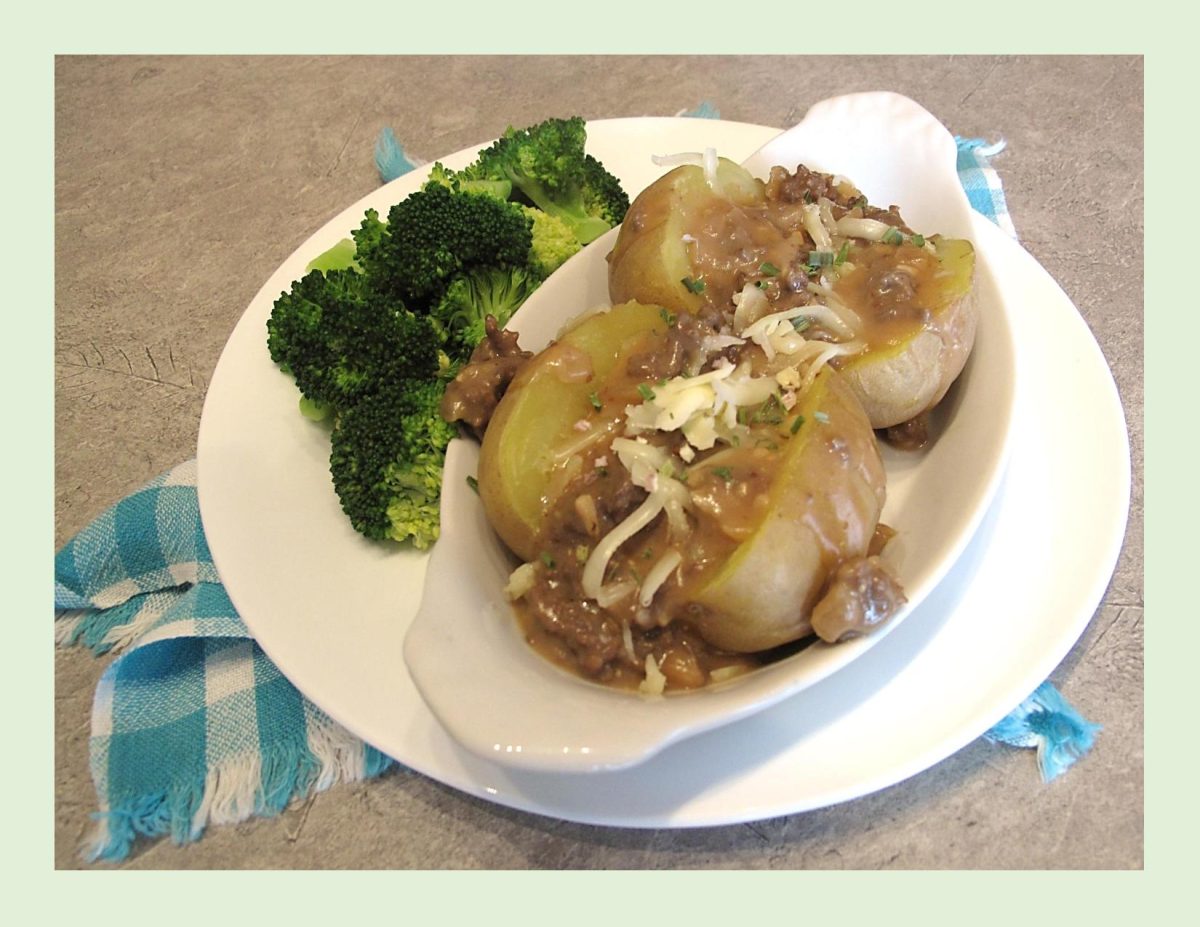
Baked Cheesy Ground Beef Stuffed Potatoes

For the most part, a baked potato with a pat of butter and a little salt is just great on its own. But stuff them with an assortment of savory ingredients such as shrimp, oysters or ground meat and it easily constitutes a whole meal.

I think my first encounter with this idea came when the Wendy’s restaurant chain introduced the Stuffed Baked Potato to their menu in 1983. Their original goal was to give the customer another choice or alternative to the same old ‘fries’. I think it retailed for 99 cents at the time. The one I remember having a couple of times was with cheese sauce and fresh broccoli. It tasted great to me, not being a fried food lover.  Of course, since then the whole concept has been ratcheted up in both flavor and eye appeal.

This version is browned ground beef in a cheesy mustard béchamel sauce served over baked potatoes. Makes such a super good meal with a bit of steamed broccoli.

Print Recipe
Baked Cheesy Ground Beef Stuffed Potatoes
Votes: 1
Rating: 5
You:
Rate this recipe!
Servings
Votes: 1
Rating: 5
You:
Rate this recipe!
Instructions
  1. Pre-heat the oven to 400 F.
  2. Wash the potatoes & pat dry. Prick with a knife or the tines of a fork, place on the oven rack and bake for approximately 45 minutes or until tender.
  3. While the potatoes are cooking, brown the ground beef in a large skillet. Season with 1/4 teaspoon of salt & set aside.
  4. In a separate pan, add 1 tablespoon of the butter & the diced onion. Cook on medium low heat, stirring often, until the onions begin to caramelize. Add the minced garlic, continue cooking for another minute and then remove from the heat. Add the cooked onion & garlic mixture to the cooked ground beef.
  5. In the pan, melt the remaining 3 tablespoons of butter & whisk in the flour. Cook for a minute to make a roux. Slowly whisk in the beef stock, milk, Worcestershire sauce, mustard, salt, ground black pepper & shredded cheddar cheese. Continue cooking & stirring, on low heat, until the mixture begins to thicken. Add the beef mixture into the sauce.
  6. When the potatoes are cooked, slice open and pour on the cheesy beef mixture. Garnish with parsley if you wish. Serve hot.

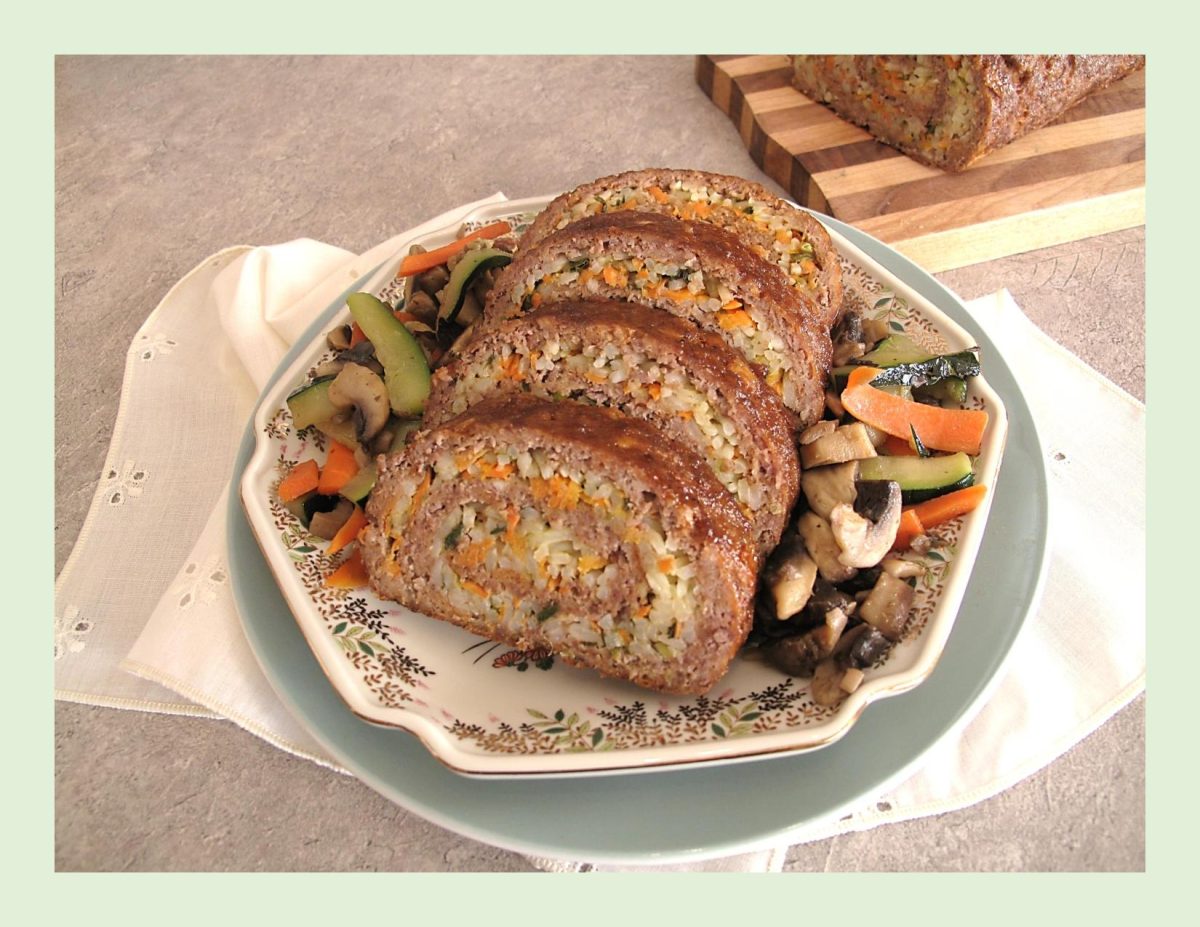
Hoisin Beef & Rice Roulade

Hoisin is not a sauce I use regularly but in this case I found it puts a nice Asian twist on a traditional meatloaf. Impressive enough to serve to guests but easy enough to prepare on a weeknight.

The history of hoisin sauce is as rich and complex as its flavor. The name ‘hoisin’ comes from the Chinese phrase meaning ‘seafood sauce’ due to its seafood-like flavor but ironically, the sauce doesn’t contain any seafood. It’s believed to have originated in southern China, and its use has evolved over centuries. Once a luxury only the wealthy could afford, it has become a staple in Chinese households and restaurants worldwide. An intriguing tale associated with hoisin sauce is its role during the mid-Autumn festival in China, where it’s used in preparing traditional mooncakes, symbolizing unity and completeness.

Traditionally, hoisin sauce was made from fermented soybeans, rice wine, sugar, spices, and other ingredients. Today, hoisin sauce is widely used in many Chinese dishes including Peking duck, dim sum, barbecued pork, and spring rolls. It has also become a popular ingredient in other Asian cuisines such as Japanese and Vietnamese.

Hoisin sauce is a culinary chameleon, seamlessly blending into a wide array of dishes. Some of the many roles of hoisin sauce are as a

  • Dipping sauce for spring rolls, dumplings, and other appetizers. Its sweet and savory notes perfectly balance the flavors of these bite-sized delights.
  • As marinade and glaze hoisin sauce works wonders with meats like chicken, pork, and beef. The sugars in the sauce caramelize beautifully when grilled, creating a rich and flavorful exterior.
  • Adding hoisin sauce to stir-fried vegetables and proteins introduces a delectable dimension to your dishes. Its thick consistency helps create a glossy coating that clings to the ingredients, delivering an irresistible taste in every bite.
  • From noodle stir-fries to fried rice, hoisin sauce can elevate these dishes with its unique blend of flavors. Just a drizzle can transform a simple plate of noodles into a gourmet delight.
Print Recipe
Hoisin Beef & Rice Roulade
Votes: 1
Rating: 5
You:
Rate this recipe!
Course Main Dish
Cuisine Asia
Servings
Votes: 1
Rating: 5
You:
Rate this recipe!
Instructions
  1. Prepare rice according to package directions. Cool slightly. Stir cooked rice with carrot, red pepper, green onion & cilantro. Reserve.
  2. Preheat oven to 350 F. In a medium sized bowl, stir breadcrumbs with milk, eggs, ginger, Worcestershire sauce, garlic, salt & pepper. Let stand for 5 minutes.
  3. Line a rimmed baking sheet with foil. Grease foil well; top with a second sheet of foil (to use as a guide when rolling the beef). Crumble beef into bread crumb mixture; mix gently until combined. Press the beef into a 1/3-inch thick, rectangular layer on the prepared baking sheet.
  4. Spread rice mixture evenly over the beef, leaving a 1-inch border around the edge. Roll beef, jellyroll-style, using the top layer of foil to guide & shape the beef into a compact log. Discard extra foil. Smooth the surface using fingers to fill in any gaps. Pinch ends closed. Bake for 45 minutes.
  5. Meanwhile, stir hoisin sauce with lime juice, ketchup, honey & sesame oil; brush evenly over roulade. Bake roulade for an additional 15 minutes.

Baked Salmon Balls w/ Orange Pineapple Glaze

Salmon croquettes are basically a version of a salmon cake, salmon balls or patties and can be fried or baked. They were originally made of beef, probably leftovers that needed to be used up. Croquettes originated in France in about 1898 by the founder of classical French cuisine, Escoffier. As Escoffier’s chefs started to travel throughout the world, they took the recipe with them to other cultures where it was transformed based on local cuisines. From the original beef croquette, it branched out into salmon croquettes, chicken, vegetarian, and many other versions.

There are many variations of ‘croquettes‘ on the market, and just about every culture has developed their own recipe. Constantly, new recipes are formulated and something new is invented and created. With the input of different cultures, the original recipe has taken itself into many directions, different applications and ingredients. Very often salmon croquettes (cakes, balls or patties) are made with canned salmon though there are quite a few newer recipes that use fresh salmon that has been either chopped finely or ground to mold into the various shapes.

I think, using a zesty orange-pineapple glaze is the perfect compliment to these baked salmon balls.

Print Recipe
Baked Salmon Balls w/ Orange Pineapple Glaze
Instructions
Salmon Balls
  1. Preheat oven to 350 F.
  2. If using canned salmon, drain & flake well. If using fresh salmon, brush with olive oil and season lightly with salt and pepper. Grill for about 6 minutes or bake wrapped in foil at 350 F. for approximately 10 minutes. When cool, flake salmon. Add carrot, green onion, potatoes, tartar sauce, egg, lemon juice, Worcestershire sauce, cilantro paste, Old Bay Seasoning, salt & pepper. Combine well.
  3. Using a small scoop (about 1/2 oz size), measure salmon mixture out into palm of your hand & gently roll into balls. Mixture should make about 32 balls.
  4. Roll salmon balls in Panko crumbs & place on a well buttered or sprayed baking sheet. Lightly spray tops with spray as well.
  5. Bake about 30-40 minutes, turning halfway through. Remove from oven.
Glaze
  1. Place all glaze ingredients into a small saucepan over medium heat. Stir gently & simmer for 15-20 minutes or until liquid begins to thicken slightly & reduces by half.
  2. Drizzle over salmon balls or serve on the side. These salmon balls are nice served with rice & a steamed veggie.

Pulled Pork w/ Roasted Rhubarb Sauce

Slow cooked meat is definitely not a new thing. Truly authentic pulled pork is actually a barbecue dish, cooked for hours over a charcoal pit until it falls apart, ready to be easily shredded or ‘pulled’ apart to serve.

I’m sure most of us have attended a classic Hawaiian Luau at one time or another in our lives. The main course of this Hawaiian feast is always the ‘kalua’ roast pork. Kalua is a traditional Hawaiian cooking method that utilizes an ‘Imu’, a type of underground steam oven.

My experience, was that it was definitely pull-apart tender but far too greasy for my liking. It has taken a lot of years for me to want to make even a North American version of this pulled pork idea. To my surprise, it didn’t turn out greasy and was pretty tasty.

The idea that it has to be roasted in an outdoor pit is really not true. It can be made easily in a standard domestic oven. Of course the seasonings, temperatures and serving methods are all open to debate.

Pork shoulder is ideal for pulling purposes, either bone-in or boneless. It has an optimum fat content that yields to create tender, ‘melty‘ meat, but its essential to cook it slowly to allow the protein to break down properly. Using a dry rub will also help create tenderness and flavor.

There are numerous ways you can serve pulled pork such as on some fresh brioche buns, with cornbread or in tacos. We are going to have ours in corn tortillas with some kohlrabi coleslaw and roasted rhubarb sauce.

Print Recipe
Pulled Pork w/ Roasted Rhubarb Sauce
Votes: 1
Rating: 5
You:
Rate this recipe!
Servings
Votes: 1
Rating: 5
You:
Rate this recipe!
Instructions
Pork Shoulder
  1. Drizzle pork with 2 Tbsp of oil; sprinkle with spices & orange zest & rub into meat. Place in a plastic zip-lock bag & refrigerate overnight (about 24 hours).
  2. Bring meat to room temperature. Preheat oven to 275 F. Place meat in a roasting pan & bake until thickest part registers 170 F. on a meat thermometer. Basically, roast until it's falling apart. Remove roast from oven & transfer to a large platter. Allow the meat to rest for about 10 minutes. While still warm, take 2 forks & 'pull' the meat to form shreds. Keep warm until ready to assemble tortillas.
Roasted Rhubarb Sauce
  1. Prepare sauce on the day you START to marinate meat.
  2. Preheat oven to 425 F. Line a baking sheet with foil & spray generously with non-stick cooking spray.
  3. Place chopped rhubarb & garlic cloves on the prepared baking sheet. Roast for 15-20 minutes, or until rhubarb is soft.
  4. Transfer the rhubarb & garlic to a food processor or blender. Puree with one cup of water until smooth.
  5. Pour the puree into a medium saucepan. Add remaining ingredients & mix well. Add additional water, as needed, until sauce is desired consistency.
  6. Bring to a simmer over medium-low heat. Simmer for 10-15 minutes. Cool before pouring into a small glass pitcher. Refrigerate any leftovers when meal is finished.
Kohlrabi Coleslaw
  1. Prepare dressing in a screw-top jar; combine vinegar, oil, sugar, salt & pepper. Cover & shake well. In a bowl, combine kohlrabi & carrots; drizzle with dressing.
Assembly
  1. During the roasting time of the meat, prepare kohlrabi coleslaw. When everything is ready, lay out warm tortillas, top with coleslaw & pulled pork shreds. Drizzle with prepared rhubarb sauce. Fold or roll tortilla & enjoy!
Recipe Notes
  • Instead of drizzling the rhubarb sauce, you can put your shredded pork in a bowl with some rhubarb sauce & combine. I find that distributes the sauce more evenly ... just a personal preference.