Chocolate Covered Strawberry Mousse Domes

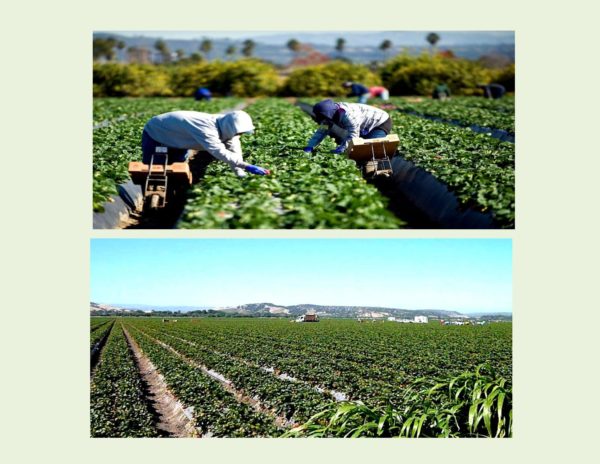
Strawberries — loved for their sweet taste and heart shape, have symbolized purity, perfection, love and passion throughout the ages. It is very common for us to give little thought to where our food comes from and the back breaking labor that it took to get it to our various parts of the country.

Travel can always be filed under the category ‘learning experience’. I find it so important to set oneself outside our ‘bubble’ to fully understand and not become complacent about the many things we take for granted.

Over the years, Brion and I have spent many holiday hours travelling along the Big Sur coast of California, USA. While there we would use Monterrey as our ‘home base’ and make little day trips to the surrounding area. Just inland from Monterrey is the agricultural jewel known as the Salinas Valley. This is one of the major valleys and most productive agricultural regions of California. Having a unique coastal environment with its western ocean exposure (less than 10 miles away) provides moderate temperatures year-round. Warm sunny days and cool foggy nights are the perfect combination for growing strawberries.

I find myself going back to those years I was raised on the farm when Brion & I were driving along looking at the fields of produce growing. I have often felt much appreciation and compassion for the farm workers standing, bent over in the heat of the blazing sun for hours tending these crops.

I have many memories of my own parents working long, hard hours to provide for us on our family farm. I am grateful to have learned to appreciate the efforts of others that make life good.

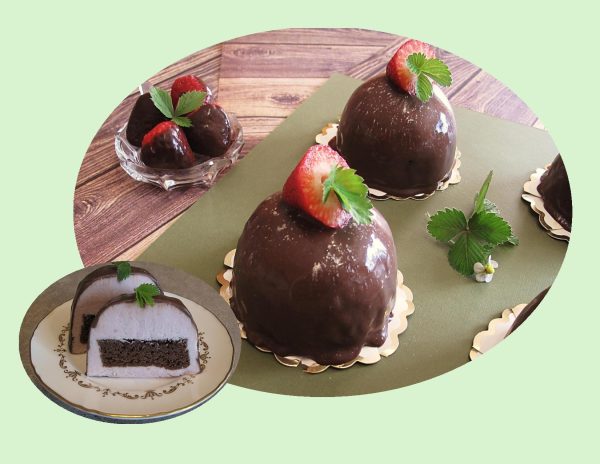
These strawberry mousse ‘domes’ celebrate those wonderful strawberries as well as satisfying the chocolate lover.
Print Recipe
Chocolate Covered Strawberry Mousse Domes
Votes: 1
Rating: 5
You:
Rate this recipe!
Servings
Ingredients
Servings
Ingredients
Votes: 1
Rating: 5
You:
Rate this recipe!
Instructions
Brownie
  1. Preheat oven to 350 F.
  2. Lightly butter a 9 x 5-inch loaf pan & line with a 9-inch strip of parchment paper (the two short ends will be uncovered); lightly butter parchment.
  3. Melt butter in a medium saucepan. Remove from heat & add chopped chocolate, stirring until smooth (the residual heat from the pan should be plenty to melt the chocolate.)
  4. Stir in sugar; mixture should be lukewarm, no longer hot to the touch. If it's still pretty warm, let it cool for a minute or two.
  5. Whisk in eggs until batter is smooth & shiny.
  6. Sift together flour, cocoa powder, baking powder & salt in a small bowl. Sprinkle over chocolate mixture & fold with a spatula until just incorporated.
  7. Pour batter into prepared pan & spread into an even layer. Bake for about 20 minutes or until top is set & a toothpick inserted near the middle comes out with moist crumbs (not gooey batter). Set pan on a wire rack & let cool completely. The brownie layer can be made a day ahead of time; once cool, cover pan tightly and refrigerate overnight until ready to use.
  8. Lift the cooled brownie out of the pan using the parchment overhang as handles. Cut off the edges, then cut into six 2-inch squares.
Strawberry Mousse
  1. Place water in a small dish; sprinkle gelatin over top & set aside to bloom for at least 5 minutes.
  2. Heat milk in a small saucepan set over low heat until it just starts to steam (try not to let it boil).
  3. Mix together egg yolk & sugar in a bowl until it forms a thick paste. Slowly spoon some of the hot milk into the yolk mixture, whisking constantly until the paste thins out a bit. Drizzle in the remaining milk & whisk until smooth.
  4. Return mixture to the saucepan & return to low heat & cook, stirring & scraping the bottom of the pan consistently, until the mixture thickens slightly to coat the back of a spoon.
  5. Remove from heat & whisk in gelatin until smooth. Transfer to a medium-large bowl & set aside.
  6. Meanwhile, purée strawberries & lemon juice in a blender or food processor until smooth. Transfer to a liquid measuring cup (you should have about 1/2 cup purée, if you have more than that save the excess for another use). Whisk strawberry purée into lukewarm custard mixture, then place bowl in refrigerator while you whip the cream.
  7. In a clean bowl or the bowl of a stand mixer, beat heavy cream until it holds soft peaks. Add 1/3 of cream to the cooled strawberry mixture & fold to lighten, then add remaining cream & fold until fully incorporated & no white streaks or lumps remain.
  8. To assemble your cakes, spoon or pipe the mousse into 5- (4 oz) silicone dome molds (they’re just over 3 inches in diameter), about 2/3 of the way full. Gently press a brownie square into the top of each mousse-filled mold. Scrape with an offset spatula to make the top perfectly level with the top of the mold. Freeze at least 3 hours or overnight until completely firm.
  9. Before you make the glaze, remove cakes from molds and place on a frozen cookie sheet lined with parchment paper. Return to freezer until just before glazing.
Glaze
  1. Place chopped chocolate in a medium-sized, heat-proof bowl and set aside.
  2. Heat cream & corn syrup in a small saucepan until it just starts to bubble (do not let it boil).
  3. Pour over chopped chocolate & let sit for 30 seconds, then gently whisk, starting in the center & moving in gentle concentric circles until an emulsion forms, then working your way out to the edges until the entire mixture is smooth & emulsified.
  4. Remove cakes from freezer & place on a cookie sheet, elevated off the sheet using small jars or cookie cutters (ideally something smaller in diameter than the cake itself so the glaze can drip off). You may also want to cut out small rounds of parchment to place under each cake to make them easier to transfer.
  5. Pour glaze generously over cakes, taking care to ensure there are no bare spots left. Gently scrape the edges to remove any remaining drops, then carefully transfer cakes using a small offset spatula to cardboard cake rounds or small pieces of cardboard for easy movement. Any leftover glaze can be scraped up & refrigerated in an airtight container for another use.
  6. Glazed cakes will keep in the refrigerator for up to 3 days. Let come to room temperature before serving.
Blackberry Cheesecake Galette

Is it a crostata or a galette? There’re actually two different names for the same thing. A galette and a crostata are essentially the same type of dessert (one comes from France and one comes from Italy). Crostatas and galettes are typically free-form and rustic, with the dough edges folded up around the filling.

When it comes to pastries and cakes, the French have given the world more techniques, recipes and methods than anyone else. No other country has taken the simple combination of flour, dairy and heat to create such a varied range of delicious dishes, both sweet and savory.

Blackberries are sometimes forgotten, unlike their more popular cousins’ strawberries and blueberries. Even if you don’t love them raw, baked blackberries are something special.

Blackberries are cherished for their enticing flavor, nutritional value, and versatility in recipes. Whether enjoyed as a fresh snack or incorporated into mouthwatering dishes, blackberries remain a beloved fruit that connects us to a rich tapestry of history and nature.

Today I’m making a blackberry cheesecake galette. The combination of buttery pastry and juicy, plump blackberries with cream cheese is simply heavenly.

Print Recipe
Blackberry Cheesecake Galette
Votes: 1
Rating: 5
You:
Rate this recipe!
Servings
Votes: 1
Rating: 5
You:
Rate this recipe!
Instructions
Pastry
  1. In a small bowl, combine sour cream & ice water; set aside. In a large bowl, whisk together flour, cornmeal, sugar & salt. Using a pastry blender or finger tips, cut in the butter until mixture resembles BOTH coarse crumbs & small peas. Sprinkle the cold sour cream mixture over dough, 1 Tbsp at a time, tossing with a fork to evenly distribute it. After you have added all the sour cream mixture, dough should be moist enough to stick together when pressed; if not, add additional cold water, 1 tsp at a time. Do not overwork dough.
  2. Press dough into a disk shape & wrap in plastic wrap. Refrigerate for at least 2 hours. The dough can be kept in the refrigerator for a day or two or it can be wrapped airtight & frozen for a month. Thaw, still wrapped in refrigerator.
Filling
  1. In a small bowl, combine 1 Tbsp sugar with 1 Tbsp cornstarch. Sprinkle over blackberries with a squeeze of lime juice. Set aside.
  2. In a medium bowl, beat softened cream cheese with whole egg & egg white until light & fluffy. Beat in 7 Tbsp sugar, zest, vanilla & a pinch of salt.
Assembly
  1. Preheat oven to 375 F.
  2. Remove pastry from refrigerator. On a large sheet of parchment paper, roll out pastry dough into a 12-inch circle. Spread cream cheese mixture evenly over dough, leaving a 1 1/2-inch border. Spoon the blackberry mixture over cream cheese, leaving any excess juice in bowl. Gently fold outside edges of pastry over, pleating to hold filling in. Brush with egg wash & sprinkle with coarse sugar.
  3. Bake 45 minutes or until filling bubbles up & crust is golden. test with knife to see that the cream cheese is set. Cool for at least 20 minutes on a wire rack before serving.

Wool Roll Bread w/ Apricot Filling

Today, March 28th, is my mother’s birth date. As we honor her beautiful memory, I’m sure each of my siblings will reflect on special times we shared with her. Forty-seven years after her passing, I find myself still doing many things in her likeness. Baking was a shared passion for my mother and I. We liked nothing better than to bake something together. After I moved from ‘home’ and would return for a visit, instead of having a coffee and visit we would get busy and bake something while we talked. Such great memories!

When I was thinking about what I wanted to post today, my mind drifted to the recipe archive that lives in my head, eventually making its way to the yeast breads. This is an area my mother had mastered down to a science.

Bread is so simple but a staple in almost every culture. Just flour, water and yeast, yet despite those few ingredients, there are hundreds of different types of bread across the world. And every culture has some sort of bread product.

It seems that the Wool Roll Bread become trendy in 2021 because of a Malaysian YouTuber. It also resembles some Middle Eastern breads such as shoreek and other European creations, such as Polish babka and Slovenian Belokranjska povitica. The pillowy yeast dough can be stuffed (or not) with a sweet or savory filling, then sliced, rolled and stacked in a round pan, so as the dough rises and bakes, the final result resembles rolls of wool or thick yarn.

The most popular fillings for wool roll bread are dried fruit, nuts, cinnamon, custard, hazelnut, chocolate, and cheese as well as some Asian favorites such as red mung bean paste, ube or purple yam, coconut or coconut jam, and meat. Sometimes the dough is made in different flavors and colors like chocolate, strawberry, and pandan.

There is some kind of magic in seeing the result of these baked bread rolls that come together to form a Bundt-like cake shape, puffed up in a ring of pull-apart bread.

I’ve chosen to fill our wool roll bread with an apricot cream cheese filling which should be a nice compliment to the soft dough.

Print Recipe
Wool Roll Bread w/ Apricot Filling
Votes: 1
Rating: 5
You:
Rate this recipe!
Servings
Ingredients
Apricot Filling
Cream Cheese Filling
Bread Dough
Servings
Ingredients
Apricot Filling
Cream Cheese Filling
Bread Dough
Votes: 1
Rating: 5
You:
Rate this recipe!
Instructions
Apricot Filling
  1. In a small saucepan, combine dried apricots, orange juice, lemon juice & sugar. Bring to a simmer over medium low heat. Simmer uncovered for 10-15 minutes, stirring occasionally, until the apricots soften & the liquid is reduced by half. Once cool, transfer the mixture to a food processor & process until a puree forms. Set aside until room temperature.
Cream Cheese Filling
  1. In a small bowl, beat the cream cheese & sugar until smooth. Add egg yolk & vanilla, beat to combine. Set aside in refrigerator until ready to use.
Bread
  1. In a small bowl, combine warm milk, sugar & yeast. Let the mixture sit for about 10 minutes until it becomes frothy.
  2. In a large bowl, Combine flour & salt. Cut in the soft butter. Combine lukewarm water with the beaten egg & add to flour/butter mixture. Add the yeast mixture & mix until a dough forms.
  3. Knead the dough for about 10 minutes or until it becomes smooth & elastic. Once the dough is kneaded, place it in a greased bowl, cover with a damp cloth & allow to rise in a draft-free place for about 1 hour or until doubled in size.
  4. Lightly oil a work surface with olive oil. Gently deflate the dough, divide it into four equal pieces & shape each piece into a ball. Cover the dough & let rest for 10 minutes.
  5. Line a 9" springform pan (at least 2" deep) with parchment paper.
  6. Roll out each piece of dough (on the lightly oil surface) into a 6" x 12" rectangle. On the top HALF of each rectangle, spread the cream cheese filling across the entire width of the rectangle (leaving about 1/4" bare on each side) & down about 6" leaving the bottom 6" bare. Next, spread a good sized dollop of apricot filling over the cream cheese filling. Use a fork so you can do this gently.
  7. Using a sharp knife, cut the uncovered dough at the bottom into very thin strips about 1/8" wide. Starting from the filling covered top & rolling toward the uncovered strips, roll the dough into a log about 6" long.
  8. Place each log, seam-side down, into the bottom of the pan so they are snuggled up against the pans outside edge to form a complete circle.
  9. Preheat to the to 350 F.
  10. Brush the rolls lightly with milk, being careful not to deflate the delicate dough. Cover the 'wool rolls' & let them rise for about 60-75 minutes, until puffy.
  11. Bake for 28-32 minutes, until golden brown on top. Remove the roll from the oven & cool it in the pan until you can transfer it safely to a rack to cool completely. Slice & serve.

Cornmeal-Anise Guava Cookies

Sweet guava paste paired with savory corn makes the perfect combo, even if it sounds a little weird, it couldn’t be better.

Guava paste is an ingredient that is used in many Cuban, Caribbean and South American recipes. This specialty ingredient, also known as goiabada or pasta de guayaba, is basically candied guava puree. It is made by cooking together guava fruit and sugar until it is very, very thick and then leaving the mixture to dry to remove excess moisture. This results in a paste that keeps well and is very flavorful. While the exact consistency of guava paste can vary from brand to brand – some are very dry and similar in texture to fruit leather, while others are more moist and slightly more jam-like, they are all thick enough to slice and serve. Guava paste, with its distinct and tropical flavor, is equally good in desserts as well as savory dishes.

If you like corn, chances are you are also a big fan of cornbread in its many interesting forms. I used to think that cornbread was so good it didn’t need anything extra thrown in the ‘mix’.

The beauty of cornbread is that it can take on so many different flavors. It can be sweet, savory or as spicy as you would like. Thanks to its simplicity, there are very few food items it wouldn’t pair with, so its limits of culinary creations are endless.

I can’t remember if there was ever a time I didn’t like corn. I love everything about it … the taste, the smell, how beautiful it looks growing in the garden and of course the memory of my mother’s cornbread straight from the oven. While these cookies aren’t necessarily a classic cornbread, they make a very interesting ‘dessert’.

Print Recipe
Cornmeal-Anise Guava Cookies
Votes: 1
Rating: 5
You:
Rate this recipe!
Servings
Ingredients
Servings
Ingredients
Votes: 1
Rating: 5
You:
Rate this recipe!
Instructions
  1. In a large bowl, cream butter, cream cheese, sugar, egg yolk, orange juice & extract with an electric mixer.
  2. In another bowl, whisk together flour, cornmeal, anise seed, baking powder & salt. Using a spatula, add to wet mixture & mix well. Cover with plastic wrap; chill 2 hours or overnight.
  3. Preheat the oven to 375 F. Line baking sheet with parchment paper.
  4. Shape dough into 1-inch balls & arrange on baking sheet, leaving about 2-3-inches between cookies. Flour the end of the handle of a wooden spoon & make a well in the center of each cookie. Cut a few slices from the guava paste, about 1/2-inch thickness. Cut into cubes. Place a piece of guava in the center of each cookie.
  5. Bake for about 15 minutes or until very light golden. Cool cookies on baking sheet for 2 minutes before transferring to a wire rack to cool completely.

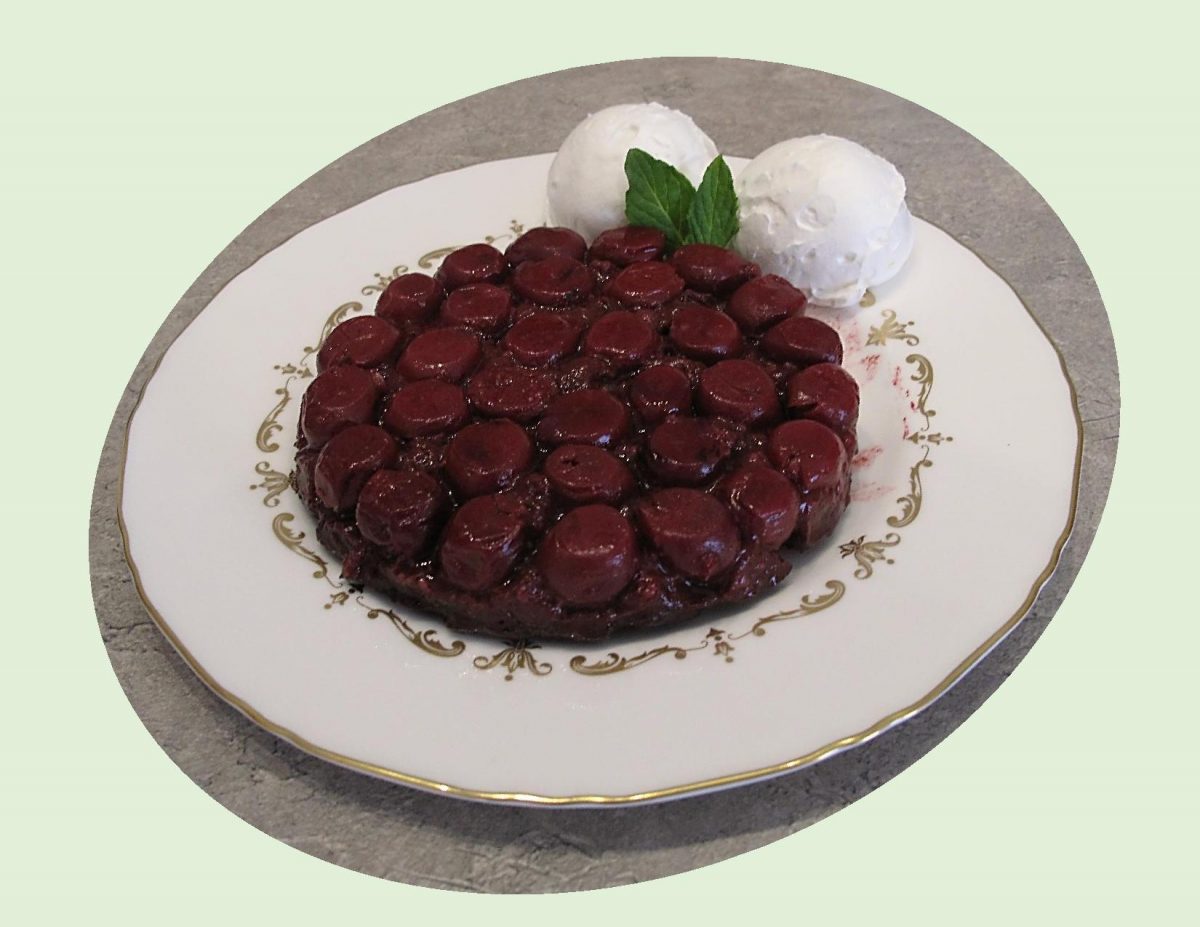
Black Forest Desserts

While the origins of the black forest cake aren’t all that clear, some historians believe that its origins can be traced back to the Black Forest Region of Germany. This part of Germany is well known for its sour cherries and ‘Kirschwasser‘ … a clear cherry brandy.

This iconic creation is a layered confection of a liqueur ‘soaked’ chocolate cake with rich whipped cream and sour cherries between its layers. The liqueur and cherries give the cake an intense and unique fruity flavor. It’s these sour cherries which gave it its German name: Schwarzwald Kirsch Kuchen or Black Forest Cherry Cake.

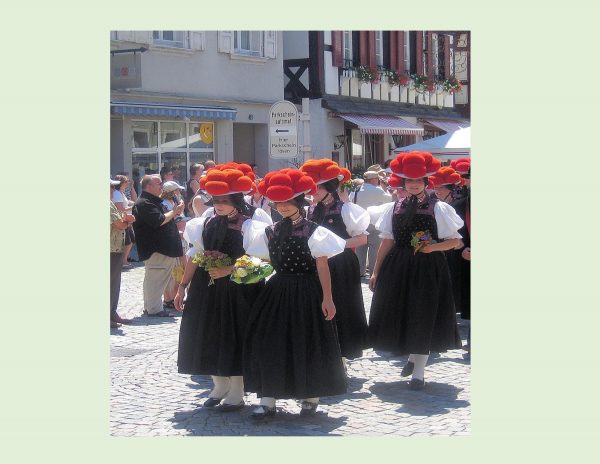
There are many origin stories about the cake. Some sources claim that the name of the cake is inspired by the traditional custom of the women of the Black Forest region, with a characteristic hat with big red pom-poms on top called a ‘Bollenhut’. The earliest published written record of black forest cake was in 1934, by a German confectioner. Today, the cake is well known worldwide and probably one of the most popular cakes in Germany.

Since we just happen to have a nice little sour cherry tree growing in our garden, why not put some of them to good use in these cakes?!

Print Recipe
Black Forest Desserts
Votes: 1
Rating: 5
You:
Rate this recipe!
Course dessert
Cuisine German
Servings
Ingredients
Course dessert
Cuisine German
Servings
Ingredients
Votes: 1
Rating: 5
You:
Rate this recipe!
Instructions
  1. Preheat oven to 350 degrees.
  2. Place 1 tablespoon butter, 1 tablespoon brown sugar, and 1/2 teaspoon cherry juice in the bottom of each of two 8-ounce ramekins. Microwave ramekins until butter and brown sugar are melted and bubbling, about 1 minute. Arrange cherries in a tightly packed layer in the bottom of each ramekin.
  3. In a small bowl, whisk together flour, cocoa, baking powder, and salt. In another small bowl, stir together 2 tablespoons butter and 1/3 cup brown sugar with a wooden spoon until light and fluffy, about 3 minutes. Stir in egg yolk, then flour mixture and milk. Divide batter between ramekins.
  4. Place ramekins on a rimmed baking sheet. Bake until a toothpick inserted in center of a cake comes out with only a few crumbs attached, about 30 minutes. Let cool on a wire rack, 20 minutes.
  5. In a small bowl, beat cream, 1 tablespoon brown sugar, and cherry brandy until soft peaks form. Run a paring knife around edge of each cake and invert onto a plate. Serve cakes with brandy whipped cream.
Recipe Notes
  • Kirschwasser is German for 'Cherry Water', and while it may be as clear as water, it packs quite a punch.  This double distilled brandy made from the sour Morello cherries is, more often than not, simply referred to a Kirsch. This 'not too sweet with a subtle cherry/almond flavored' liqueur is a vitally necessary ingredient to make a traditional Black Forest Cake; for that is where both the cake and Kirschwasser hail from...  The Black Forest, or Schwarzwald, in southwestern Germany.  

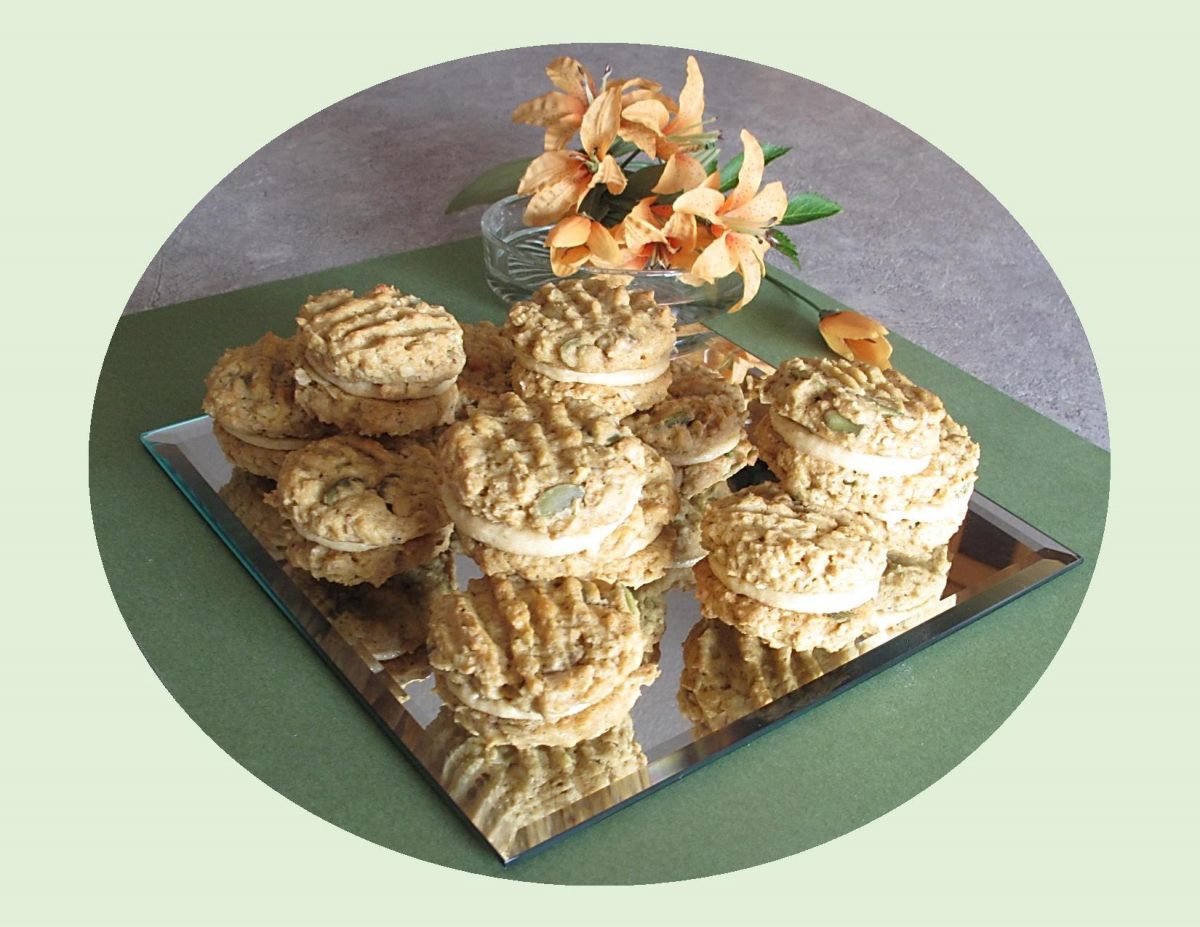
Oatmeal Pumpkin Sandwich Cookies

We are now officially into fall, so its time to think in terms of a bit of pumpkin. I had not considered pumpkin as part of a sandwich cookie before, but oatmeal with pumpkin and cream cheese makes good sense to me. There’s more to oatmeal cookies than the recipe on the Quaker Oats box. In fact there’s a lot of amazing combinations out there but first a bit of food history.

Oatmeal cookies evolved from oatcakes, a type of plain flatbread made centuries ago by the British and the Scots. Raisins and nuts were added to the mix somewhere around the Middle Ages to make them tastier. When oatmeal cookies became elevated to the ranks of ‘health food’, a recipe for them appeared on containers of Quaker Oats. These recipes were circulated widely and oatmeal cookies were soon common in households throughout North America.

An important part of these cookies lies in the spices. Rather than using a pre-made ‘pumpkin pie spice’, I like to give them a personal touch by using my own combination. This way, you can control the flavor better. Feel free to adjust the spice mix to suit your taste or just simply go with cinnamon.

Print Recipe
Oatmeal Pumpkin Sandwich Cookies
Votes: 1
Rating: 5
You:
Rate this recipe!
Servings
SANDWICH COOKIES
Ingredients
Cookies
Servings
SANDWICH COOKIES
Ingredients
Cookies
Votes: 1
Rating: 5
You:
Rate this recipe!
Instructions
Spice Mix
  1. In a small bowl, whisk together spice mix combination from recipe notes & set aside.
Cookies
  1. In a large bowl, whisk together flour, baking powder, baking soda, salt & 1 1/2 tsp spice mixture; add oatmeal & pumpkin seeds; mix together.
  2. In a bowl, using a hand mixer, cream butter until light & fluffy. Add sugars & beat until fluffy, about 2 minutes. Add pumpkin puree, egg yolk & vanilla; mix to combine. Add flour mixture, mixing ONLY until combined. Place dough in refrigerator & chill for 30 minutes.
  3. Preheat oven to 350 F. Line 2 cookie sheets with parchment paper. Scoop dough into 2 tsp sized balls & place on cookie sheet. Press with a dampened for to flatten a bit. Bake for 10-15 minutes or until done but not browned. Allow to cool for 1 minute before transferring to a wire cooling rack.
Filling
  1. In a bowl, beat together cream cheese & butter until smooth. Add in pumpkin & mix until fully incorporated. Add remaining spice mixture & powdered sugar about 1/4 cup at a time, allowing each prior amount to fully mix into the filling before adding more.
  2. Spread or pipe filling on half of the cooled cookies & top with remaining cookies. This recipe makes 5 dozen filled cookies so you may want to freeze some.
Recipe Notes
  •  Spice Mixture Recipe (2 1/8 tsp):
  • 1 tsp cinnamon
  • 1/4 tsp EACH nutmeg & cloves
  • 1/8 tsp EACH ginger, cardamom & white pepper
  • 1/4 tsp ground star anise


Rhubarb Pastries

Here we are at that time of year when rhubarb makes an appearance once again. As always, if you read my blog, you know I can’t resist featuring numerous rhubarb recipes during its growing season. The question is … do you love it or hate it? It demands an opinion. Is it fruit or a vegetable? Is it red or is it green? Doesn’t matter …. rhubarb is rhubarb. It is what it is and doesn’t care if we love it or leave it.

Today, I have made some rhubarb pastries. The tartness is there, as it should be, but is mellowed a bit by the velvety cream cheese so the sharpness is balanced. The night before just put the frozen puff pastry in the fridge to defrost. Make up the rhubarb compote and cream cheese mixture so they can chill overnight. The next morning its nothing more than a quick assembly job before you are ready to bake them.

Great little ‘upscale’ breakfast pastry!

Print Recipe
Rhubarb Pastries
Votes: 1
Rating: 5
You:
Rate this recipe!
Course Brunch, dessert
Cuisine American, European
Keyword rhubarb danish
Servings
Ingredients
Course Brunch, dessert
Cuisine American, European
Keyword rhubarb danish
Servings
Ingredients
Votes: 1
Rating: 5
You:
Rate this recipe!
Instructions
Rhubarb Compote
  1. In a small pot, place rhubarb, orange juice, sugar, cinnamon, anise, vanilla & ginger. Bring to a boil then reduce heat to low; simmering for about 10 minutes. Rhubarb should be tender but still hold its shape. Set aside to cool completely.
Cream Cheese Filling
  1. In a bowl, beat cream cheese, powdered sugar, egg yolk, salt & vanilla together until well combined. Store in fridge until chilled. As with the compote, the cream cheese bakes better in these when it is chilled.
Assembly
  1. Preheat oven to 400 F. Line a baking sheet with parchment paper.
  2. Lay puff pastry sheet on a lightly floured surface & use a pizza cutter to create 16 small triangles (first cutting eight rectangles & then splitting them into 2 triangles each). Spread each triangle with a thin layer of cream cheese mixture & top with some rhubarb compote. Starting at the long end, roll each triangle into a crescent shape. Transfer pastries to a parchment lined baking sheet with space in between each one.
  3. Refrigerate pastries for 10 minutes then beat together egg white & water. Brush the surface of pastry with egg wash & bake 12-15 minutes or until golden. Allow to rest on baking tray for 5 minutes, then move to a cooling rack.
Topping
  1. In a bowl, whisk together powdered sugar, extract & milk. Drizzle over danish & garnish with toasted almond slices. Serve warm.
Recipe Notes
  • Usually puff pastry is packaged containing 2 sheets. I only wanted to make one but you will definitely have enough of the cream cheese & rhubarb fillings to make both sheets if you wish.

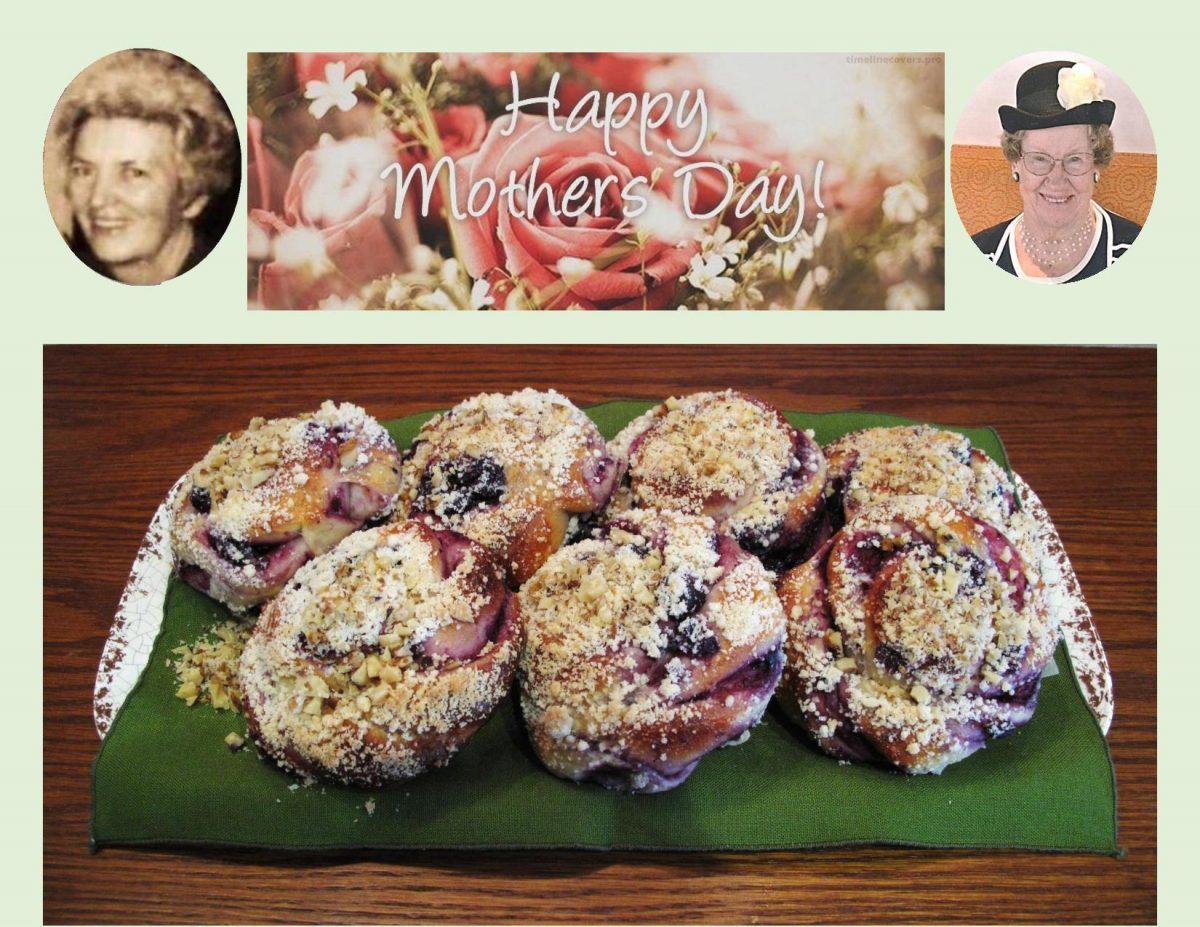
Blueberry Babka Rolls

HAPPY MOTHER’S DAY!

Today as we celebrate Mother’s Day, many special memories come to mind. My mother passed away in 1978 but even after 42 years, time has changed nothing. I still miss the sound of her voice, the wisdom in her advice, the stories of her life and just being in her presence. I miss her today as much as the day she left us and I always will.

It is also with very loving thoughts, I celebrate my mother-in-law, Dolores, for her loving and kind ways and for raising that ‘special’ man I love sharing my life with. Love to my sisters, who gave so much of themselves to be the great mom’s they are.

Babka ….. an old world beauty with roots in both the Jewish and Eastern European communities. A cake like, sweet yeast bread, richer than that of a cinnamon bun but not as rich as a Danish pastry. The name Babka means ‘little grandmother’ in many European languages.

Traditionally, babka was filled with seeds, nuts and sometimes even honey or filled with layers of cinnamon sugar or chocolate. This classic baked good has been making its way into every corner of the food world. A great babka dough is a blank canvas for almost any filling. Many other flavors have been developed and have become equally popular.

Fruit lovers can now indulge in apple-cinnamon or raspberry and apricot cream cheese babkas. There is also a Middle Eastern favorite using halva (sesame candy) or a completely savory version with sun-dried tomatoes.

This bread seems very fitting on our Mother’s Day blog.

Print Recipe
Blueberry Babka Rolls
Votes: 1
Rating: 5
You:
Rate this recipe!
Servings
ROLLS
Ingredients
Babka Dough
Blueberry Filling
Streusel Topping
Servings
ROLLS
Ingredients
Babka Dough
Blueberry Filling
Streusel Topping
Votes: 1
Rating: 5
You:
Rate this recipe!
Instructions
Babka Dough
  1. In a small bowl, place water & sprinkle with the yeast & a pinch of sugar; stir to combine. Allow to stand until frothy, about 5-10 minutes.
  2. In a large bowl, whisk together 4 cups of the flour, sugar & salt. Make a well in the center of the flour & add eggs, yolk & oil. Whisk to form a slurry, pulling in a little flour from the sides of the bowl.
  3. Pour the yeast mixture over the egg slurry. Mix the yeast, eggs & flour with a wooden spoon until a shaggy dough that is difficult to mix forms. Turn dough out onto a floured work surface & knead for about 10 minutes. If the dough seems very sticky, add flour a teaspoon at a time until it feels tacky. The dough has finished kneading when it is soft, smooth & holds a ball-shape.
  4. Place the dough in an oiled bowl, cover with plastic wrap & place in a draft-free area. Allow to rise until doubled in bulk, about 1 1/2 - 2 hours.
Blueberry Filling
  1. In a small saucepan, combine cornstarch, sugars & salt. Add water & blueberries; cook until clear & bubbling. Remove from heat & add lemon juice; cool completely.
Streusel Topping
  1. In a bowl, whisk together flour, powdered sugar, salt & baking powdered. Cut butter into small chunks & add the flour mixture. Using your fingertips, work the butter into the flour mixture until it forms LARGE, coarse crumbs. Place in refrigerator until ready to use.
Assembly
  1. Line a large baking sheet with parchment paper; set aside. On a lightly floured work surface, roll out dough into a rectangle, roughly 40 X 60 cm (15" X 24"). Spread half of the filling on center third of the dough. Fold one of the sides over the center & spread the remaining filling on top. Next, put opposite side of the dough over all & gently press together.
  2. Using a sharp knife or a pizza cutter, cut 15 strips, between 2 - 2.5 cm (3/4"-1") thick. Twist each strand of dough a few times then, holding one end between you thumb & forefinger, coil the dough to form a circle. Finish by pinching the outer end to the ring, so it holds the circular shape when baking. Repeat with remaining strips. Place rolls on lined baking sheet as you make them. Cover baking sheet with plastic wrap & set in a draft-free place until rolls have doubled in size.
Baking
  1. Preheat oven to 350 F. Brush rolls with egg wash. Sprinkle streusel & chopped nuts evenly over the tops, pressing lightly so the crumbs adhere to the rolls. Bake for about 20 minutes or until golden brown. Remove from oven & place on a cooling rack.

Rosca de Reyes

The tradition of a New Year’s Cake is one that spans countless cultures and is meant to symbolize wealth, prosperity, health and good luck for the coming year. The cake or bread usually contains symbolic items baked inside which is believed to give good luck to the receiver.

Most of the cakes are consumed at midnight on new year’s eve … though some cultures cut their cake on Christmas or the Epiphany on January 6th.

In January of 2019, Brion and I spent some vacation time in Merida, Mexico. We stayed at a wonderful boutique hotel called Hotel Del Peregrino. On the morning of January 6th we were served some Rosca de Reyes (cake/bread) at breakfast. This was the first time either of us had tasted this traditional bread. It was absolutely delicious and yes, you might have known, I would not only have to make some, but learn the history behind it.

January the 6th is a special day in Mexico, known as ‘Three Kings Day’, which represents the height of the Christmas season. This date marks the culmination of the 12 days of Christmas and commemorates the three wise men who traveled from afar, bearing gifts for the infant baby Jesus. The day when the wise men found the baby Jesus is known as Epiphany which is the event represented by the Rosca de Reyes.

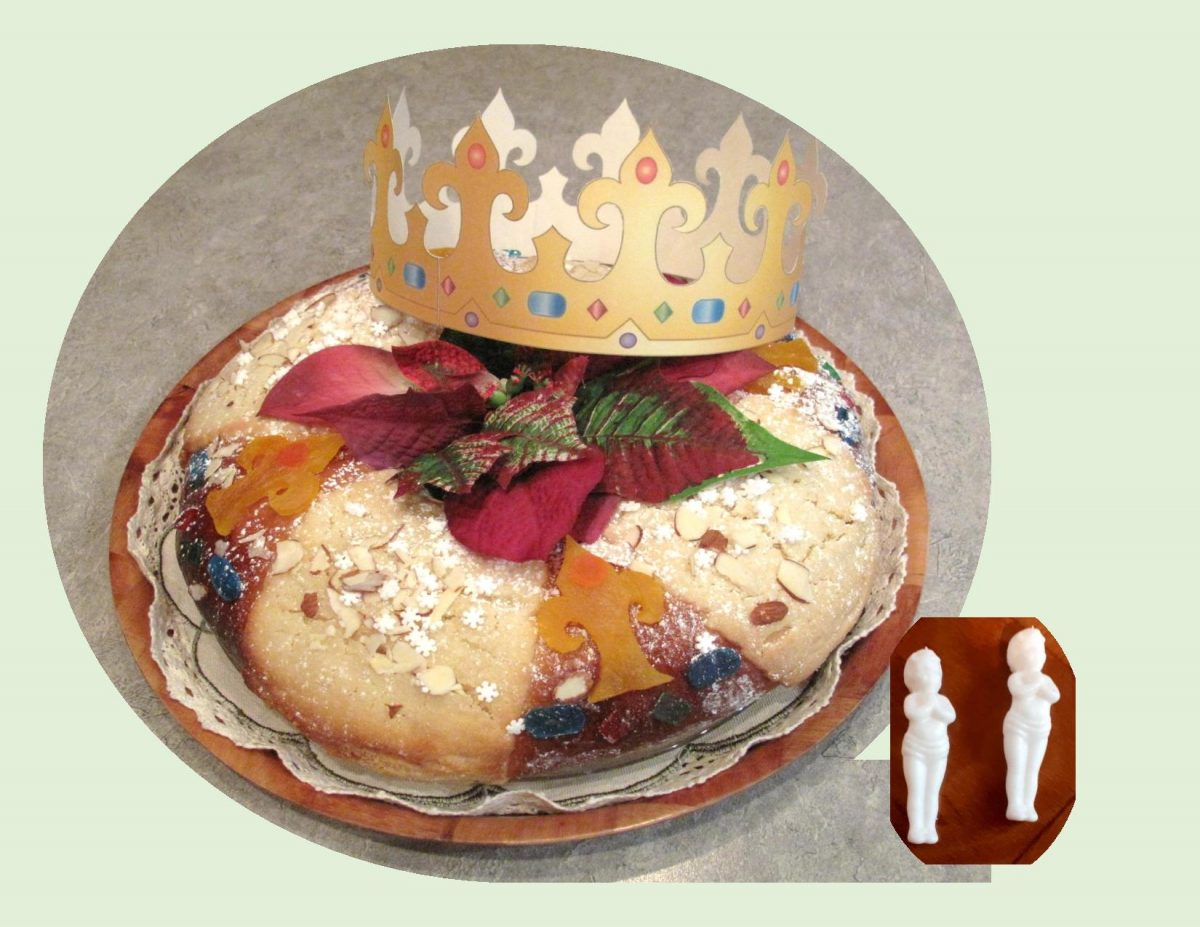
The circular form of the rosca represents God’s eternal love which has no beginning or end. The dried candied fruits that adorn the bread symbolize the King’s crown, while the traditional figurines placed inside the bread represent the baby Jesus. Whoever finds this token is obligated to host an upcoming party on the occasion of ‘Candlemas Day’, a Christian holiday which occurs each year on February 2nd. The traditional menu for this event would be tamales and hot chocolate.

In researching the internet for a traditional recipe for the cake/bread it seems orange and vanilla were usually in the actual dough but as for the decorations, there were a lot of fruit and nut choices. Apart from the circular shape it looked like personal preference dictated your decoration design. Here’s my best interpretation of Rosca de Reyes!

Print Recipe
Rosca de Reyes
Instructions
Bread Dough
  1. In a small bowl, combine lukewarm water, yeast & a pinch of sugar; stir with a fork until dissolved. Allow to stand for 5-10 minutes in a warm place until frothy.
  2. In a large bowl, whisk flour, sugar, salt, anise seed & cinnamon. Make a well in the center of the flour & add eggs, yolk, cooled butter, orange zest & vanilla. Whisk to form a slurry, pulling in a little flour from the sides of the bowl. Pour the yeast mixture over the egg slurry; using a wooden spoon, mix until a shaggy dough that is difficult to mix forms.
  3. Place on a lightly floured work surface & start kneading until you have a smooth dough. It will take about 10 minutes to get good results. Be careful not to add to much flour to your work area, the texture should be soft, smooth & holds a ball shape.
  4. Place in an buttered bowl, cover with plastic wrap. Allow dough to proof in a warm place until doubled in volume, about 1 1/2 -2 hours.
Bread Decoration
  1. In a bowl, cream butter with sugar; add egg yolk & mix until combined. Add flour & continue to mix until a soft dough forms. Refrigerate if your not quite ready to use it yet.
Assembly
  1. Line a baking sheet with parchment paper. When dough has doubled in size, turn onto a lightly floured surface & knead a few times. Shape the dough into a large ring & place it on the prepared baking sheet. Seal the ends to close the ring. Loosely cover with buttered plastic wrap & allow to rise in a warm place for 45 minutes or more until almost doubled in volume.
  2. Preheat oven to 350 F. In a small dish, whisk together egg wash. Divide the 'decoration dough' into 4-6 equal sections. Roll each with your hands until you get a strip long enough to decorate the ring. Brush dough with egg wash.
  3. Place the 'decoration dough' strips around the ring, try to place them facing one another, then decorate the ring with candied or dry fruit such as mango, pineapple, cherries, figs, citron, orange or lemon peel or quince paste strips or any personal choice you wish. Once the ring is decorated, sprinkle it with sugar & sliced almonds.
  4. Bake the bread for 20 minutes or until the bread is a nice golden brown color. Ovens vary so it may take a bit longer. Transfer bread to a wire rack to cool. After bread has cooled insert the plastic baby dolls from the bottom of bread. Some times the plastic dolls are inserted into the bread before baking, personally I think inserting them afterwards works just fine.

Chicken Parmigiana with Basil Sauce

From what I understand, the global dish called chicken parmigiana is a variation on the Italian entree known as eggplant parmigiana. Simply put, you deep fry eggplant, add cheese and tomato sauce and bake it. At some point in time, various regions in the world with large Italian immigrant populations, realized chicken would be an excellent alternative to the eggplant and chicken parmigiana evolved.

In America, the dish became popular around 1958. Often the name has been simplified to just ‘chicken parm‘. Usually composed of fried or breaded chicken fillets, smothered in mozzarella (or provolone), parmesan and tomato sauce all of which is then baked. Another version is using veal instead of chicken. Parmigiana is traditionally served over hot pasta as the main entree but it has also become a sandwich filling favored in subs, hoagies, etc.

In today’s recipe, I’m using parmesan cheese but omitting the mozzarella-tomato sauce. I wanted to accent the flavor with fresh basil in the sauce instead. We quite enjoyed it.

Print Recipe
Chicken Parmigiana with Basil Sauce
Votes: 1
Rating: 5
You:
Rate this recipe!
Course Main Dish
Cuisine American, Italian
Servings
Ingredients
Course Main Dish
Cuisine American, Italian
Servings
Ingredients
Votes: 1
Rating: 5
You:
Rate this recipe!
Instructions
Chicken
  1. In a small bowl, combine breadcrumbs, cheese & parsley. Chop bacon finely & fry until crisp; drain. Add bacon to breadcrumb mixture.
  2. Preheat oven to 350 F. In a saucepan, melt butter, add minced garlic, Worcestershire sauce & dry mustard. Mix well. Dip chicken fillets in butter mixture & place in a shallow ovenproof dish. Press crumb mixture on top of each fillet.
  3. Bake, uncovered for 20 - 25 minutes.
Basil Sauce
  1. In a saucepan, combine oil, vinegar, minced garlic, finely chopped basil leaves & cream; stir until heated through. Add egg yolk & stir until sauce thickens. Do not boil. Season with salt & pepper. Serve over chicken parmigiana.