Bundt pan roasted chicken is an easy method to prop up the bird to roast on all sides in a home oven using the standard Bundt pan. This recipe for roasted chicken showcases a unique way to use your Bundt pan to roast the chicken in a style similar to ‘beer can chicken’.
H. David Dalquist, the owner of Nordic Ware, invented the Bundt pan in 1950. The pan is a modern innovation that can be used for baking cakes and roasting chicken. The Bundt pan’s fluted shape encourages even cooking and browning.
This recipe takes the classic roasted chicken to a whole new level. The unique shape of the Bundt pan allows for even cooking and ensures that every bite is tender, juicy, and bursting with flavor. This simple roasted whole chicken is seasoned with a flavorful rub and placed on the cone of the pan covered in foil, on top of a mix of vegetables, lemon and herbs. All the flavors and juices roast beautifully in the Bundt for an amazing dinner option while containing the juices for an easy cleanup.
Print Recipe
Bundt Pan Roasted Greek Chicken & Vegetables
Votes: 1
Rating: 5
You:
Rate this recipe!
|
|
Votes: 1
Rating: 5
You:
Rate this recipe!
|
Instructions
Preheat oven to 425 F. Line a Bundt pan with foil or lightly coat pan with cooking spray.
In a small dish combine all seasoning ingredients.
In a large bowl, toss potatoes, peppers, onion, carrots, olive oil & 2 tsp seasoning mix. Toss well to coat then place mixture in the bottom of the Bundt pan.
Sprinkle chicken evenly with remaining seasoning. Place chicken cavity over the Bundt pan center with legs facing down on top of the vegetables. Place Bundt pan on a baking sheet.
Bake at 425 for the first 30 minutes then reduce heat to 400 F. Bake until chicken is no longer pink at the bone & the juices run clear, about 1 1/2 - 2 hours. Cover the top half with foil after 30 minutes to avoid over-browning. An instant-read thermometer inserted into the thickest part of the thigh, near the bone, should read 165 F.
Remove chicken to a cutting board to rest for 5-10 minutes. Toss veggies with cheese & dill.
On a serving platter place veggies & top with chicken pieces. Garnish with more fresh dill & lemon zest if perferred.

Who says you can’t have a Linzer cookie in April? Add some lemon-y zing and a butterfly shape and what’s not to love! A descendent of the famous Linzer torte, it’s hard to go wrong with a shortbread-like dough that melts in your mouth and a sweet/tart filling that glues it all together. Linzer cookies employ the same basic recipe as a Linzer torte, but the dough is cut into cookies and form a sandwich around the filling. The top cookie has a small cutout in its center to show off the filling underneath.
The Linzer Torte, the Austrian mother of the Linzer Cookie, is the oldest known written recipe in history. A copy of the recipe was found in the Veronese Admont Abbey’s journals, dated 1653! The tart was baked like a pie with a buttery almond crust, filled with black currant preserves and topped with a latticework crust. The recipe was developed using a crust made of nuts since they were easier to come by at times than wheat for flour. While a black currant tart is a perfect way to end a meal, bakers came up with a cookie version they could stock in their shops.
When the Linzer torte was bought to North America in the 19th century, it became very popular. Today, the Linzer cookie is still very commonly used not only for the holidays but anytime of the year in different applications.
This cookie is crisp if served on the same day it is assembled but becomes soft when stored with filling.
Print Recipe
Lemon Poppy Seed Linzer Butterflies
Votes: 1
Rating: 5
You:
Rate this recipe!
|
|
Votes: 1
Rating: 5
You:
Rate this recipe!
|
Instructions
Shortbread
In a large bowl, cream butter, white sugar, powdered sugar, vanilla, lemon juice & lemon zest with an electric mixer until light & fluffy. Reduce speed to low & add the flour & salt. Continue to mix until well incorporated. Slowly add poppyseeds & mix until just combined, about 1 minute.
Remove dough from bowl, form into a disk & wrap tightly in plastic wrap. Chill for at least an hour or overnight.
Lemon Curd
Fill a medium saucepan, about halfway full with water & bring to a boil. Reduce heat to a simmer. Fill a large bowl with ice water & set aside.
In a glass or metal bowl, whisk together egg, egg yolks, sugar, lemon juice, lemon zest & salt. Set over the saucepan of simmering water, ensuring that the bottom of the bowl is not touching the water. Whisk the mixture constantly until it reaches 170 F. Immediately remove the bowl from the heat, add butter & whisk until smooth. Place over the bowl of ice water. Cover with plastic wrap making sure it is touching the lemon curd surface so a 'skin' will not form. Let mixture stand at room temperature until cooled & thickened.
Baking
-
Roll out shortbread dough on a large sheet of parchment paper to 1/8-inch thickness. Using a butterfly cookie cutter, cut out 36 cookies. Leave 18 of them as is & cut some designs in the wings of the remaining 18 cookies. At this point you may need to place the cookies in the freezer for about 10 minutes so you can remove them easily to the baking sheet without destroying their shapes.
Line a cookie sheet with parchment paper & transfer cookies to baking sheet. Bake for about 8-10 minutes or until just baked. Place cookies on a wire rack to cool completely.
Assembly
Spread desired amount of lemon curd on the bottom cookies. If desired, dust the tops with powdered sugar. Lightly press on a top cookie to sandwich the curd. Repeat with remaining tops. Store in the refrigerator for up to 3 days.
Recipe Notes
• Don’t hesitate to speed up the process by purchasing a jar of lemon curd. There are a lot of real good ones available.

Artichokes can be intimidating with their seemingly endless layers of tough leaves and spiked ends. Approaching these vegetables in their fresh form may demand a little know-how, but the nice thing is that today’s supermarkets often stock canned artichoke hearts, which eliminates most of the hard work and preparation.
A gratin is the term used for any dish that is topped with breadcrumbs, cheese or both and then baked until crisp and golden. This method of cooking is commonly used with potatoes, but can easily and equally deliciously, be used for a variety of different ingredients.
This particular gratin incorporates both shrimp and artichokes in a lemon béchamel sauce which complements the shrimp as well as the almost lemony flavor of the artichokes, resulting in a wonderfully creamy and bright tasting dish.
Print Recipe
Creamy Shrimp & Artichoke Hearts Gratin
Votes: 1
Rating: 5
You:
Rate this recipe!
|
|
Votes: 1
Rating: 5
You:
Rate this recipe!
|
Instructions
-
Drain the artichoke hearts & set aside.
Generously sprinkle shrimp with Old Bay seasoning. In a large saucepan, heat 1 Tbsp of the butter & sauté the minced garlic & shrimp. When shrimp is almost cooked, remove from saucepan & set aside.
In a medium-sized bowl, mix together the Gruyère cheese & fresh breadcrumbs; set aside.
In the saucepan (used for cooking shrimp), over medium heat, add the remaining 1 Tbsp butter. Once melted, add the flour, whisking to create a roux.
Slowly incorporate the milk, whisking all the while, to create a thick & creamy béchamel sauce. Stir in the fresh thyme, lemon zest, juice, & salt, then remove the sauce from the heat.
Arrange artichoke hearts in bottom of an oven proof baking dish. Nestle shrimp in the spaces between artichoke hearts. Pour the lemony béchamel sauce over all & top with the Gruyère mixture & black pepper.
Bake for 20-25 minutes until the artichoke mixture is bubbling & the top is golden & crisp. Serve hot.

HAPPY MOTHER’S DAY!
Today as we celebrate Mother’s Day, many special memories come to mind. My mother passed away in 1978 but even after 47 years, time has changed nothing. I still miss the sound of her voice, the wisdom in her advice, the stories of her life and just being in her presence. I miss her today as much as the day she left us, and I always will.
It is also with very loving thoughts, Brion & I celebrate my mother-in-law, Dolores, for her loving and kind ways and for raising that ‘special’ man I love sharing my life with. Love to my sisters, who gave so much of themselves to be the great mom’s they are.
In honor of these two precious women who prepared so many wonderful meals for us years ago, I like to post something special on this day. My choice this year are these unique looking raspberry curd tart cases.
I think tart rings give these little tarts more of an upscale look, fitting for the occasion. Using rings instead of tart pans gives such a clean look. Being perforated allows for the ring to heat up quicker (along with it being very thin), which allows for better baking. This also allows steam to escape from the crust, which keeps your crust nice and crispy.
I became interested in making curds a number of years ago. Curds differ from pie fillings or custards in that they contain a higher proportion of juice and zest, which gives them a bolder, fruitier taste. Also, curds containing butter have a smoother and creamier texture than both pie fillings and custards, which contain little or no butter and use cornstarch or flour for thickening. Additionally, unlike custards, curds are not usually eaten on their own. It seems fruit curds continue to gain popularity as evidenced by the wide array of recipes available today.
I think these should taste as good as they look.
LOVE TO ALL THE MOM’S OUT THERE READING MY BLOG TODAY!
Print Recipe
Raspberry Curd Tart Cases
Votes: 1
Rating: 5
You:
Rate this recipe!
|
|
Votes: 1
Rating: 5
You:
Rate this recipe!
|
Instructions
Pastry
Combine the flour, powdered sugar, cornstarch, salt, & vanilla in a large bowl. Add the butter & mix with your hands until the butter is broken down into pieces the size of peas & the ingredients are well combined. Add the beaten egg & mix with a spatula until the dough is smooth & the egg is fully incorporated. Don’t overmix.
Turn the dough out onto a large piece of plastic wrap & gently shape it into a ball. Wrap the dough in the plastic wrap & flatten it into a disc. Refrigerate for at least 30 minutes or overnight, until cold but still pliable. It should have the texture of clay. While the dough chills is a good time to make the filling.
When the dough has chilled, unwrap the dough and place it on a silicone baking mat (or parchment paper) on your work surface. Roll it out into a rectangle about 1⁄8 inch thick, using a second silicone sheet on top. The silicone mat makes it easier to lift the rolled-out dough onto the sheet pan later. Make sure to work quickly so the dough doesn’t get too warm.
Place the silicone mat with the dough on a baking sheet.
Using the tart rings, cut out 12 circles of dough. Remove the rest of the dough from around the rings.
Reroll remaining dough between 2 sheets of parchment. Using a sharp knife, slice strips about 10 inches long & 3/4- inch thick (or the thickness of your pastry rings). These strips will make the sides of each tartlet. At this point you may want to place the sheet of strips in the freezer for about 5-10 minutes so they will be easier to work with.
Working with one at a time, transfer a strip of dough to one of the tart rings and press it to the sides. Use your fingers to slightly push the bottom of the sides to the dough circle (to seal it). Repeat with the remaining strips of dough.
On another sheet of silicone or parchment, roll out any leftover dough & cut 12 tartlet case tops. Cut round holes in various sizes in them for decoration. Remove excess dough from around & in tops. Place on a separate baking sheet as they will bake faster than the tartlet cases.
Transfer the baking sheets containing the tartlet shells & tops to the freezer & freeze for at least 20 minutes.
-
Bake tart rings for about 20 minutes or until golden. Bake tops until they are just slightly golden (they bake fast so you need to keep a close eye on them). Remove from oven.
Raspberry Curd
Combine raspberries, sugar, lemon zest, lemon juice & water in a saucepan over medium-high heat. Bring mixture to a boil (about 5 minutes); reduce heat & simmer 5 minutes. Remove mixture from heat & let stand 5 minutes. Place in a food processor or blender; process until smooth. Strain mixture through a fine-mesh sieve into a bowl & discard solids.
Wipe pan clean & return strained mixture to pan. Whisk together egg yolks & cornstarch in a small bowl until smooth. Stir yolk mixture into raspberry mixture; bring to a boil over medium-low heat (about 5 minutes). Cook for 1 minute, stirring constantly, then remove from heat (the mixture should coat the back of a spoon). Add salt & butter, stirring until smooth. You may need to return the mixture to processor at this point if your curd doesn't seem smooth enough.
Place curd into a bowl; cover with plastic wrap, pressing it directly onto the surface of the curd to prevent a skin from forming. Chill curd in the refrigerator at least 2 hours, or up to 1 week if making in advance.
Assembly
Place tartlet tops on a wire rack & dust with powdered sugar. Spoon raspberry curd into cooled tart shell & spread into an even layer with an offset spatula. Arrange pastry lid on top of each filled tartlet. Decorate with fresh raspberries. Best eaten when they have chilled OVERNIGHT or a minimum of 2 hours.
Recipe Notes
If you find the dough is to soft to work with just add a small amount of flour, just enough to make it easier to handle.
This is a real nice crispy pastry dough. When its baked it would give the impression of being real hard but instead its crisp and so nice to bite into.

I find the aroma of the hot cross buns baking so intoxicating. Brion & I have always loved these soft, spicy little buns. Each year, at Easter time, I really enjoy making some version of Easter bread or buns (of course, trying to make it just a bit better than the year past). While I was giving this some thought, I read a comment where someone was complaining that they had too many hot cross buns leftover from Easter. Is there really such a thing as having too many hot cross buns … seriously!
While hot cross buns are now sold and enjoyed throughout the year, they were once reserved for Good Friday alone. There is no one clear explanation … some theories rest in Christian symbolism while there are also more than a few stories that indicate hot cross buns were baked on Good Friday for superstitious reasons.
Every year I like to try and make a different version of these traditional, seasonal treats. This year I’m going with some dried blueberry lemon hot cross buns. Should be good!
Print Recipe
Dried Blueberry Lemon Hot Cross Buns
Votes: 1
Rating: 5
You:
Rate this recipe!
|
|
Votes: 1
Rating: 5
You:
Rate this recipe!
|
Instructions
Buns
In a small dish, dissolve 1 Tbsp sugar in lukewarm water. Sprinkle yeast over the surface. Do not stir. Let stand for 15 minutes.
In a large bowl, mix together 1/2 cup sugar & lemon zest with fingers. Add flour, salt & cinnamon & mix well. Add prepared yeast along with melted butter, egg & egg white. Combine with a fork then add blueberries & citron.
On a lightly floured surface, knead dough for about 10 minutes. If dough is quite sticky add a LITTLE more flour.
Cover & allow to sit in a draft-free, warm place for 30-40 minutes.
Line pan with parchment paper or butter a 7x11-inch baking dish. Divide the dough into 12 equal parts & form into balls. Place them in the prepared pan & let rise for about an hour or until doubled in size.
Whisk together egg wash & lightly brush over buns before baking.
Before buns are finished rising, preheat oven to 350 F. Bake buns for about 30-35 minutes.
Remove from pan & let rest on a wire rack for about 15-20 minutes before piping on the glaze crosses.
Glaze
Mix together powdered sugar, milk & vanilla (if using) until smooth. You will want this to be quite a stiff glaze so only add enough milk to bring it to a thick consistency. Pipe crosses onto the tops of the slightly warm buns. A Ziploc bag with a corner snipped off works well for this small job.
-

Raspberry Crumble Cookies are no ordinary treat. Half tart, half cookie, they offer a perfect balance between a soft, melt-in-your-mouth texture and a crumbly, cookie-like crust. Made with a homemade tangy raspberry compote, these cookies are a delectable balance of sweet and tart flavors with a burst of fruity goodness in every bite.
I have wondered where this crumb (or crumble) cake/cookie idea came from. Its origins speak of its German heritage. The origin of crumb cake was called ‘streuselkuchen,’ and today’s modern crumb cake is fairly similar to its forebear. Streuselkuchen ‘crumb cake’ is often referring to a cake made of a sweet yeast dough covered with a crumb topping that is called ‘streusel.’ Today, we make crumble cakes with baking soda or baking powder for leavening. One thing that has not changed is the signature thick layer of crumb topping where the crumbs are made simply of sugar, butter, and flour and allowed to have a roughly unfinished look. The crumb topping is sprinkled with powdered sugar to add interest to the look of the uneven top.
What we know today as crumb or crumble cake/cookies is most likely the adaptation of coffee cake recipes by German bakers who came to North America. The cake does bear a passing resemblance to many of the streusel topped kuchen recipes, a popular coffee-friendly cake from Germany.
Raspberry Crumble Cookies are baked in a muffin tin and look like mini pies! The dough does double duty as the base of the butter cookies and the crumble topping.
Print Recipe
Raspberry Crumble Cookies
Votes: 1
Rating: 5
You:
Rate this recipe!
|
|
Votes: 1
Rating: 5
You:
Rate this recipe!
|
Instructions
Raspberry Compote
Place rasp[berries, sugar, lemon juice, zest & vanilla in a small saucepan over medium heat. Bring to a boil, stirring frequently. Reduce heat & simmer for 7-10 minutes. Remove from heat & pour through a sieve. Press through sieve with a spatula to take out as many of the seeds as possible. Set aside.
Cookies
Preheat oven to 350 F. Spray 24 mini tart or mini muffin tins with cooking spray. Set aside.
In food processor, place flour, sugar & butter. Pulse a few times until mixture is crumbly; set aside 1/2 cup of the mixture. To remainder add baking powder, baking soda & nuts. Place mixture in a large bowl.
In a small bowl, beat egg slightly then stir in sour cream & lemon zest. Add to dry ingredients; stir until just moistened.
Divide batter between the 24 mini tins. With the back of a small scoop that has been dipped in flour, press batter to go over the bottom & up the sides. Spoon about 1 tsp raspberry compote in the indented area of the cookie. Sprinkle each cookie with some of the reserved crumb mixture.
Bake 15-18 minutes or until done. Remove from oven & allow to cool in pans for at least 10 minutes. At this time the cookies should pop out easily.
Store in an airtight container at room temperature.

Eggs Benedict is a common North American breakfast or brunch dish, consisting of two halves of an English muffin, each topped with Canadian bacon, a poached egg, and hollandaise sauce. It was popularized in New York City.
Many variations of eggs Benedict exist, involving replacing any component except the egg such as:
- Avocado toast eggs Benedict – substitutes toast in place of the muffin and adds sliced avocado.
- California eggs Benedict – adds sliced avocado. Variations may include sliced tomato instead of Canadian bacon.
- Eggs Atlantic – substitutes salmon which may be smoked, in place of Canadian bacon.
- Eggs Blackstone – substitutes streaky bacon in place of Canadian bacon and adds a tomato slice.
- Eggs Florentine – adds spinach, sometimes substituted in place of the Canadian bacon.
- Eggs Mornay – substitutes Mornay sauce in place of the Hollandaise.
- Eggs Neptune – substitutes crab meat in place of Canadian bacon.
- Eggs Omar (steak Benedict) – substitutes a small steak in place of Canadian bacon and sometimes replaces the Hollandaise with bearnaise.
- Huevos Benedictos – adds sliced avocado or Mexican chorizo, topped with salsa and Hollandaise sauce.
- Irish Benedict – substitutes corned beef or Irish bacon in place of Canadian bacon.
Being seafood lovers, Brion & I are having a pre-Christmas treat of scallops benedict for brunch today. Yum!
Print Recipe
Scallops Benedict
Votes: 1
Rating: 5
You:
Rate this recipe!
Ingredients
Chive Buttermilk Biscuits
Brown Butter Hollandaise Sauce
Ingredients
Chive Buttermilk Biscuits
Brown Butter Hollandaise Sauce
|
Votes: 1
Rating: 5
You:
Rate this recipe!
|
Instructions
Biscuits
Preheat oven to 400 F. Line a baking sheet with parchment paper.
In large bowl, whisk together flour, baking powder & baking soda. Using pastry blender, cut in butter until coarse crumbs. Add chopped chives. Toss together & make a well in the center. Pour in the buttermilk, stirring with fork to form ragged dough.
Turn out onto lightly floured surface. With lightly floured hands, knead gently until dough comes together. Pat or roll into 1 1/2-inch thickness. Using floured cutter, cut out rounds. Place, well spaced, on lined baking sheet. Dough should make 6 large biscuits.
Bake in the 400 F. oven for about 10 minutes before lowering the temperature to 375 F. & baking for an additional 10 minutes or until tops of the biscuits are light golden. Remove from oven & keep warm in a basket with a tea towel over it.
Hollandaise Sauce
Melt butter in a saucepan over medium heat, watching it until the color turns light golden brown. Pour it off immediately into a heat proof measuring cup, leaving the sediment behind.
In a blender, combine egg yolks, mustard, lemon juice & zest for a few seconds. With the blender on medium speed, slowly pour in hot butter in a thin stream. The sauce should thicken quickly. Pour into a bowl & keep the bowl warm in a warm water bath while preparing the other components of the scallops benedict.
Scallops
Season the scallops with Old Bay seasoning, salt & pepper. Pan sear them in a hot pan with butter & olive oil for only a few minutes per side. Keep warm. Prepare scrambled eggs.
Assembly
Slice biscuits in half, using bottoms as the base. Divide scrambled eggs evenly between the 6 bottom biscuit halves & top each with a couple of seared scallops. Pour some hollandaise sauce over scallops & sprinkle with chopped bacon. Garnish with chopped chives. Top with the second half of the biscuit if you wish.
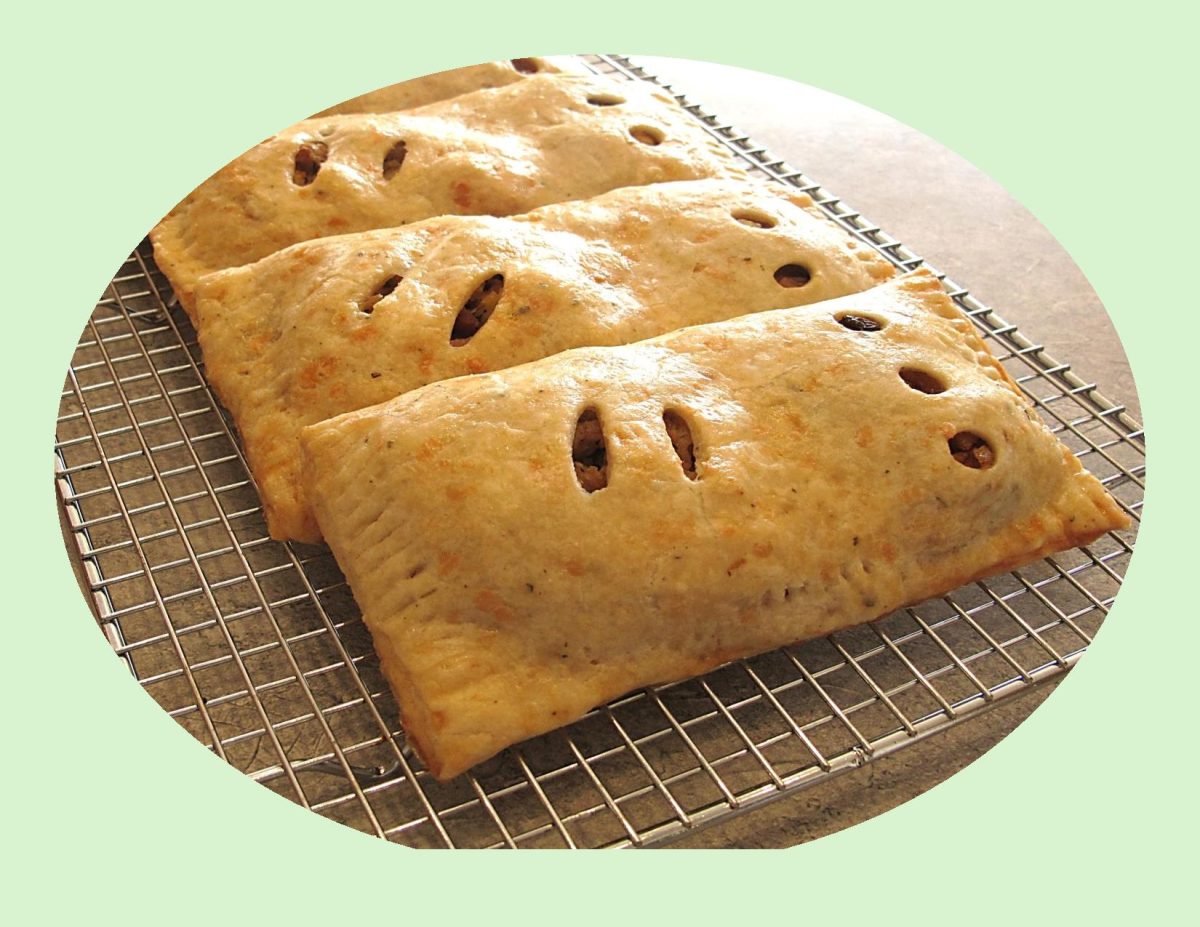
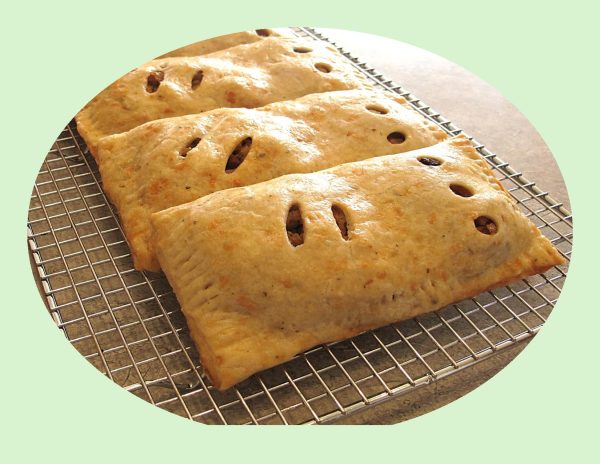
The Bedfordshire Clanger is a very unique and little-known meat pie recipe from England, specifically (not surprisingly) from the county of Bedfordshire, a small, low-lying and predominantly agricultural county nestled in the east of England.
In centuries past many of the working husbands of the area used to toil in the fields there. Their wives, knowing their husbands would need lots of protein and carbohydrate sustenance, came up with the brilliant idea of a doubled, loaf-shaped pie. One end contained a savory filling that used the famed pork of the area while the other end was filled with stewed apples (made from the famed local apples) as dessert. So, the two fillings didn’t combine, there was a ‘pastry wall’ in between blocking any flavors from mixing. A ‘secret code’ denoted which end was meat and which was dessert: two knife slits on one end of the pastry top means meat, three small holes on the other shows the sweet. This was brilliant, an entire meal for the hard-working man – handheld, portable and delicious
I guess you could say, the Bedfordshire clanger is not only a tasty treat but also a piece of culinary history that has stood the test of time!
Print Recipe
Pork & Apple Bedfordshire Clanger w/ Cheddar-Sage Pastry
Votes: 1
Rating: 5
You:
Rate this recipe!
|
|
Votes: 1
Rating: 5
You:
Rate this recipe!
|
Instructions
Pastry
In a medium bowl, whisk together the flour, sage & salt. Sprinkle the butter cubes over the flour mixture & use your fingers to work them in. Alternately you could use a pastry cutter to do this.
When the mixture resembles cornmeal with pea-sized bits of butter remaining, stir in cheese with a fork until evenly distributed. Sprinkle 6 Tbsp ice water over mixture & stir with a fork until dough begins to come together. If needed, add an additional Tbsp or two of ice water.
Turn the dough out onto a lightly floured surface & knead for about three times. Gather the dough into a disk & wrap in plastic wrap. refrigerate for at least 30 minutes or overnight.
Pork Filling
Bake potato in microwave, peel & cut into small cubes. Set aside.
Heat oil in a skillet & sauté celery, onion, garlic & bacon together on medium heat until veggies are soft & bacon is cooked. Add ground pork, breaking it up well. Stir in dried herbs & spices. Cover & simmer for about 10 minutes.
Remove from heat & stir in cooked potato & cheese. Set aside to cool.
Apple Filling
In a small saucepan, combine butter, water, cinnamon & brown sugar. Bring to a simmer then add diced apples, raisins, lemon zest & juice. Gently simmer for 5 minutes. Remove from heat & allow to cool.
Assembly/Baking
Divide pastry into 5 equal pieces. On a lightly floured surface (or dry wax paper) roll out each piece of pastry into 7 x 7 1/2-inches. The excess trimmed from the sides will be used for little pastry ‘walls’ dividing the sweet & savory fillings. Roll the excess into a 3-inch length.
From the top of each piece, LIGHTLY make a line across your pastry 4-inches from outside edge. This will help to place your fillings properly.
On the 3-inch wide section of the pastry, place savory filling to cover 2/3 of the area. Place one of the rolled strips after that then place sweet filling on the remaining 1/3 to complete the 'clanger'. The little rolled piece of pastry divides the savory & sweet filling.
On the sweet side make 3 holes for vents & on the savory side make 2 slashes. This is the 'code' to let the person eating the clanger which was savory or sweet.
-
Brush the edges of each pastry with egg wash. Lift the pastry from the opposite side over the fillings & seal the edges with a fork.
Brush clangers with remaining egg wash & bake for about 30-35 minutes or until golden.