This stylish Ethiopian celebratory flatbread derives its unique elements from the hand styled wheel design and its mildly sweet flavor. It was probably initially baked over coals. The Himbasha baking tradition dates back centuries in the mountainous terrain shared by Eritrea and Ethiopia where wheat and aromatic spices like cardamom grew. Communities used the large, round bread as a focal point for hospitality, family bonding, religion and even in a first-birthday ritual to give a child strength.
Over generations, families have passed down their recipes, adding their own personal touches. Himbasha is more than food; it is a cultural symbol of warmth, family, and festivity. While both Eritrean and Ethiopian countries enjoy Himbasha (or Ambasha in Ethiopia), there are differences. Eritrean Himbasha is thicker, sweeter, and often more elaborately decorated, with cardamom, raisins and black sesame seeds. Ethiopian Himbasha is, on the other hand, flatter, less sweet and sometimes includes spices like nutmeg. Decorations are simpler. In short, Eritrean Himbasha is rich and celebratory, while Ethiopian Himbasha is lighter and more everyday‑friendly.
The symbolism behind the wheel pattern design serves as a visual metaphor for the community, family, and interconnectedness. The concentric circles radiating outward from the center point symbolize shared roots and expanding blessings. In some traditional interpretations, the spoked shape represents a wagon wheel, symbolizing life’s journey, continuous movement and future prosperity. The scored intersecting lines split the round loaf into uniform, wedge-shaped segments. Because Himbasha is a celebratory bread meant for gatherings, this design allows hosts to easily pull apart and share the loaf evenly among guests without needing a knife at the table. Scoring the dough prevents the flatbread from puffing up unevenly or inflating like a balloon while baking. It ensures a consistent, beautifully flat and evenly baked crust.
We have enjoyed having the pleasure of a wonderful Ethiopian family next door for many years. Recently, Brion & I were away and had them look after our home in our absence. When we returned, I wanted to make something for them that I thought would have special meaning. The Himbasha bread seemed appropriate … and it was.
Print Recipe
Himbasha - Ethiopian Bread
Votes: 1
Rating: 5
You:
Rate this recipe!
|
|
Votes: 1
Rating: 5
You:
Rate this recipe!
|
Instructions
Yeast Mixture
Mix the lukewarm water, yeast & 1 teaspoon of sugar in a small bowl. Let it sit for 5–10 minutes until it becomes frothy & bubbly.
Dough Base
In a large bowl, whisk together the flour, 1/3 cup sugar, cardamom, ginger & salt. Make a well in the center. Pour in the yeast mixture, warm milk & oil/butter. Stir until a shaggy dough forms. If using raisins, fold them in now. Turn the dough onto a floured surface. Knead for 8–10 minutes until it is smooth and elastic.
First Rise
Place the dough in a lightly oiled bowl. Cover it with a damp cloth. Let it rise in a draft-free area for 1-1 1/2 hours, or until it doubles in size.
Deflate & Press Dough
Punch down the dough. Form into a smooth ball. Grease a large baking sheet (or a 12-inch pizza pan). Press & roll the dough directly onto the pan into a flat, even circle about 1/2-inch thick.
Create Traditional Pattern
For the cleanest lines, use a very sharp knife. Try to cut about 1/4-inch deep into the dough. If you cut too shallowly, the pattern will disappear as the bread rises; if you cut too deeply, the dough segments will completely separate.
The Outer Ring: Cut a clean circle roughly 1/2-inch to 1-inch inside the outer edge of your loaf. This creates the distinct 'crust' rim.
The Main Spokes (The Cross): Cut one vertical line straight down the center & one horizontal line straight across the center. You now have 4 equal quadrants.
The Sub-Spokes: Cut a diagonal line through each of those 4 quadrants. You will now have 8 distinct, triangle-shaped segments radiating from the center.
The Traditional Leaf Details: Inside each of the 8 triangles, use the tip of your knife to gently score a central line down the middle of the segment, then score smaller diagonal lines branching off it (like the veins of a leaf).
The Fork Pricks: Take a standard dinner fork & prick dots along the main spokes & around the outer border. This adds the traditional texture and anchors the dough. Sprinkle the black sesame seeds evenly over the top, pressing them LIGHTLY into the dough.
Tip: If your knife is sticking to the dough while scoring, dip the blade in a little bit of vegetable oil or flour between cuts.
Second Rise/Bake
Cover loosely & let rise for 20–30 minutes.
Preheat oven to 350 F.
Bake for 25–30 minutes until the top is beautifully golden brown & the bottom sounds hollow when tapped.
Honey-Butter Glaze
While the bread is in its final 5 minutes of baking, melt the butter in a small saucepan or microwave-safe bowl. Stir in the honey until it completely dissolves into the warm butter.
The absolute secret to a perfect glaze is timing. The moment you pull the Himbasha out of the oven, brush the glaze generously over the boiling hot bread using a pastry brush. The hot bread will instantly drink up the honey-butter, keeping the interior incredibly moist while leaving a dazzling, tacky, sweet sheen on the top.
Let the bread sit on the baking sheet for 5 minutes, then carefully transfer it to a wire cooling rack so the bottom doesn't get soggy.

Oatmeal Cookies are incredibly versatile! Part crispy cookie, part moist cake, the oatmeal cookie is made in a variety of ways: from thin and crispy, to moist and chewy, to even extra sweet or laced with salt. You can customize the classic combination by mixing in different ingredients so you get a completely different flavor than you would expect.
Oatmeal cookies came into North American kitchens by way of the Quaker Oats Company. The original oatmeal cookie recipe was mass distributed in 1908, printed on boxes of rolled oats. Billed as ‘oat cakes’ the recipe called for 3 cups of rolled oats along with butter, sugar, and flour. The oat cakes were an instant hit with homemakers. In 1943, the Quaker Oats company reformulated their recipe, this time using the term ‘oatmeal cookies’. The revised recipe utilized bacon drippings or shortening instead of butter and dried fruits for minimal sugar needs.
The oatmeal cookie recipe released by Quaker Oats has been re-branded twice, re-emerging on oatmeal packages as ‘Famous Oatmeal Cookies’, and as it is known today as ‘Quaker’s Best Oatmeal Cookies’. This oatmeal cookie recipe has earned the distinction of the longest printed recipe on any Quaker Oats products.
Here’s just a few add-ins to bump up the basic recipe if you choose to:
- Dried fruit: Dates, Apricots, Cherries, Apples, Coconut
- Nuts: Walnuts, Pecans, Cashews, Peanuts
- Spices: Cinnamon, Ginger, Nutmeg
- Chocolate Chunks: White, Milk, Dark
This recipe gives you the option of freezing the dough and baking it later or using it right away. Rolling them in ground flax seed gives them an added bonus in flavor – as if oatmeal cookies could get any better!
Print Recipe
Oatmeal Freezer Cookies
Votes: 2
Rating: 5
You:
Rate this recipe!
|
|
Votes: 2
Rating: 5
You:
Rate this recipe!
|
Instructions
Whisk both flours, baking powder, baking soda, salt & cardamom in a medium bowl.
Using an electric mixer, beat butter & both sugars on high speed until light & creamy. 2-3 minutes. Add eggs one at a time, beating to blend & scraping down bowl between additions. Beat in vanilla.
Reduce speed to low. Gradually add dry ingredients & mix just until combined. Fold in oatmeal & fruit.
Divide dough between 2 large sheets of parchment paper. Using paper as an aid, roll up each piece of dough into a 1 1/2-inch diameter log. Wrap in plastic; freeze for at least 4 hours up to 3 weeks.
When ready to bake: Preheat oven to 350 F. Unwrap dough & cut into 1/2-inch thick rounds. Roll edges of rounds in ground flax seed. Place 2-inches apart on a parchment paper lined baking sheet.
Bake until edges are golden brown, 15-18 minutes. Transfer to a wire rack; let cool. Store in an airtight container or freeze.
Recipe Notes
- Any fruit, nuts or seeds should be chopped quite small so your cookies can be sliced frozen.
- Rolling the edges in ground flax seed gives them such a nice flavor.
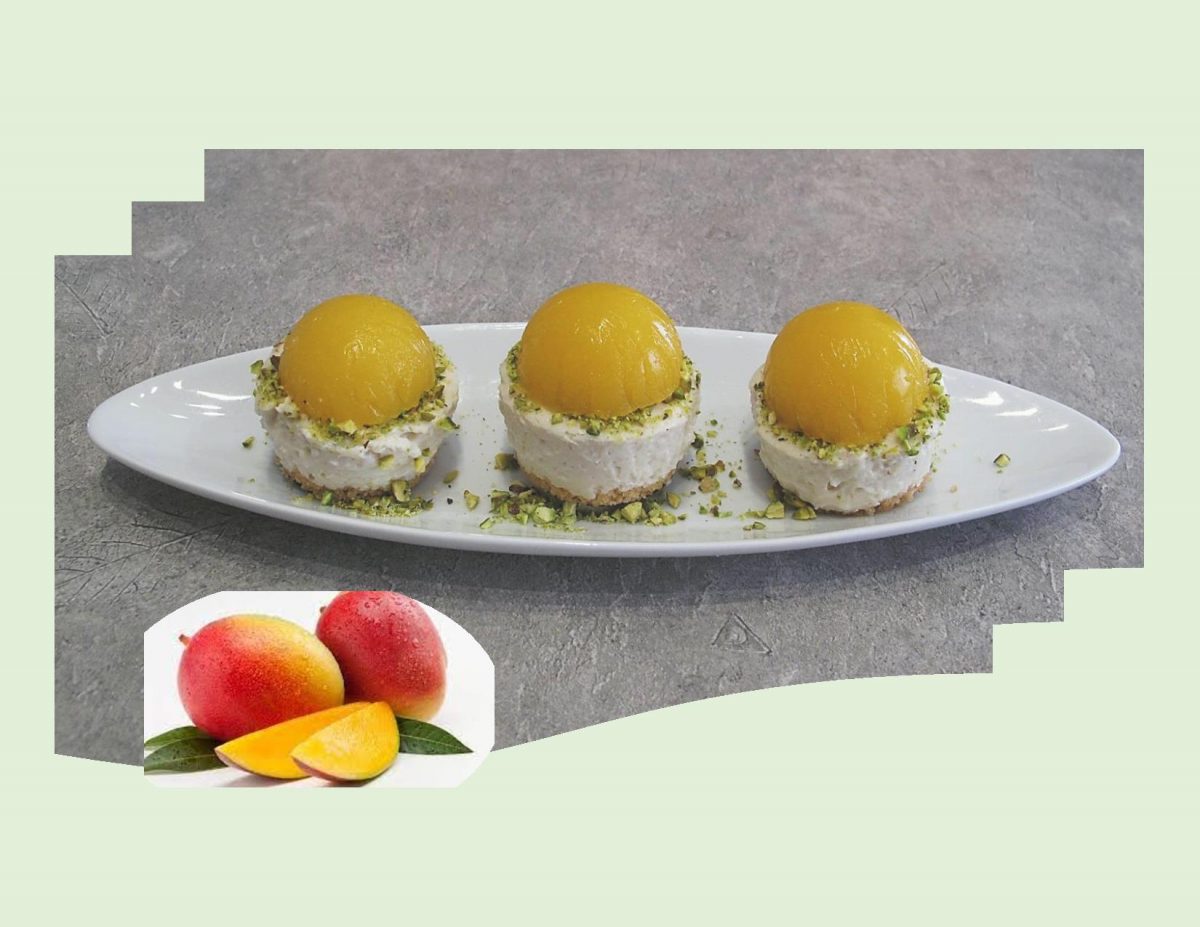
No matter how you slice it, cheesecake is truly a dessert that has stood the test of time. From its earliest recorded beginnings to its current iconic status around the world, this creamy cake remains a favorite for dessert lovers of all ages.
The no-bake cheesecake, turned the process of making cheesecake into one that consisted mostly of stirring and chilling. Simply combine cream cheese, milk and Jell-O instant pudding mix, pour into a crust, and chill for an hour or two. The pudding mix sweetens and stabilizes the filling. Essentially foolproof, its a recipe that works every time and tastes custardy and rich with a lighter texture than the traditional cheesecake.
The original recipe for no-bake cheesecake has spawned numerous iterations, many of which were popularized by ‘Jell-O’ itself. The best part about the original formula was that it created harmony between industrialized shortcuts and the real thing. Jell-O eventually launched an entire ‘N0-Bake’ dessert line in 1966.
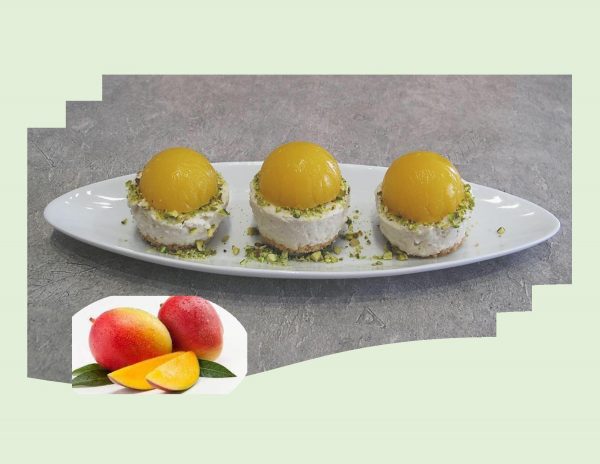
The simplicity of the recipe makes it endlessly adaptable. Of course, you can use different flavored pudding mixes or add spices or extracts to the filling for extra flavor and variation such as cinnamon, cardamom, lemon zest or almond extract. In addition you can serve the cheesecake with fruit or glaze as I’ve done here .
Print Recipe
No Bake Mango Cheesecake
Votes: 2
Rating: 5
You:
Rate this recipe!
|
|
Votes: 2
Rating: 5
You:
Rate this recipe!
|
Instructions
Crust
-
In a small bowl, combine crust ingredients, mixing well. Divide between mini cheesecake pan cups & press down firmly. Bake 5-7 minutes; allow to cool completely.
Cheesecake
In a bowl, beat cream cheese 1/2 cup milk until smooth. Add the remaining 1 1/2 cups milk, cardamom & instant pudding mix; beat until smooth. Divide between mini cheesecake pan cups, filling almost to the tops. Allow to chill for at least 2-3 hours.
Glaze
Place all glaze ingredients in saucepan & heat. As it comes to a boil, lower the heat & simmer 3-4 minutes. Turn off the heat & allow the glaze to cool slightly. Divide glaze between mini cheesecakes & allow it to set for 3-4 hours. Ensure that the cheesecake is properly set before topping with the glaze.
Recipe Notes
- For a bit of a different look, I filled my cheesecake cups right to the top. Then I poured my mango glaze into a cake pop pan to set a bit. When the glaze was firm enough I topped each cheesecake with one forming a dome instead of a flat layer.
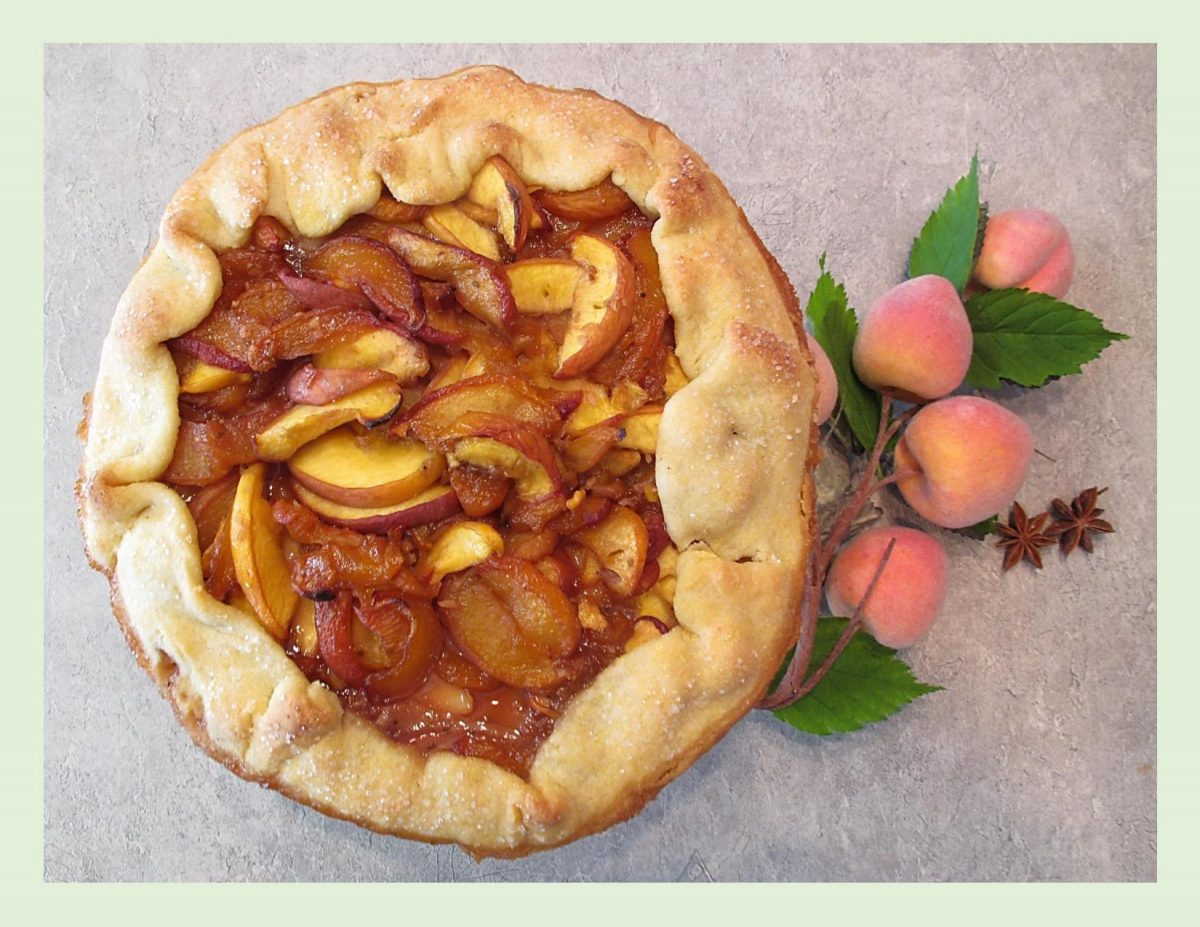
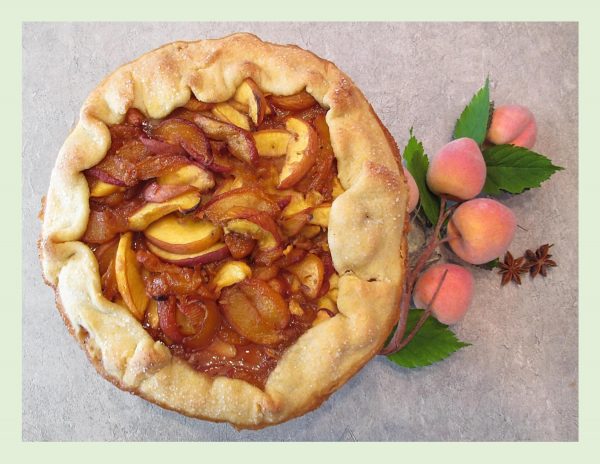
This peach chutney galette has all the flavors of a classic peach pie, plus the pop of fresh ginger, apple cider vinegar and spice.
I love chutneys and find that just about any fruit can be made into one. Each chutney is a balance of sweet, sour, savory and spice with endless variations. When it comes to the ways you can eat or serve it, a few that come to mind are:
- Add it to a chicken sandwich
- Serve with cured meats & cheese
- Serve on the side with empanadas or meat pies
- Eat it with any cooked pork meal
- Serve with grilled sausages or roasted poultry
- Serve it with pate
- As a topping for warm Brie cheese
- Mixed into Greek yogurt
- Puree it & use as a dipping sauce
- Served on a burger
Peaches are one of those fruits that make their way into summer chutneys so why not put some in a galette and see what develops?!
Print Recipe
Peach Chutney Galette
Votes: 2
Rating: 4.5
You:
Rate this recipe!
|
|
Votes: 2
Rating: 4.5
You:
Rate this recipe!
|
Instructions
Pastry
In a small bowl, combine sour cream & ice water; set aside. In a large bowl, whisk together flour, cornmeal, sugar & salt. Using a pastry blender or fingertips, cut in the butter until mixture resembles BOTH coarse crumbs & small peas. Sprinkle the cold sour cream mixture over dough, 1 Tbsp at a time, tossing with a fork to evenly distribute it. After you have added all the sour cream mixture, dough should be moist enough to stick together when pressed; if not, add additional cold water, 1 tsp at a time. Do not overwork dough.
Press dough into a disk shape & wrap in plastic wrap. Refrigerate for at least 2 hours. The dough can be kept in the refrigerator for a day or two or it can be wrapped airtight & frozen for a month. Thaw, still wrapped in refrigerator.
Filling
In a saucepan over medium heat, add apple cider vinegar, brown sugar, ginger, star anise, cloves, pepper, cardamom & sea salt. When mixture starts to bubble, fold in about 2 cups sliced peaches. Bring the mixture to a boil; turn down heat to a lively simmer. Cook, stirring often, 20-30 minutes, or until mixture has thickened enough to easily coat a spoon. Set aside to cool.
Assembly
When chutney is cooled, preheat oven to 350 F. On a large sheet of parchment paper, roll or press out chilled pastry into a 12-inch circle.
In a large bowl, stir to combine remaining peaches, cooled chutney, 1/4 cup sugar & cornstarch.
Spread mixture evenly over dough, leaving a 1 1/2-inch border. Gently fold pastry over peach chutney filling, pleating to hold it in. Brush with egg wash (if using); sprinkle with sugar.
Bake 35-45 minutes until filling bubbles up & crust is golden. Chill at least 2 hours to prevent the filling from running out. Serve as is or with a scoop of vanilla ice cream.
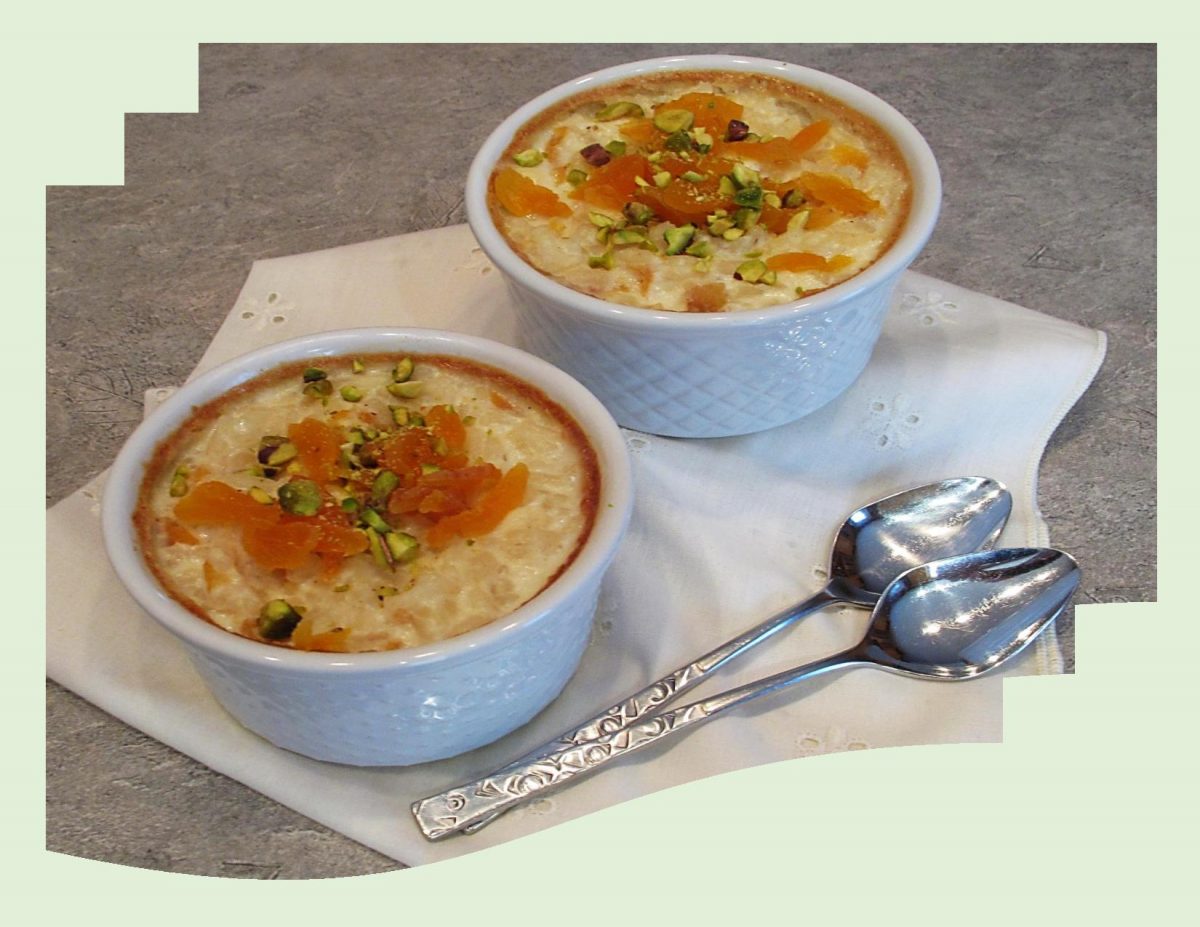
Chances are good, you’ve tried rice pudding at least once. That’s because humans have been eating the dish for thousands of years across the world.
Today, rice pudding is considered a humble dessert …. a simple mixture of rice with milk, sugar and spices. But for centuries, rice pudding held a place of distinction in the royal courts of Europe. Because rice did not grew well in the European continent, it had to be imported from Asia along the Silk Road or by water. The extensive trade routes made rice an expensive commodity that only the rich could afford. As the world seemingly grew smaller through the effects of globalization, the import of rice became affordable and common.
Many early rice puddings did not resemble the sweet dessert we think of today. This sweetened version didn’t arrive until the 15th century. Usually rice pudding is sweetened with white or brown sugar, honey or dried fruit, but you can also use maple syrup, jam, date sugar or fruit juice concentrate.
Different varieties of rice lend their own tastes and aromas. I opt for Arborio, which makes the pudding creamy even when I use low fat milk or non-fat milk. Fruit, whether fresh, dried or candied is the puddings perfect partner. Today, rice pudding is considered an easy and versatile dessert which many of us associate with our childhood.
Print Recipe
Baked Apricot Rice Pudding
Votes: 1
Rating: 5
You:
Rate this recipe!
|
|
Votes: 1
Rating: 5
You:
Rate this recipe!
|
Instructions
-
In a bowl, combine egg whites, egg, milk, sugar & vanilla. Beat until combined but not foamy. Stir in cooked rice, snipped apricots, cardamom & orange zest.
Place 4 custard cups in a rectangular baking dish. Divide rice mixture among dishes, Place baking dish on an oven rack. Pour boiling water into the baking dish around custard cups to a depth of 1-inch.
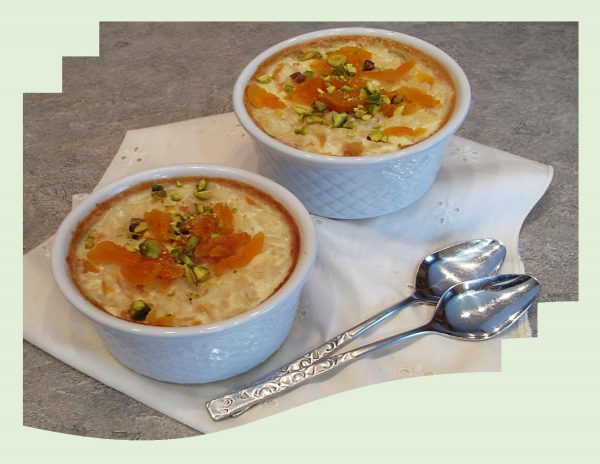
Bake, uncovered, for 40 minutes or until just set, stirring after 20 minutes. Serve warm or chilled. Garnish with slivered apricots & pistachios.
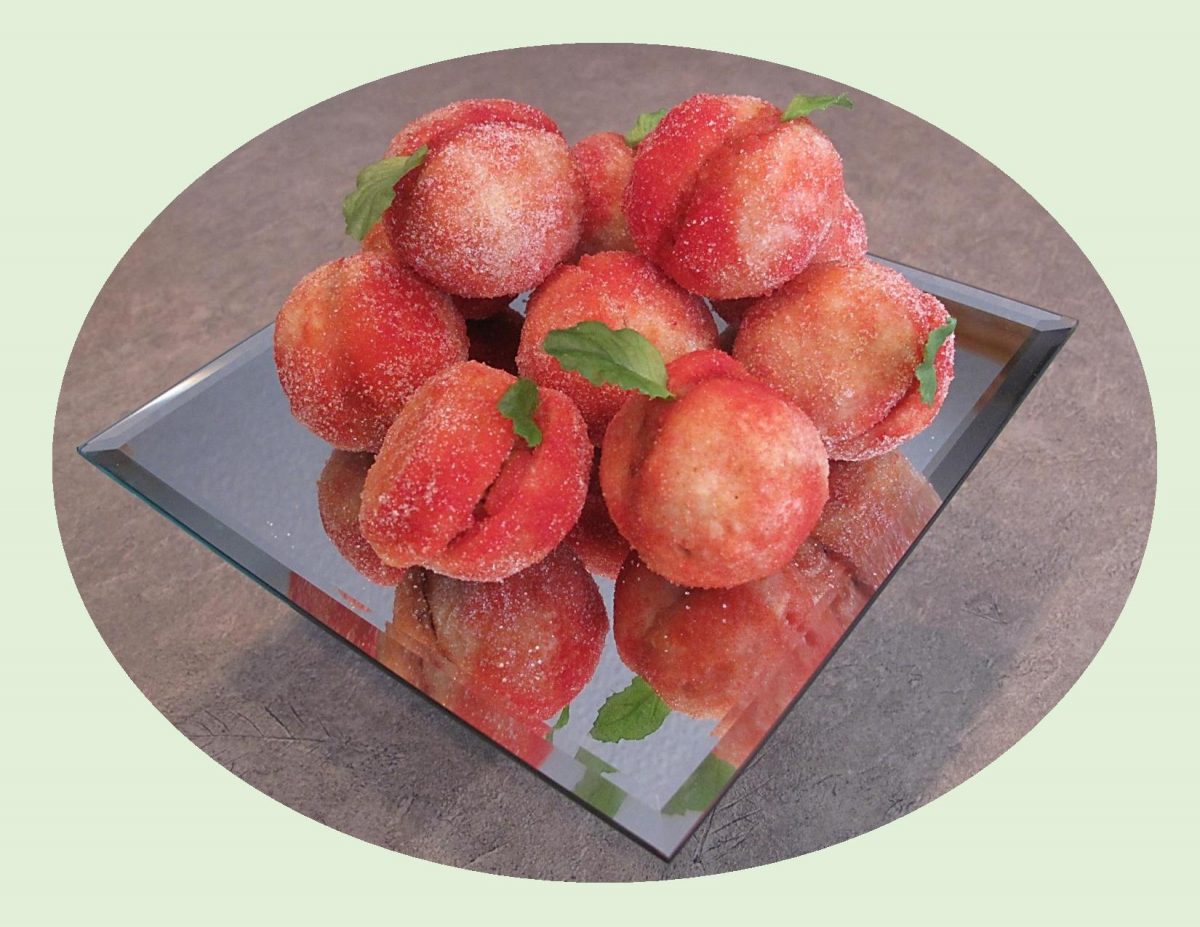
It’s that wonderful time of year when there is an abundance of fresh fruit available so why not make the most of it?! Peaches are a favorite of mine, not only because of their great taste but they have such versatility in their uses. Just for something different today, I want to take the peach idea in a whole different direction. These beautiful, old fashioned pastries were very popular in the 1980’s. They are known for their unique look that resembles a fresh peach with a flavor that is delicately sweet and buttery. Traditionally served at Italian wedding showers, Pesche (or peach), are now served at any celebration and may be found throughout many countries in Europe.
Peach cookies are two cookie domes, carved on the inside and paired together to hold a dollop of custard. Once assembled, they are dipped in Alchermes, a crimson colored liqueur infused with a blend of anise flowers, cinnamon, cloves, coriander, jasmine, mace, nutmeg, orange peel, sugar and vanilla. These ingredients are stepped in alcohol, which is then flavored with rose water. Alchermes gives these pastries a vibrant pink hue and a unique, light alcohol flavor that combines custard and cookie beautifully. To further enhance the peach resemblance, they are rolled in a sanding sugar.
Alchermes is a very ancient liqueur of Arabic origin. It’s main feature is an unmistakable scarlet color, which was originally acquired by adding ‘kermes’, a scale insect that eat oak trees. Modern alchermes liqueurs no longer use the kermes insect. Alchermes was created in the Frati’ Convent at Santa Maria Novella in Florence, Italy.
These peach cookies are an impressive dessert, perfect for special summer occasions. You can use any filling you choose such as a pastry cream, lemon curd, limoncello or just plain nutella spread. Since it is almost impossible to find the alchermes liqueur in Canada, I’ve listed a few substitutes that can be used instead.
Print Recipe
Peach Cookies or Pesche
Votes: 2
Rating: 4.5
You:
Rate this recipe!
|
|
Votes: 2
Rating: 4.5
You:
Rate this recipe!
|
Instructions
Cookie Dough
Preheat oven to 350 F. Line a cookie sheet with parchment paper.
In a large bowl, sift flour & baking powder. In another bowl, whisk egg with sugar until combined & fluffy. Whisk in milk, melted butter, vanilla & lemon zest until well combined. Gradually add flour mixture into wet ingredients until incorporated & a soft dough is achieved. Form the dough into 16-20 small balls; place on baking sheet & press slightly on top to flatten a bit.
Bake for approximately 15-20 minutes. Remove from oven & cool on wire rack until cool enough to hold. With a sharp small knife remove the middle of the cookie forming a small hole. Reserve crumbs for filling.
Filling
In a small bowl, combine filling ingredients; stir in reserved crumbs. Spoon into center holes of cookies & press together to form a peach.
Coating
In a shallow bowl, combine lemon & peach gelatin powder. Place package of strawberry gelatin in another bowl. Place sugar in a third bowl.
Assembling
Working with one cookie at a time, spritz cookie with a bit of water. Dip in lemon mixture, then in strawberry gelatin & then in sugar. Spritz with additional water & add more gelatin as needed to create desired 'peach blush' effect. Place on a wire rack to dry for an hour. Attach mint leaves to top of each cookie with additional preserves. Store in refrigerator.
-
Recipe Notes
- Alchermes can be substituted for a peach liqueur or Chambord raspberry liqueur. For my peach cookies, I kept it simple & used a combination of jello powders to replicate the traditional idea.

I remember the first time I heard of sour cream being used in making a rhubarb pie. I could hardly imagine it but once I tried it there was no going back! If you look through some of the older recipe books, there are at least eight or nine different pies made using sour cream. These nostalgic desserts certainly take you back to a simpler time.
Basically this is your classic rhubarb pie except with a sweet/sour cream, custard filling. The sour cream is not assertive; its presence simply provides a rich, creamy background for the rhubarb.
I’m not sure why, but I never get tired of cooking (or eating) rhubarb. Every season, I can’t wait until its ready to use. Last year, Brion and I found another spot for three new plants to grow in our yard, so hopefully they do well. I realize its not for everyone but it is certainly versatile in its uses.
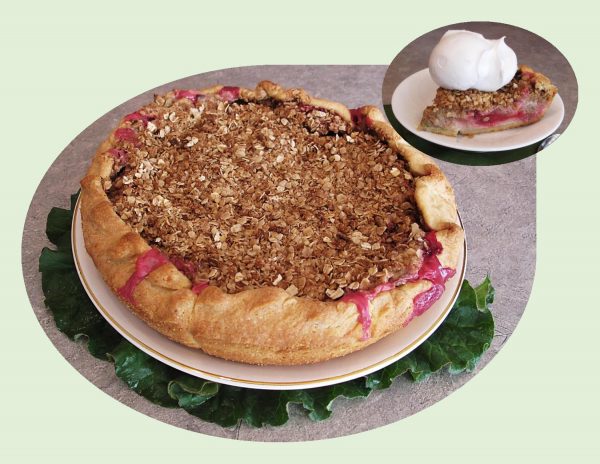
For this rhubarb crostada, I’m using an spiced-oat streusal topping which almost mimics a baked fruit crumble taste. Serving this dessert chilled brings it to its full potential. Of course, when you add a scoop of ice cream!
Print Recipe
Sour Cream Rhubarb Crostada
Votes: 1
Rating: 5
You:
Rate this recipe!
Ingredients
Cornmeal Pastry (OR use purchased refrigerated pastry if you wish)
Ingredients
Cornmeal Pastry (OR use purchased refrigerated pastry if you wish)
|
Votes: 1
Rating: 5
You:
Rate this recipe!
|
Instructions
Cornmeal Pastry
In a small bowl, combine sour cream & ice water; set aside. In a large bowl, whisk together flour, cornmeal, sugar & salt. Using your fingertips, cut in the butter until mixture resembles BOTH coarse crumbs & small peas. Sprinkle the cold sour cream mixture over dough, 1 Tbsp at a time, tossing with a fork to evenly distribute it. After you have added all the liquid mixture, dough should be moist enough to stick together when pressed. Do NOT over work pastry. Press dough into a disk shape; wrap in plastic wrap & refrigerate until ready to use.
Spiced-Oat Topping
In a bowl, combine all topping ingredients with fingertips until crumbly; set aside.
Filling
Preheat oven to 375 F. In a bowl, Mix 1 cup sugar, 3 Tbsp flour, 1 tsp cardamom & orange zest. Stir in slightly beaten eggs & sour cream, add rhubarb; toss gently.
Remove pastry from fridge. Preheat oven to 375 F. On a large sheet of parchment paper, roll out pastry into a 12-inch circle. Place pastry in a 9-inch pie pan, leaving parchment paper underneath it. Pour filling into crostada; gently fold the 1/2-inch of pastry remaining above pie pan rim over edge of crostada. Sprinkle spiced-oat topping over filling. Brush pastry edge with egg wash.
Bake 50-60 minutes until edge is puffed, filling is slightly jiggly & topping is golden. Cover loosely with foil if topping begins to brown too much. Cool at least 3 hours before serving. Slice & serve with a dollop of whipped cream or a scoop of ice cream.

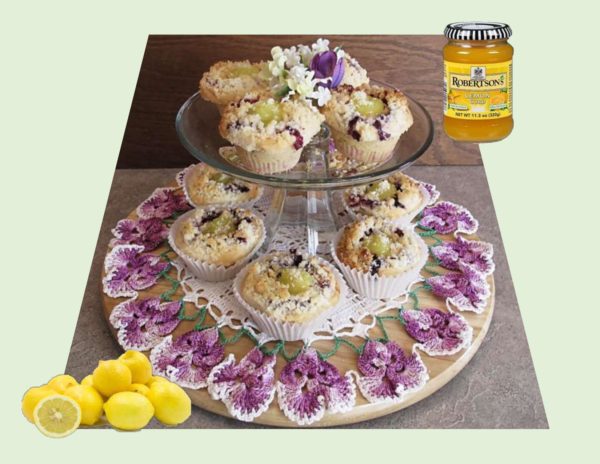
Spring is definitely in the air, so bring on those fresh spring flavors. One that comes to my mind is lemon — zesty and full of some spring ‘zing’. My first thought is to pair lemon with some wild blueberries. I realize we are a long way from blueberry harvest time but the good news is that WILD blueberries are as good frozen as they are fresh. None of the nutritional values or antioxidant goodness is lost by freezing.
Canada is the world’s largest producer of ‘low-bush’ blueberries, which is another name for the wild blueberries native to eastern North America. They grow best on treeless land or on land that has been burned over. Growers do not plant them but instead manage wild stands that spread naturally by means of underground runners. The berries are often not uniform in appearance since managed fields can have several distinct runner systems.
The wild blueberries have a sweeter, tangier more intense flavor than their cultivated cousins. Harvest time comes in late August to early September, generally only lasting a few weeks.
This simple little dessert lets us get into the summer blueberry ‘season’ a little earlier and still has all the flavor.
Print Recipe
Wild Blueberry Lemon Drops
Votes: 1
Rating: 5
You:
Rate this recipe!
|
|
Votes: 1
Rating: 5
You:
Rate this recipe!
|
Instructions
Pastry
-
In a large bowl, combine butter & powdered sugar; cream well then stir in vanilla. In a small bowl, combine dry ingredients, gradually add to creamed mixture; blend well. Line the muffin pan size of your choice with paper cups. Divide dough into balls, placing one into each cup. With your fingers, press dough evenly up sides & on bottom of paper cups. Refrigerate until filling & streusal are made.
Streusal
-
In a small dish, combine streusal ingredients until mixture forms coarse crumbs.
Filling
-
Preheat oven to 350 F. Gently rinse & dry blueberries. In a small bowl, combine all other filling ingredients & whisk together until smooth. FOLD in blueberries. Divide filling evenly between pastry shells. Top with streusal & a spoon full of lemon curd. Bake about 25 minutes, (filling will rise slightly when set). Remove from oven. If you prefer, add a bit more lemon curd. Once tarts are cool, remove from pan. The paper cups will come off easily, leaving a pretty little corrugated design.