Roasted salmon with honey-tart cherry salsa is popular because it perfectly balances the naturally bold, rich flavor of salmon with a vibrant, sweet-and-sour glaze. The sweet honey, zesty fruit, and savory roasted fish offer a gourmet-quality restaurant feel that is incredibly easy to make at home.
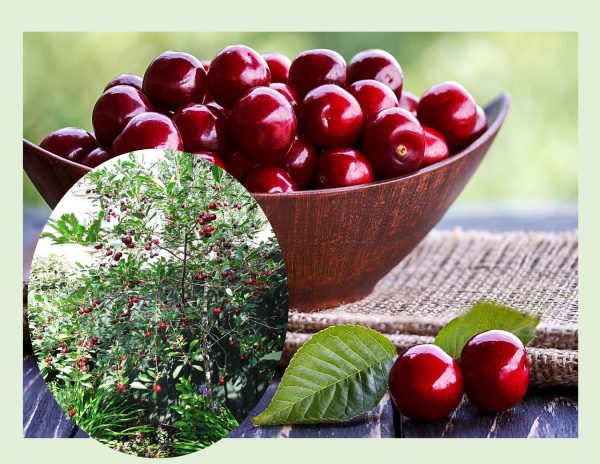
About 13 years ago, Brion and I planted a ‘Cupid’ cherry tree in our back yard. I don’t know if you have ever heard about these ‘prairie’ cherry trees. They were developed here in Canada at the University of Saskatchewan for colder climates. A sour cherry was cross pollinated with a Mongolian cherry. This resulted in a variety of very hardy, smaller trees with a tart-sweet cherry about the size of the well-known ‘Bing’ variety. A group of five cherry trees were developed and became known as the ‘Romance’ series.
We chose this particular one because it is an early bloomer with large, dark red cherries that are both sweet and slightly astringent. The fruit matures in late August -early September with about a three-week harvest period. The tree size is perfect as it matures to around eight feet tall. In the fall its glossy green leaves turn into a beautiful yellow orange.
I personally like using these cherries for cooking and baking as opposed to eating them fresh. The sweet/tart flavor lends itself so well to numerous recipes. Over the years, I have come to really enjoy the flavor of chutneys. The flavor and gorgeous color of the cherries made a real nice ‘chutney’ for this roasted salmon.
Since this year’s crop is not ready yet I see no reason not to use some of the frozen ones I have left from last year.
Print Recipe
Roasted Salmon w/ Honey-Tart Cherry Salsa
Votes: 1
Rating: 5
You:
Rate this recipe!
|
|
Votes: 1
Rating: 5
You:
Rate this recipe!
|
Instructions
Salsa
In a medium bowl, stir together the ingredients for the salsa until well combined. Cover and chill until ready to serve.
Salmon
Preheat oven to 350 F. Line a baking sheet with nonstick aluminum foil.
Rinse the salmon filets under cool water & pat dry with a paper towel. Arrange on the baking sheet.
In a small bowl, whisk together the cherry juice & honey. Spread half of the mixture over the salmon filets, reserving the second half.
Bake for 15-17 minutes until just about cooked through. Drizzle the second half of the tart cherry-honey mixture over the filets & bake for an additional 2-3 minutes until slightly golden at the edges.
Serve the salmon filets with roasted potatoes & a green salad, if you wish, with the tart cherry salsa on top.

July is such a wonderful month. The weather’s warm, there’s still plenty of summer left, and the produce is literally amazing.
Midsummer means the farmer’s markets are brimming with great fruit & veggies. With such a colorful bounty of goods, we can settle into our summer cooking routines with tasty meals hot or cold.
But, even in summer, we sometimes crave ‘comfort food’ such as a savory hand pie. The humble hand pie goes by many different names: call it a pasty, a turnover, an empanada, or whatever you like, who doesn’t love a little portable personal-sized savory pie?
These hand pies, with their tender, flaky, herbed crust perfectly envelop the creamy chicken and summer veggies. A flavorful meal that can be served as the main course for a warm-weather picnic or for a hand-held, backyard meal with the addition of a nice fresh salad at home.
Print Recipe
Summer Chicken/Veg Hand Pies w/ Herbed Crust
Votes: 1
Rating: 5
You:
Rate this recipe!
|
|
Votes: 1
Rating: 5
You:
Rate this recipe!
|
Instructions
Herbed Crust
Add the flour, sugar, basil, oregano & salt to a food processor; pulse just until combined. In a small bowl, whisk mix together the egg, vinegar & water. Add the cold butter pieces into the food processor; pulse until small coarse crumbs remain. Sprinkle the water/egg mixture over the flour & pulse again until the dough comes together.
Remove the dough with your hands & wrap it in plastic wrap. Refrigerate the dough for 30 minutes. Prepare filling during this time.
Filling
Heat a Dutch oven or pot over medium high heat; add the olive oil & butter. Season the chicken with the salt & pepper then add it to the pot. Cook until the chicken is golden & browned, then remove it with a spoon & place it in a bowl.
Add the 3 tablespoons of butter to the pot with the onion. Sprinkle in a bit more salt & pepper. Stir, then cook the onions until slightly soft, about 4 - 5 minutes. Add the potatoes & stir, cooking for another 5 minutes; stirring often. Sprinkle the flour over the onions & potatoes; stir gently to create somewhat of a roux with the vegetables. Cook for 2 - 3 minutes while stirring occasionally.
Slowly stream the chicken stock into the pot while stirring – it will thicken. Stir in the squash, green beans, corn and chicken. Stir in the cream. Taste the mixture and season with salt & pepper if needed.
Preheat the oven to 375 F.
Remove pastry from refrigerator & place on a baking sheet or board. Invert a 5-inch bowl over top to create your outline of each hand pie. Press down to cut out.
Line a baking sheet with parchment paper. Place rounds of pastry on the parchment & brush around the outer edge of each pastry circle.
Distribute the filling in the center of each pastry circle (don't fill to the edge; leave some space). You want enough filling in there, but not too much that you can't close/seal over.
Fold over each pastry circle (so each is a half-moon shape), pressing the outer edges with a fork to seal. You can gently press over top (with your hand) to spread out the filling inside.
Brush the hand pies with some of the remaining egg wash. Cut 3 slits in top of each pastry circle. Place them in the fridge for about 10 minutes so the pastry gets a little cold again.
Bake for 22 to 24 minutes or until they're golden brown and crispy on the outside & heated through. Allow to cool a few minutes before serving. Nothing says they can't be served with a little gravy (if desired)!
Recipe Notes
- You may get anywhere from 6-8 hand pies depending how thick your dough is rolled.

CELEBRATING CANADA DAY!
In Canada, July 1st marks the day for Canadians to reinforce national unity, sovereignty, and shared values against external economic pressures and to mark the 60th anniversary of the flag. It acts as a unifying force against trade tensions, protects our identity from being absorbed by larger neighbors, and boosts morale.
Today, Canadian pride and sense of belonging have reached their highest levels in years. Being Canadian brings pride through a strong commitment to multiculturalism, inclusivity, and freedom, alongside a reputation for politeness, resilience, and a high quality of life.
From coast to coast the country’s birthday is marked with various events. Barbecues are definitely the preferred choice of food event for the day. Of course, the staple at most barbecues, tailgates and picnics is the classic burger. But a burger doesn’t have to be just a burger. The surf and turf burger is a variation of the surf and turf dish, typically made with minced meat and marine products like lobster, shrimp, or crab.
The concept of ‘surf and turf’ is reported to have originated in the US as a dining trend in the mid-20th century. It refers to a dish that combines both seafood (surf) and meat (turf) in a single meal. While the idea of pairing seafood and meat together has been around for centuries in various forms, the modern surf and turf combination gained popularity in the 1960s and 1970s. The surf and turf burger is a creative twist on this classic concept.
Brion & I thought this was truly a gourmet meal burger in a bun. Much more than just a delicious meeting of ocean and prairie.
Print Recipe
Surf & Turf Burgers
Votes: 1
Rating: 5
You:
Rate this recipe!
|
|
Votes: 1
Rating: 5
You:
Rate this recipe!
|
Instructions
Burgers
In a bowl, combine all seasonings & add ground beef & beaten egg. Lightly combine without overmixing. Form into 4 burger patties. Set aside in refrigerator.
Shrimp
Peel & devein shrimp. Rinse in cold water & dry with paper towel. Toss shrimp in olive oil & Old Bay seasoning. Set aside in refrigerator.
Avocado Steak Sauce
In food processor, add all sauce ingredients. Process on high speed until smooth. Remove from processor & place in a glass dish. Cover with plastic wrap & refrigerate.
Other Ingredients
Slice tomato & red onion. Slice or shred cheese. Very lightly butter hamburger buns.
Cooking / Assembly
Heat a griddle to medium-high & cook shrimp until they are just done, about 1-2 minutes per side. Set them aside.
Place burgers on the griddle & cook them until done or to your liking.
Assemble surf & turf burgers as follows: roll, burger, cheese, arugula, tomato & onion, generous amount of avocado steak sauce, shrimp & top of roll.
-

Like many now-famous recipes, the original inventor of the cauliflower steak is a contentious topic. Some food magazines credit Australian chef Ben Ford (son of Harrison) as coming up with the idea. Other experts claim this dish can be traced back to the first raw food revolution in the early 1900s.
Food is a universal human experience—and yet every culture brings their own perspective and ingredients.
While we may never know who came up with the idea for the very first cauliflower steak, we do know they were onto something. Cauliflower has become a versatile vegetable that can be used and cooked in many different ways. The name suggests that cauliflower steaks can be prepared using similar cooking methods to steaks, such as grilling, pan-sautéing, oven roasting, or sous vide.
Some people pick up a heavy, creamy white head of cauliflower and they see pizza. Some people see rice. Other people see thick steaks. To vegetarians, it’s a meat stand-in. For keto and paleo dieters, it replaces previously beloved carbs like rice, potatoes, and pasta. For adventurous cooks, it’s a blank canvas for textures and flavors.
While these ‘steaks’ make a tasty main dish, that doesn’t always work for the meat lover. Here are some mains to go with these roasted cauliflower steaks!
- grilled ribeye steak
- crispy roasted chicken
- smoked pork tenderloin
- turkey burgers
Print Recipe
Cheesy Cauliflower Mushroom Steaks
Votes: 1
Rating: 5
You:
Rate this recipe!
|
|
Votes: 1
Rating: 5
You:
Rate this recipe!
|
Instructions
Preheat oven to 400 F. Line baking sheets with foil & spray with cooking oil.
Place the cauliflower slices onto a large baking sheet. They need lots of space between them & shouldn't overlap so use 2 large baking sheets if needed.
Spray cauliflower steaks lightly with the avocado or olive oil & season with sea salt, pepper & Italian seasonings.
Roast for 20-25 minutes in preheated oven, until golden brown on the sides.
In a mixing bowl add mushrooms, minced garlic, a pinch of sea salt and pepper, then toss to coat well.
Spread mushroom mixture on another baking sheet sprayed with oil & bake for 10-15 minutes OR sauté mushroom mixture in a medium sauté pan with 1 teaspoon of oil over med-high heat for 5-6 minutes. Once done, remove the pans from the oven or heat.
Sprinkle roasted cauliflower steaks with cheese & top the cheese with roasted mushrooms & garlic mixture.
Return to the oven for 2-3 minutes until cheese is melted & bubbly.
Sprinkle with sliced green onion. Since I had some roasted chicken on hand, I sliced it & placed a small amount on top of each mushroom steak just before returning to oven for the last 2-3 minutes. The chicken was already warm so it worked out well.

I had no idea when I completed my studies in the commercial food industry that there would be some food items, I would make so many times. One such item was an omelet.
In the early years of my career, my first position was a short order chef. It all sounded pretty easy until it came to the weekends. On Sunday morning alone, you could use anywhere from 90-120 DOZEN eggs. A large percentage of them were made into omelets with various fillings. All this would be made and served in the course of 4-5 hours as individual breakfasts in the hotel restaurant. That job definitely taught you the perseverance you would need to survive in the industry.
Omelets have a long history dating back to 16th century France. Most are made with just simple egg and dairy ingredients. The fluffiest omelets use whole eggs or all egg whites, which are beaten with a small measure of cream, milk or water. I even recall adding just a tiny bit of pancake batter to give them more body.
Legend has it that when Napoleon and his army were travelling through the south of France, they spent one night near Bessieres. Napoleon ate an omelet prepared by a local cook and enjoyed it so much that he ordered the townspeople to gather all the eggs in the village and prepare a gigantic omelet for his army the next day. Since 1973, every year on the Monday following Easter, people in Bessieres, France make a giant omelet, using 15,000 fresh eggs.
I have added some pictures of this huge omelet as well as one of a cook dumping eggshells in a pile.
The recipe I am including has everything it takes to make a great flavored omelet.
Print Recipe
Omelet w/ Veggies, Bacon & Cheddar
Votes: 1
Rating: 5
You:
Rate this recipe!
|
|
Votes: 1
Rating: 5
You:
Rate this recipe!
|
Instructions
On a large griddle, place frozen hashbrowns & spray with cooking spray. Cover with a lid & cook until golden then flip over & fry a little longer. Remove from griddle & set aside.
Place bacon on griddle & cook until crispy. Set on paper towels to drain the grease then chop into crumbles. Set aside.
Place the onions & mushrooms on the griddle in the bacon drippings & cook on medium-high for 10 minutes or until the mushrooms are golden brown & the onion is tender. Remove from pan & set aside.
Using an 8-inch baking dish turned upside down, form 2 'foil pans' with aluminum paper. Spray the inside of each one with cooking spray.
In a bowl, whisk eggs, cornstarch & milk until well blended; season with sea salt & pepper, to taste. Set 'foil pans' on the medium-high heated griddle. Divide the egg mixture into each of the 'foil pans', swirling so the pan is evenly coated with the egg.
Once the egg is starting to set, sprinkle a small amount of cheese on top of each egg mixture then divide the hashbrowns & refried beans & spoon over each omelet. Next, top each omelet with half of the onion/mushroom mixture & a sprinkle of green onions & a bit more cheese.
'Cover' The griddle with a large baking sheet to help 'steam' the omelets. This will only take a few minutes. Remove each 'foil pan' & place the omelets on serving plates. Roll into customary omelet shape if preferred.
Top each with remaining cheese & green onion if preferred. Serve immediately.
Recipe Notes
- Omelet is the standard spelling in American English. The British spelling, omelette, is actually the modern French spelling.

The original Peachy Chicken recipe has been printed on the back of the Heinz Malt Vinegar bottle for many years. Peaches paired with chicken just go together extremely well. The chicken cooked in peach sauce just melts in your mouth and the sauce itself has a sweet & sour flavor that is just amazing.
Malt vinegar transforms simple baked chicken into something incredibly special! Made from malted grains of barley, malt vinegar has a tart flavor and can help to enhance the flavors of other foods it is paired with. It is best known for topping fish and chips.
Malt vinegar is produced from the same grains that are used for making beer, and so it has a similar lemony, nutty, and caramel flavor profile as malted ale. It can range in color from light to dark brown while some distilled varieties are clear.
Usually found in condiment or bakery aisles at the grocery store, it’s become a culinary mainstay in British and Canadian cuisines.
Print Recipe
Peachy Chicken
Votes: 1
Rating: 5
You:
Rate this recipe!
|
|
Votes: 1
Rating: 5
You:
Rate this recipe!
|
Instructions
In a large skillet, brown the chicken thighs, onion & garlic in the oil.
Combine the reserved peach juice, orange juice concentrate, vinegar, brown sugar, red pepper flakes (if using), basil, salt, cloves, cinnamon & pepper. Pour over browned chicken mixture. Cover & simmer 25-30 minutes or until chicken is cooked through.
Add peaches; heat. Combine cornstarch & water; stir into sauce. Heat, stirring, until sauce is thickened.
Serve chicken & sauce over rice.
Recipe Notes
• If malt vinegar is not available, try using apple cider vinegar as a substitute.

Yaki Udon is a wok-fried Japanese udon noodle dish. Born from postwar ingenuity, Yaki Udon (literally ‘fried udon’) is a celebrated Japanese stir-fry dish with a history rooted in the resourcefulness of the mid-1940s.
The dish’s creation is widely attributed to a small restaurant named Darumado in Kokura (modern-day Kitakyushu), shortly after World War II. In 1945, food was scarce across Japan. The owner of Darumado wanted to serve yakisoba (fried buckwheat noodles), but proper soba noodles were unavailable due to rationing and shortages, so he decided to use dried udon noodles (which were more readily available) as a substitute for the missing soba.
The improvised dish, stir-fried with meat and vegetables in a soy-based sauce, was an instant hit with locals and eventually became a staple of the region.
While the original version used dried noodles, modern yaki udon is typically made with thick, chewy fresh or frozen udon noodles. Over the decades, it evolved from a ‘desperation’ meal into a popular Japanese pub snack and a standard festival street food.
Shrimp yaki udon is a staple of Japanese comfort food and a global favorite primarily because of its combination of fast, one-pan preparation, addictive textures, and a savory, rich flavor profile that is both comforting and customizable.
Just recently I’ve started incorporating these unique udon noodles into some of our meals and we really have enjoyed them.
Print Recipe
Yaki Udon w/ Shrimp
Votes: 1
Rating: 5
You:
Rate this recipe!
|
|
Votes: 1
Rating: 5
You:
Rate this recipe!
|
Instructions
Shrimp
Marinate shrimp in a bowl & set aside.
Sauce
Whish together stir-fry sauce ingredients in a small bowl & set aside.
Udon Noodles
Place udon noodles in a bowl & fill it with hot or boiling water. Let noodles sit until they are easy to detangle. Then drain & set aside.
Cooking
Preheat half of the vegetable oil in a saucepan over medium heat. Sear the shrimp until they are cooked through (5-8 minutes depending on the size). Remove them from the pan & set aside.
Add more oil to the pan & sauté garlic & green onions until fragrant. Add the cabbage, carrots, mushrooms & peas. Sauté until vegetables start to soften.
Add the udon noodles, cooked shrimp & stir-fry sauce to the pan, Toss & sauté for another 2-3 minutes. Serve.

I’m not sure about you, but lobster is a rare treat in our household because it’s so expensive. ‘Poor Mans Lobster’ with melted butter is a dish that is made with white fish, so it tastes just like lobster, but it doesn’t cost a fortune.
When the first European settlers reached North America, lobsters were so plentiful that they would reportedly wash ashore in piles up to 2 feet high. Their bounty made them a precious source of sustenance during hard times—and gave them a lowbrow reputation as the poor man’s protein. Instead of this leading to seafood festivals and celebrations like the clambake, colonists were just super embarrassed by all of, what they called ‘the ‘cockroaches of the sea’. These hard-shelled creatures were even used as fertilizer and fish bait because there were just so many around. Dirt-cheap because they were so copious, lobsters were routinely fed to prisoners, apprentices, slaves and children during the colonial era and beyond.
However, all this started to change in the mid 1800’s because of canned food and trains. Lobster actually became one of the most popular canned products on the market. Later, during World War II, canned lobster was used to feed soldiers.
Once railroad transportation began to make travel easier, more and more people began to experience the taste for lobster. Thanks to the cheap price tag and the copious quantities, lobster was served on passenger trains. Passengers were intrigued by the dish and word began to spread about the rediscovered cuisine.
Before long, demand and prices for lobster both increased, as the crustacean was ultimately rebranded by the North American population from a food for the poor to a far more decadent dish.
Today, poor man’s lobster refers to a dish made of white fish, cooked in the style of lobster, mimicking many of the similar flavors. Once simmered in boiling water, dipped in butter, with a squeeze of lemon, it takes on a taste like cooked lobster.
Print Recipe
Poor Man's Lobster
Votes: 1
Rating: 5
You:
Rate this recipe!
|
|
Votes: 1
Rating: 5
You:
Rate this recipe!
|
Instructions
-
In a bowl, mix together water, sugar & salt then add to a large skillet.
Place fish filets in the skillet & bring to a gentle simmer. Cook the cod by avoiding a hard boil during the poaching step. Keep the water at a gentle simmer & watch the cooking time closely ... overcooking is the main cause of rubbery fish.
After poaching, transfer the cod to a baking sheet, brush with some melted butter & season with paprika.
Broil for about 7 minutes on low until fish flakes easily with a fork.
Brush with more butter & juice from the lemon & serve.
This meal is nice served with broccoli or green beans & roasted potatoes or rice. We added some 'Cheddar Bay Bread' as well.

Revisiting Stuffed Mushrooms!
I’m sure the appeal of mushrooms isn’t for everyone. Brion & I love that earthy taste. There is hardly anything you can’t use mushrooms in from appetizers to main course.
I remember when I was growing up on the farm, we would sometimes find edible mushrooms especially on humid days. My father had an area where hay bales were kept for feeding the cattle in the winter. It seemed this was where these mushrooms would pop up. There was never any great amount — just enough so we each had a taste. My mother would fry them in butter, and they were so good.
When it comes to party appetizers, stuffed mushrooms have to be one of the all-time favorites. Earthy, buttery mushrooms filled with creamy cheese and topped off with crispy breadcrumbs… what’s not to love? Really, the only thing I don’t love about this appetizer is the assembly. But, you can save yourself the hassle of stuffing individual mushrooms and make this casserole instead. You get all the flavors of the classic dish with a fraction of the prep time.
I always love a good recipe shortcut, and this delicious stuffed mushroom casserole transforms this classic appetizer into a super easy casserole!
Earthy mushrooms are harmonized with creamy cheeses, aromatic garlic, and crispy breadcrumbs for the ultimate stuffed mushroom ‘casserole‘ experience.
Print Recipe
Stuffed Mushroom Casserole
Votes: 1
Rating: 5
You:
Rate this recipe!
Ingredients
- 2 Tbsp olive oil
- 680 gm large white mushrooms, cleaned & quartered
- 1 leek, light green & white parts, sliced
- salt & pepper to taste
- 4 cloves garlic, minced
- 70 gm cream cheese, cubed
- 112 gm mozzarella cheese, grated OR cheese of choice
- 3/4 cup breadcrumbs, divided
- 45 gm parmesan cheese, grated DIVIDED
- 3 Tbsp fresh parsley, finely chopped, optional
- 1 1/2 Tbsp unsalted butter, melted
Ingredients
- 2 Tbsp olive oil
- 680 gm large white mushrooms, cleaned & quartered
- 1 leek, light green & white parts, sliced
- salt & pepper to taste
- 4 cloves garlic, minced
- 70 gm cream cheese, cubed
- 112 gm mozzarella cheese, grated OR cheese of choice
- 3/4 cup breadcrumbs, divided
- 45 gm parmesan cheese, grated DIVIDED
- 3 Tbsp fresh parsley, finely chopped, optional
- 1 1/2 Tbsp unsalted butter, melted
|
Votes: 1
Rating: 5
You:
Rate this recipe!
|
Instructions
-
In a large saucepan, warm oil over medium heat. Place quartered mushrooms & sliced leeks in the saucepan. Season with salt & pepper. Saute until veggies are softened & most of the moisture has evaporated, approximately 7-9 minutes.
Add garlic & sauté about 1 more minute. Add cream cheese, stirring until mushrooms are uniformly coated with the melting cheese.
Remove saucepan from heat & mix in mozzarella, 1/2 cup breadcrumbs & 1/4 cup parmesan cheese. After combining, transfer the mixture into a lightly greased 8 X 8-inch baking dish, ensuring even distribution.
In a separate small bowl, combine finely chopped parsley, melted butter, remaining parmesan & breadcrumbs. Once mixed, evenly sprinkle this topping over the mushroom mixture.
Bake until breadcrumb topping is golden, about 25-30 minutes.

Leeks are an edible plant used in many different cuisines. Closely related to onions, garlic, and scallions, the edible parts of leeks are the tightly bound leaf sheaths that form stalk-like bases, which transition into flat leaves. Leeks are quite mild which makes them perfect to pair with simple veggies in the spring like asparagus and peas, and heartier veggies in the fall like winter squash and potatoes.
When leeks are grown, soil is piled up around them, so that more of the leek is hidden from the sun, and therefore lighter in color and more tender. What produces a beautiful leek, a long pale body, also results in sand and dirt being lodged deep inside the leek.
Leeks straddle the line between aromatic and fresh vegetables, with the seasoning qualities of ‘the gourmet’s onion’ and the delicate flavor and texture of ‘the poor man’s asparagus’.
Leeks can be used interchangeably with onions in most recipes for soups, casseroles, and stews to add a subtle, more complex flavor. One way to showcase this flavorful onion is to make it the star of the show as I’ve done here in this leek dish with salmon in mustard sauce.
Print Recipe
Coho Salmon & Leeks Baked In Mustard Sauce
Votes: 1
Rating: 5
You:
Rate this recipe!
|
|
Votes: 1
Rating: 5
You:
Rate this recipe!
|
Instructions
Salmon / Leeks
Clean & remove skin from salmon fillet. Wash leeks & remove thicker outer layer, which can remain a bit tough. Cut the leeks into pieces approximately 1 1/2-inches in length. In the microwave steam dish, cook leek for 8 minutes until al dente. Drain & set aside.
Whisk all sauce ingredients together in a small saucepan over low heat. Warm through for 2-3 minutes, but do not boil.
Sauce
Whisk all sauce ingredients together in a small saucepan over low heat. Warm through for 2-3 minutes, but do not boil.
Assembly / Baking
Place salmon fillet in the center of a large baking dish. Surround with pre-cooked leeks & spread mustard sauce carefully over all.
Bake for about 20 minutes or until salmon flakes easily. Serve with orzo or mashed potatoes.