Baked Pancake w/ Pears & Cardamom

ENJOYING SHROVE TUESDAY!

Today, February 17th is Shrove Tuesday. The date can be anytime between February 3rd & March 9th. It is exactly 47 days before Easter Sunday, based on the cycles of the moon.

For centuries, the consumption of pancakes has widely been regarded as a popular way to celebrate Shrove Tuesday, which takes place the day before Ash Wednesday in preparation for Lent. However, the day is celebrated in a variety of ways around the world with many different foods.

The final day before Lent has many meanings, both spiritual and practical. The spiritual purpose of Shrove Tuesday is to take stock of the year and determine what things one must bear in mind during repentance.

Practically speaking, Shrove Tuesday is the last day before the great ‘fast’ of Lent. As a result, many would take it as an opportunity to have a final feast and party. Because this holiday marked the last day to use up one’s stocks of fats and eggs, a British tradition was born –Pancake Tuesday. Pancakes make use of ingredients that were banned during Lent and would spoil before its end.

Although many traditions of the past have gone by the wayside, whether you know its history or not, Pancake Tuesday seems to still be a ‘thing’.

I’m sure you are probably quite familiar with the Dutch Baby or German pancake. I have featured them on the blog numerous times over the years.

A cross between a pancake and a crepe, a Dutch baby begins with the thin pancake-like batter which is poured into a hot skillet or an oven proof dish. When the edges of the pancake are brown, it is ready to come out of the oven. The center is perfect for adding sweet or savory ingredients.

Brion & I eat pancakes regularly and enjoy them whether they are sweet or savory versions. As always, I can’t resist a different combination, so today we are having some baked pancakes with pears & cardamom. Yum!

Print Recipe
Baked Pancake w/ Pears & Cardamom
Votes: 1
Rating: 5
You:
Rate this recipe!
Servings
Votes: 1
Rating: 5
You:
Rate this recipe!
Instructions
  1. Melt 2 Tbsp. butter in a 10" cast iron (or other oven proof) skillet. Toss in sliced pears, cardamom, lemon juice & sugar. Cook, stirring occasionally, until the pears are tender & the sugars are beginning to caramelize, anywhere from 10-20 minutes.
  2. Preheat oven to 400 F.
  3. Combine flour & salt in a large bowl, make a well & add eggs. Whisk to combine, adding the milk a little at a time until batter is smooth. Whisk in vanilla & 2 Tbsp melted butter.
  4. Pour the batter into the hot pan over the pears & place it in the oven.
  5. Bake until golden & dramatically puffed, about 30 minutes.
  6. Dust with powdered sugar & cut into wedges. Serve immediately.
Recipe Notes

This baked pancake is good reheated or eaten cold should there be any leftovers.
Brion & I really enjoyed this pear pancake with some sausage & eggs on the side for a nice sweet/savory meal.

Strawberry Cheesecake w/ Danish Rum Balls

HAPPY VALENTINES DAY!

In keeping with Valentines Day, I’m pairing the classic duo of strawberry & chocolate today. At some point, in the many years I spent in the commercial food service industry, I learned the history of the iconic Danish Rum Balls or ‘Romkugler’. These legendary little sweets came about due to leftovers and day old cake that Danish bakers couldn’t sell. Even though they did their best to make the right amount of baked goods so that it would all be sold during the day, they always had leftovers which would not be fresh enough to be sold the day after. They came up with an idea to add jam & rum extract to the day old chocolate cake and the classic rum ball was created.

Today, the rum ball is not considered an unwanted leftover or solely made to avoid food waste. Instead, these little ‘cakes’ continue to appear on the present day bakery shelves.

I think these mini rum balls are the perfect compliment to the strawberry cheesecakes. Sweet, but heh …. its Valentines!!

Print Recipe
Strawberry Cheesecake w/ Danish Rum Balls
Votes: 1
Rating: 5
You:
Rate this recipe!
Servings
MINI CHEESECAKES
Ingredients
Cheesecake
Danish Rum Balls - Makes about 39 mini size
Servings
MINI CHEESECAKES
Ingredients
Cheesecake
Danish Rum Balls - Makes about 39 mini size
Votes: 1
Rating: 5
You:
Rate this recipe!
Instructions
Crumb Base
  1. In a small bowl, combine Oreo crumbs, sugar & melted butter (mixture should have the consistency of wet sand). Place 1 1/2 tablespoons in the bottom of each 'cup' of an individual cheesecake pan. Press the mixture down firmly to form the crust.
Cheesecake Batter
  1. Dice 150 gm strawberries. Reserve several strawberries for garnish.
  2. Process strawberries in a food processor slightly; add softened cream cheese, sugar, orange & lemon juices. Continue to process until very smooth.
  3. Soften gelatin in cold water; stir over low heat until dissolved. Beat into cheese mixture.
  4. Divide cheesecake batter between 14 individual 'cups' in cheesecake pan. Refrigerate 4 hours or overnight. Carefully remove cheesecakes from molds.
Mini Rum Balls
  1. In a food processor, process cake until crumbly. Add jam & rum then process until the dough has a uniform consistency.
  2. Roll dough into 1/2 oz. size balls. Refrigerate until chilled for about an hour..
  3. In a double boiler, melt chocolate with shortening, stirring until smooth. Roll balls in chocolate, allowing excess to drip off. Place on a piece of dry wax paper until set.
  4. When ready to serve, top each cheesecake with a rosette of whipped cream & a slice of strawberry garnished with a mint leaf. Serve with a Danish rum ball on the side.
Recipe Notes
  • If you're cheesecake pan only has 12 cups, use a mini muffin pan for the extra two cheesecakes.
  • If you want to increase the strawberry flavor in the cheesecakes add 1/2 tsp Lor Ann strawberry flavor to the batter and for some extra color, a bit of red GEL food coloring.
  • If you wish, don't hesitate to add finely chopped nuts to the rum balls or roll them in chocolate sprinkles.

German Pancake Bites

If you have never eaten a German pancake, think of it as a cross between a souffle and an omelette with undertones of French toast. Often called a Dutch baby pancake and not unlike a sweet Yorkshire pudding. ‘Eggier than your typical pancake, but sweeter and lighter than an omelette, with more pastry-like characteristics. The sides of the pancake rise high above the edges of the pan, creating a light, puffy crust with a tender, custard-like middle.

Story has it that the name ‘Dutch Baby’ was coined when a restaurant owner’s daughter (in the USA) could not pronounce ‘Deutsch’, the German word for German, and out of her mouth came ‘Dutch’. Originally served as three small German pancakes with powdered sugar and fresh squeezed lemon juice, the Dutch Baby, moniker was born.

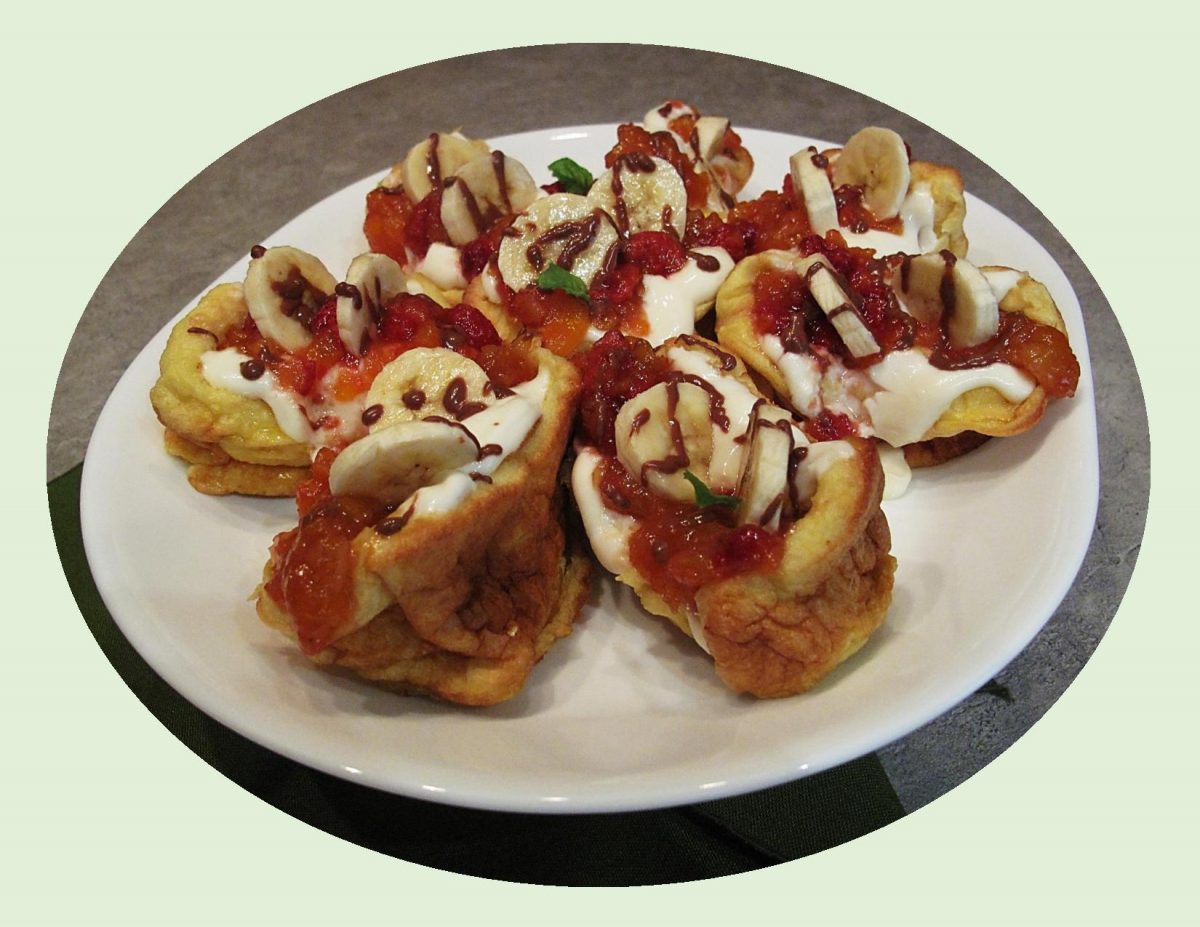
These German pancake ‘bites’ are kind of a fun spin on the classic Dutch baby pancakes. The fresh apricot/raspberry sauce along with the Greek yogurt filling, bananas and chocolate makes them such a decadent addition to brunch.

Print Recipe
German Pancake Bites
Votes: 1
Rating: 5
You:
Rate this recipe!
Servings
Ingredients
Pancake Batter
Greek Yogurt Filling
Apricot/Raspberry Sauce
Servings
Ingredients
Pancake Batter
Greek Yogurt Filling
Apricot/Raspberry Sauce
Votes: 1
Rating: 5
You:
Rate this recipe!
Instructions
Apricot/Raspberry Sauce
  1. In a food processor, place pitted apricots, lemon juice & sugar; pulse several times until the apricots are COARSELY chopped. Transfer mixture to a saucepan. Lightly boil over medium heat, uncovered for 10 minutes; stirring occasionally to prevent scorching. Add more sugar to taste depending on how sweet your apricots were. Add raspberries & simmer 1-2 minutes or until raspberries are heated through & softened. Set aside until ready to use.
Greek Yogurt Filling
  1. In a bowl, cream together cream cheese & sugar with a hand mixer. Add Greek yogurt & beat on medium-high until smooth & creamy. Set aside until ready to use. Refrigerate if not using right away.
Pancake Bites
  1. Preheat oven to 400 F. In a bowl, using a hand mixer, blend eggs, milk, vanilla, flour & salt until well mixed. Pour a small amount of the melted butter in 8 MINI loaf pans. Pour 1/3 cup of the mixture into each of the individual spaces.
  2. Bake for about 15 minutes. Remove from oven & invert on a cooling rack. Place 'bites' on a serving plate. Divide yogurt filling, placing some in the bottom of each individual pancake. Top each with some apricot/raspberry sauce & some banana slices. Drizzle with chocolate & sprinkle with powdered sugar. Serve immediately.

Dutch Christmas Log

About fifteen years ago, I had the opportunity to work in a Dutch bakery over the Christmas season. It wasn’t until then that I learned about the wonderful ‘speculaas spice’ and ‘banket‘.

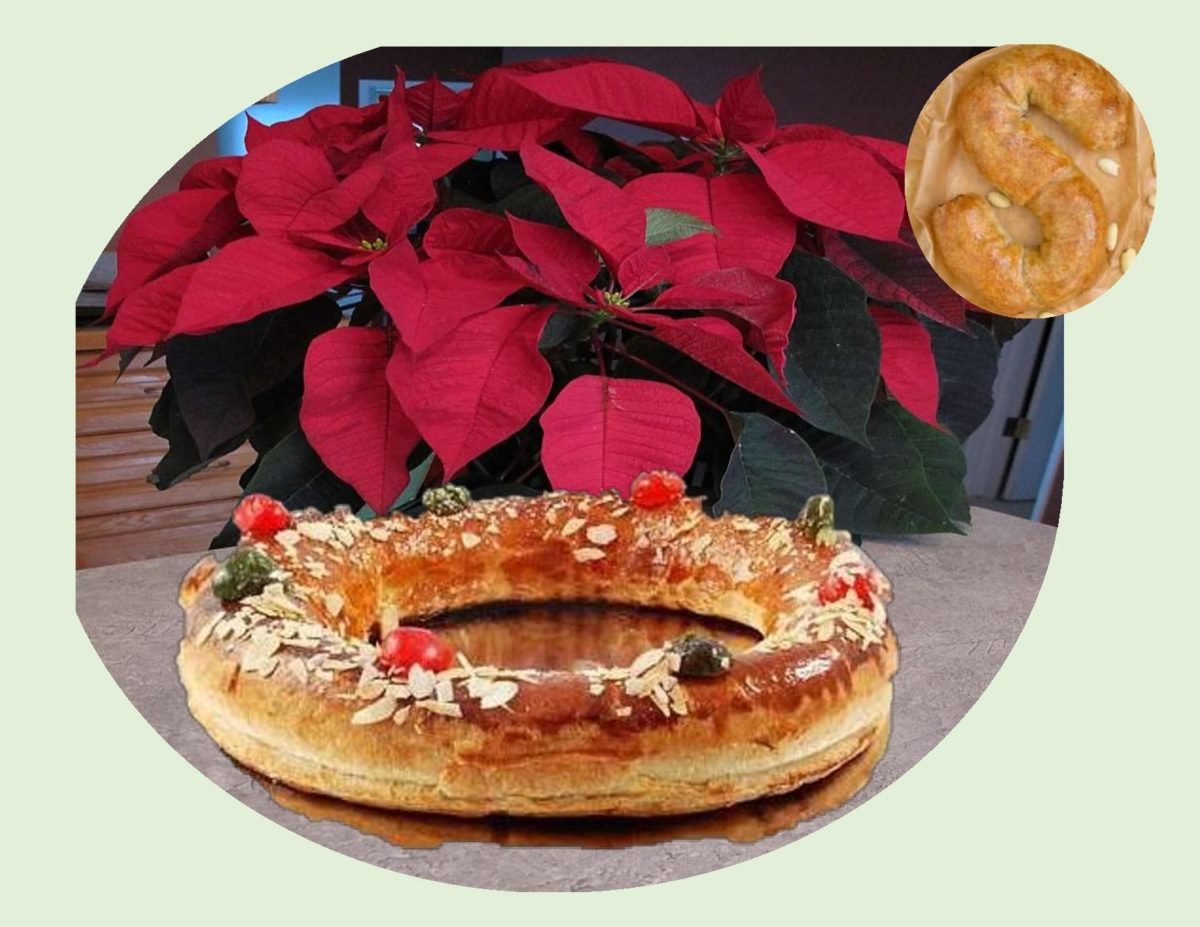
Bankerstaaf (Dutch Christmas log) or letterbanket is a sweet pastry stick or alphabet letters that originated in the Netherlands. They are popular during the Christmas season to celebrate Sinterklaas. Almond sticks and Dutch letters follow pretty standard, northern European, almond paste- filled pastry recipes. The custom of edible letters goes back to Germanic times when, at birth, children were given a letter made of bread as a symbol of good fortune. Convent schools in the Middle Ages used bread letters to teach the alphabet. When the letter was learned and could be written well, the pupil could eat the bread letter.

Letters became associated with Sinterklaas in the 19th century, when a sheet was used to cover St Nicolas’ presents. A bread dough letter, placed on top of the sheet, identified where a child’s gifts were located. Chocolate letters were first manufactured around 1900.

I was so amazed at the huge volume these almond-filled pastries sold in that Dutch bakery at Christmas time. One taste and I could understand why. If your’e not interested in the time consuming puff pastry process, there are some good quality ones in the frozen department at the supermarkets. I also found some real nice almond paste at an Italian grocery store. If you are an almond lover, this dessert is for you!

If you would like to make your own almond paste there is an easy recipe featured on a site called daringgourmet.com


Print Recipe


Dutch Christmas Log

Votes: 3
Rating: 4.33
You:
Rate this recipe!

Course Brunch, dessert
Cuisine American, Dutch, European

Servings

Votes: 3
Rating: 4.33
You:
Rate this recipe!


Instructions
  1. Preheat oven to 425 F. Line a baking sheet with parchment paper. On a lightly floured work surface, roll out puff pastry sheet& cut in half lengthwise.

  2. In a bowl, combine almond paste with orange zest & knead until blended. Divide almond paste into 2 even pieces & roll each one into a log approximately 1-inch shorter than the length of puff pastry.

  3. Place each almond log onto a puff pastry half. Fold 2 shorter ends of the pastry onto almond log. Brush one of the long sides with egg wash. Roll up almond log in pastry so that seam is on the bottom. Transfer logs to baking sheet, brush with egg wash & bake for 25 minutes or until slightly browned on top.

  4. In a microwave-safe dish, heat apricot jam for about 30 seconds or until jam is runny. Brush baked logs with apricot jam; sprinkle with sliced almonds & dust with powdered sugar.


Recipe Notes

The Difference Between Marzipan & Almond Paste -                                

  • almond paste is softer and is used in baked goods.   
  • marzipan is firmer and used in making candies/chocolates or as fondant for cakes. Marzipan also uses rose water.

German Gingerbread

Christmas is known for bringing out the ancestral origins in all of us, with every culture celebrating the holidays enjoying their specific holiday foods. Although my parents were born here in Canada, our German heritage was very evident in my mother’s cooking and baking.

One cookie that has been made specifically for holidays for hundreds of years is gingerbread. Across Europe you will find many versions of the spicy cookies in different shapes, colors and textures.

‘Lebkucken’, a traditional German gingerbread was invented by medieval monks in Franeonia, Germany in the 13th century. Prepared in monastery bakeries with ingredients that not only had symbolic religious meaning but were highly prized for their healing properties.

There are a variety of types of lebkucken, each distinguished by slight alterations in ingredients. Most common ingredients include:                            * honey, flour, sugar and eggs    * gingerbread spice mix or ‘Lebkuckengewurz’  * almonds, hazelnuts and/or walnuts  * candied lemon and orange peel.   The most critical ingredient being the ‘exotic’ spices from all around the world such as cinnamon, nutmeg, cloves, anise, cardamom, coriander and ginger.

Lebkucken can be round, square or rectangular. They can be glazed or not. Sometimes cocoa is mixed in with the dough making it rich and chocolaty. Other times, roasted apple, marzipan or cashews may be mixed in to add different flavors and textures.

‘Elisen lebkucken’ are the highest quality made. They must have at least 25% almonds, hazelnuts and/or walnuts and must contain no more than 10% flour if any. The ‘Nuremberg lebkucken’, baked in the city of Nuremberg, Germany, are known worldwide to be the best. Marzipan is often an ingredient in these gingerbread.

Of course this brings me back to another memory. Some years ago I had the experience of spending some time in the presence of a Dutch baker. At Christmas time, he would bake these incredible Dutch cookies called ‘Speculaas’ that were filled with marzipan and had that glorious similar spice blend. I just loved it and can’t resist making some version of it every Christmas season since.

Today, I’m making a large batch of lebkucken which I’m going to divide. Half of it is going to be made into ‘glazed’ triangles and the other half  I want to dip in white chocolate and add a little holly decoration. Should be good!

Print Recipe
German Gingerbread
Gingerbread cookies that are rich with warm spices, toasted nuts and candied fruit.
Votes: 1
Rating: 5
You:
Rate this recipe!
Servings
Ingredients
Gingerbread Dough
White Chocolate Icing
Glaze
Servings
Ingredients
Gingerbread Dough
White Chocolate Icing
Glaze
Votes: 1
Rating: 5
You:
Rate this recipe!
Instructions
Gingerbread Dough
  1. Preheat oven to 350 F. Spread hazelnuts on a baking sheet & toast until the skins blister, about 5 minutes. Let cool slightly, then transfer nuts to a clean kitchen towel & rub together to remove the skins. Cool completely.
  2. In a small bowl, combine almond meal, flour, baking powder, baking soda, spices & salt. Transfer hazelnuts to a food processor, add walnuts, candied citrus rind & crystallized ginger along with 1 cup of the dry ingredient mixture; pulse until very finely chopped. Add remaining dry ingredients & pulse ONLY to combine.
  3. In a large bowl, using a mixer, beat butter with brown sugar until creamy. Add honey & beat until smooth. Add eggs & vanilla, beating to combine. Fold in dry ingredients then beat until evenly combined. Divide the dough in half. Wrap in plastic wrap & chill for at least 4 hours or overnight.
  4. Line an 8 x 8-inch square baking dish with 2 pieces of parchment paper (this will allow you to easily remove squares fro the pan). Spread the half of the chilled dough evenly into baking pan & bake in the center of the oven until surface is dimpled & a toothpick inserted into the center comes out clean, about 20 minutes. The cake should be springy but firm. Let cool on a wire rack for 15 minutes.
Glaze
  1. In a bowl, whisk powdered sugar with your choice of flavoring & water to make a thin but spreadable glaze. Spread glaze on just-warm cake & let cool completely. Remove cake (with parchment) from pan onto cutting board. Cut 16 squares then cut each square into 2 'triangles' giving you 32 pieces.
Making Individual Cookies
  1. Line a large cookie sheet with parchment paper. Scoop about 1 1/2 Tbsp dough out at a time. Roll into balls. Place on parchment about 2-inches apart & bake at 350 F. for 15 minutes or test with a toothpick. Remove from oven & cool completely.
White Chocolate Icing
  1. In a microwave safe bowl, melt white chocolate chips with 1 Tbsp shortening on HIGH for 10 second intervals, stirring between intervals, until melted, smooth & fairly runny. Dip half of each cookie in melted white chocolate mixture then run bottom of cookie slightly along edge of bowl to remove excess. Place on parchment paper to set at room temperature.
  2. For the holly decoration, melt candy melts, one color at a time. Place in a small piping bag with a #4 tip & pipe decorations. Allow to set up at room temperature. You should have around 26 cookies.
Recipe Notes
  • If you would like a dark depth of flavor, add 2 Tbsp dark, unsweetened cocoa to your cookie dough as well as using a dark brown sugar instead of the light.
  • If you prefer to not make 2 different versions, make the whole recipe into either bars or rounds -- your choice!
  • This is one of those cookies that gets better as it ages.
  • Something I did & found it worked well was to portion out my cookies before chilling the dough.

Vanillekipferl – Gevulde Speculaas

I’ve always enjoyed food history and recreating memories from the past through cooking and baking. I had never realized how much my mother’s cooking was influenced by our German heritage. I guess as one gets older, things that were taken for granted now take on a whole new meaning. Today’s blog features a couple of those very special European treats. 

VANILLEKIPFERL or Vanilla Almond Crescent Cookies  –  Although this little crescent cookie originated in Austria, it has become very traditional in Germany. ‘Vanillin’ became very popular in the early 20th century, after artificial vanilla flavoring was invented. I’ve noticed there are numerous recipes that call for egg yolks in them. My personal preference is to make them without – just a few less calories. ‘Vanilla Sugar’  which is used in many German baked goods can be either bought in the Dr Oetker  brand or you can easily make it yourself. If you like the flavor of anise, you may want to try adding some anise seed to the cookie dough and when baked, dust these with  ‘Anise Sugar’.

GEVULDE SPECULAAS  or Spiced Cookies (Squares) Filled with Almond Paste  –  You’re right, this is very much a Dutch specialty. Some years ago I had the opportunity to spend a little time in the presence of a Dutch baker.  Among the many things I learned at that Dutch bakery was their love of almonds and those unique speculaas spices. In the mid 18th century, the recipe for ‘Spekulatius’  made its way to Germany from Holland and has become another traditional favorite. The origin of the cookie’s name may have derived from the Latin word ‘Spekulum’, signifying ‘mirror image’, which alludes to the wooden mold whose mirror image appears on the cookie. Since I became ‘hooked’ on that ‘speculaas spice’ combination, I like to make a small  pan of these very rich  and wonderful tasting goodies each Christmas. 

Print Recipe
Vanillekipferl / Gevulde Speculaas
Votes: 1
Rating: 5
You:
Rate this recipe!
Course dessert
Cuisine Dutch, German
Servings
Ingredients
Vanillekipferl (Vanilla Almond Crescent Cookies)
Speculaas Spice (about 3 Tbsp)
Course dessert
Cuisine Dutch, German
Servings
Ingredients
Vanillekipferl (Vanilla Almond Crescent Cookies)
Speculaas Spice (about 3 Tbsp)
Votes: 1
Rating: 5
You:
Rate this recipe!
Instructions
Vanillekipferl
  1. In a food processor, place flour & butter & pulse to combine until mixture resembles coarse crumbs. Place mixture in a large bowl. Add ground almonds, 1/4 cup powdered sugar, 1 pkg vanilla sugar, salt & extract. Knead dough with your hands in bowl until it comes together, about 5 minutes. Divide dough into four equal pieces, shaping each into a ball. Wrap in plastic wrap place in a sealed plastic bag. Refrigerate for at least 30 minutes or up to 2 days.
  2. Preheat oven to 350 F. Line a baking sheet with parchment paper. Remove one ball at a time from refrigerator. Roll into a rope 12 inches in length. Cut into 12 even pieces, rolling each with the palm of your hands to a 3-inch length. Form into a crescent shape & place 2 inches apart on baking sheet. When you have filled the baking sheet, bake for about 12 minutes, just until tips of crescents turn a light golden brown. Using another COLD baking sheet repeat with remaining dough.
  3. Allow cookies to rest on baking sheet for 2-3 minutes. In a small bowl, mix together 1/2 cup powdered sugar remaining package of vanilla sugar. Carefully coat warm cookies in sugar mixture; place on a wire rack to finish cooling. Allow to sit out overnight then transfer to an airtight container for storing or freezing.
Gevulde Speculaas
  1. In a food processor, combine flour, baking powder, sugar, salt & spices. Add chunks of cold butter & pulse into a smooth dough (you can do this by hand if you prefer). If the dough is too dry. you can add a little milk. Wrap dough in plastic wrap & place in refrigerator for 2 hours or up to 2 days.
  2. Either grease or line a 8 x 8" baking dish with parchment paper. Preheat oven to 350 F. Divide dough into 2 portions. Roll out each portion on a lightly floured surface, until they are exactly as big as baking pan. Put one layer in pan & press lightly to fill the bottom. Lightly beat egg with a teaspoon of cold water. Spread 1/3 of egg over dough in pan.
  3. Roll out the almond paste between two sheets of plastic wrap, until it is exactly the size of pan. Press the paste lightly down to fit in the pan, and spread the next 1/3 of egg over it. Place the second layer of dough on top of the paste, press it lightly, making it as smooth as possible. Spread the last 1/3 of the egg wash over dough. Decorate the pastry with the almonds.
  4. Bake about 40 minutes or until they test done. Allow speculaas to cool completely in the pan, then cut into the portion size you prefer.
Recipe Notes
  • If you would like to make the 'Anise Seed Crescent Cookies' instead of the Vanilla Almond version, use vanilla extract instead of almond & add 1 Tbsp of crushed anise seed to the batter. For the 'Anise Sugar', blend (at a high speed), 1 Tbsp aniseed with 1 cup of granulated sugar until it makes a powder.
  • Although Gevulde Speculaas are at their best when fresh, I have never heard any complaints after they have been frozen. I always make sure they are wrapped in an airtight way before freezing.
  • In regards to the 'speculaas spice', I like to make extra so I can use it in anything you would normally use apple or pumpkin pie spice in.