I never seem to get enough of making use of my rhubarb plants, since this is probably my 4th ‘rhubarb’ blog so far this year. I’m sure any of you that are following my blog stories are tired of hearing about rhubarb but ……… At the risk of boring you with this subject, I still want to share a few other ideas for this seasonal plant.
Spiced Rhubarb Relish : Place 8 cups chopped rhubarb, 2 cups chopped onion, 1 tsp allspice, 1/2 cup vinegar, 2 cups sugar & 1 1/2 tsp salt in a large pot; bring to a boil. Reduce heat; simmer & cook uncovered on low heat, stirring frequently. Cook until onion becomes tender & mixture thickens. Pour into hot sterilized jars & seal. Nice to serve with red meats. Stewed Rhubarb: In a medium saucepan, heat 4 cups sliced rhubarb with 2/3 cup sugar over medium heat until tender, about 15 minutes. Stir often. Rhubarb Smoothie: To cold stewed rhubarb add your choice of frozen berries, low-fat yogurt, orange juice & a banana. Mix in a blender & add honey to taste. Rhubarb Muffins/Scones: Add 1 cup of finely chopped rhubarb & zest of 1 orange to your favorite batter. Rhubarb Applesauce: Heat 3 cups of peeled, sliced apples, 1/3 cup sugar, 1 cup chopped rhubarb over medium heat until apples are soft, about 15 minutes. Stir often. To enhance flavor, add raisins, cinnamon or ginger to taste. Rhubarb Cherry Pie: Stir 1 cup coarsely chopped rhubarb with 1 – 540 ml can of cherry pie filling. Bake the same as you would for a cherry pie. Savory Rhubarb Pork Sauce: In a medium saucepan, combine 2 cups sliced rhubarb with 1/3 cup brown sugar, 1 Tbsp cider vinegar & 3/4 tsp fresh, grated ginger. Simmer until soft.
Hopefully you will find one of these ideas useful. Enjoy!
Print Recipe
Rhubarb Mini Flans
Votes: 1
Rating: 5
You:
Rate this recipe!
|
|
Votes: 1
Rating: 5
You:
Rate this recipe!
|
Instructions
Cornmeal Tart Crust
In a food processor, place flour, cornmeal, salt & sugar; pulse several times to combine. Add butter; process until mixture resembles coarse meal, about 10 seconds. While machine is running, pour the ice water through the feed tube in a slow, steady stream, until the dough just holds together (do not process for more than 30 seconds). Turn the dough out on work surface. Place dough on plastic wrap. Flatten to form disk; wrap & refrigerate at least 1 hour.
Rhubarb Filling
In a medium saucepan, combine rhubarb, both sugars, cornstarch & salt. Cook stirring occasionally, until the rhubarb releases its liquid & begins to breakdown, creating a thick, chunky sauce, about 10 minutes. Remove from the heat & stir in vanilla. Set aside to cool to room temperature.
On a lightly floured work surface, Divide dough into 16 pieces. Line 8 mini flan pans with bottom crusts; rolling the remaining 8 balls into circles for top crusts. Pace circles on parchment paper. Refrigerate bottom & top crusts again for 1 hour.
Preheat oven to 375 F. Divide rhubarb filling among the 8 tarts. Cut a design of choice in the top crusts & fit to mini tarts. Brush with egg wash & sprinkle with sugar. Bake until crust is golden & filling bubbles a little bit, about 20-25 minutes. Serve warm or at room temperature, topped with whipped cream or ice cream.
Recipe Notes
- These little minis would also be nice made as fruit galettes for something a bit rustic looking.
EASTER GREETINGS!
The meat traditionally associated with Easter in America is ham, while in many other parts of the world, the arrival of spring is celebrated with lamb. Eating ham at Easter dates back to at least the 6th century in Germany. Pigs thrived in northern Europe, being forest-adapted animals. They were let to roam the abundant woodlands to forage for acorns and roots. Slaughtered and hung in the autumn of the year, pigs were one of the few meats available to eat in early spring. As Christianity spread northward, it merged with the Pagan spring celebration of ‘Eostre’. A convenient uniting of traditions was born, with ham at the center of the Easter feast.
Even though, adding ‘glaze’ while baking a ham seems like a ‘modern’ idea, raw honey was being used in much earlier times.
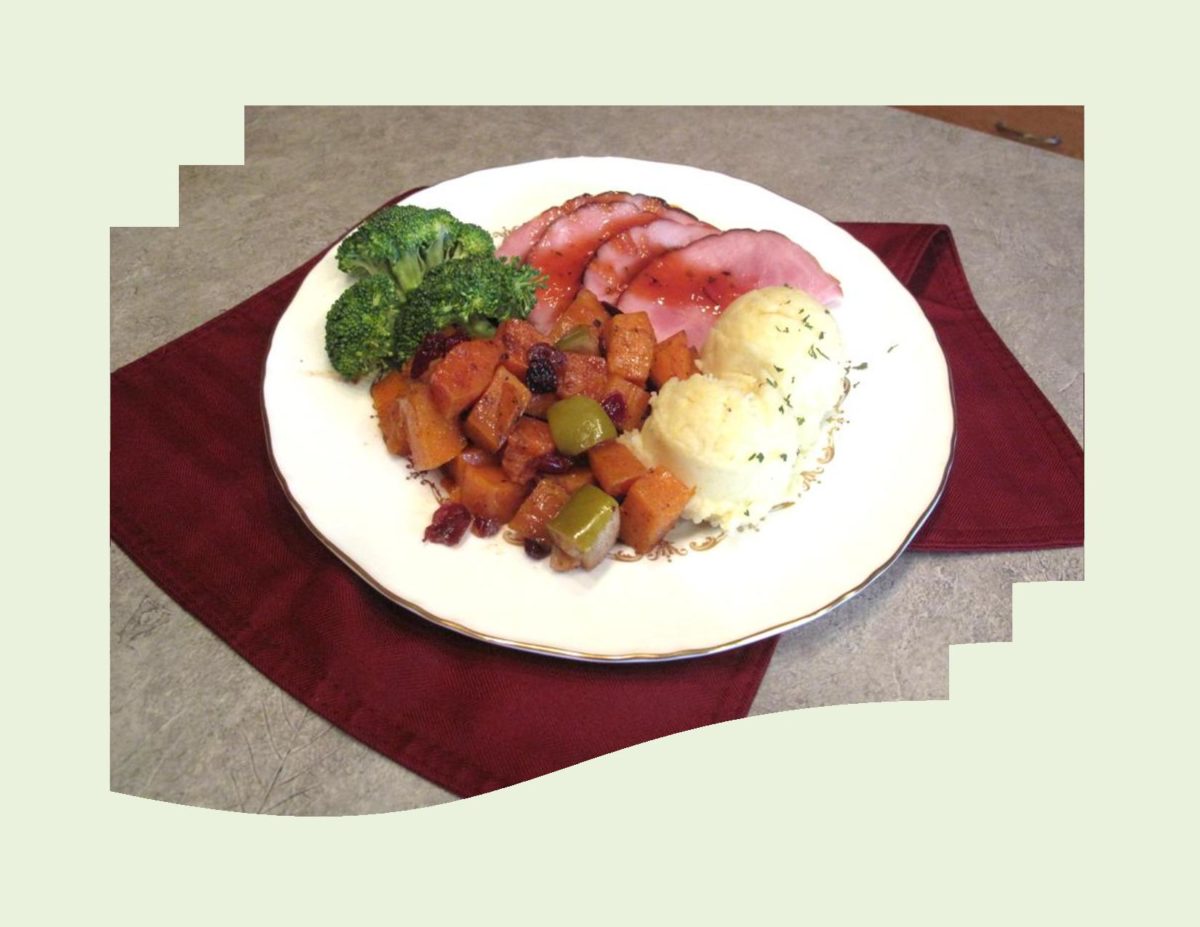
A glaze that is both sweet and savory has been one of my favorites for many years. Brion & I are looking forward to enjoying some glazed ham for our Easter meal.
HAPPY EASTER TO EVERYONE THANKS FOR YOUR INTEREST IN FOLLOWING MY BLOGS!
Print Recipe
Baked Glazed Ham
Votes: 1
Rating: 5
You:
Rate this recipe!
|
|
Votes: 1
Rating: 5
You:
Rate this recipe!
|
Instructions
Preheat oven to 325 F. Place ham, cut side down, on rack in a roasting pan. Bake about 30 minutes or until internal temperature reaches 90 F.
In a small saucepan, simmer jelly, preserves, vinegar, mustard, brown sugar & sage stirring occasionally. Remove from heat.
Remove ham from oven. With a sharp knife, lightly score outside of ham, making parallel 1/4" deep cuts in crosshatch pattern. Brush ham with some of the glaze & return ham to oven. Bake until internal temperature reaches 130 F., brushing ham with glaze during baking.
Carefully place ham on a serving platter. Cover loosely with foil & let stand 10 minutes before serving. Internal temperature will rise to 140 F. upon standing.
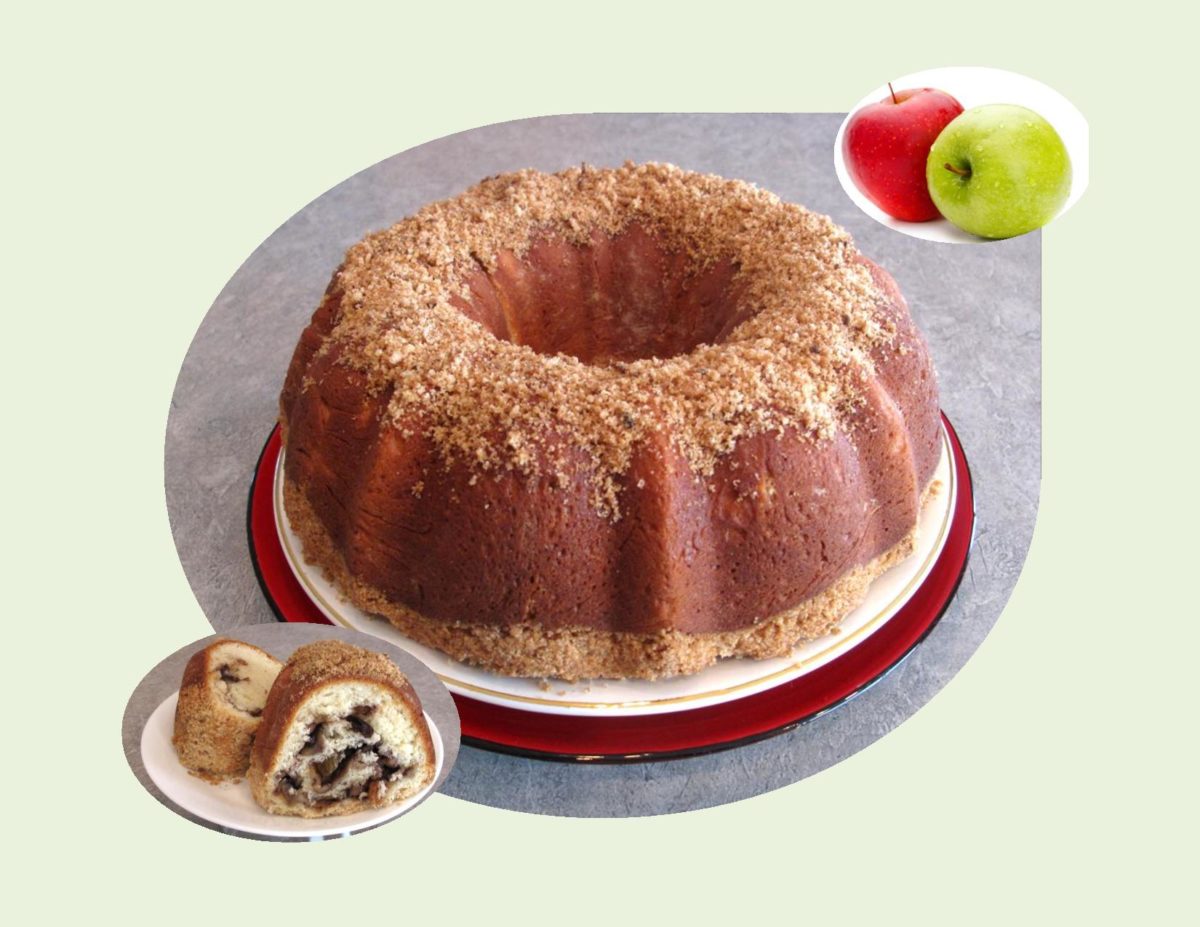
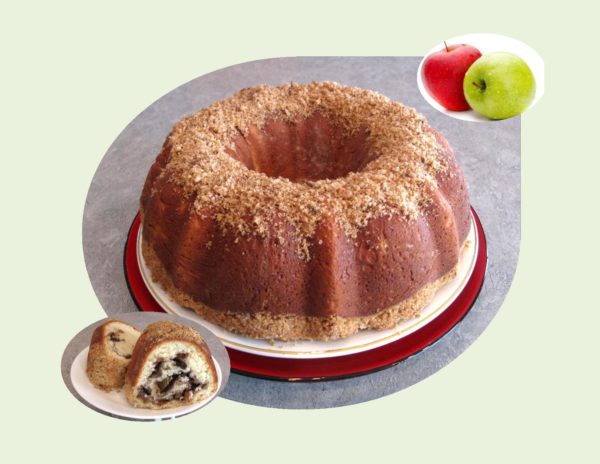
German-inspired yeasted coffee cake is a very popular type of cake all over Germany and Austria. It is very different from the typical butter cake associated with streusel coffee cake in North America. Whereas a butter cake is rich, sweet and fine grained, kuchen is light and slightly porous with a complexity of flavor that can only be found in yeast leavened baked goods. Of course, there are many different variations, but the important part is the streusel or crumbled topping, which consists of a combination of flour, sugar, butter and spices.
In the past, most German towns and cities had orchards planted all around them, on land that belonged to the community. Cows or sheep grazed underneath the trees and people were free to pick the fruits when they became ripe. Today most of those common lands have been turned into suburbs and the trees are gone. Destruction of the remnants of ancient orchards is ongoing, contributing to the loss of heirloom varieties. Even though the diversity of choice is decreasing, the apple is still by far the most popular fruit in Germany.
Here is my best adaptation of an APPLE STREUSEL COFFEE CAKE that I think you might enjoy to try.
Print Recipe
Apfel-Streuselkuchen - German Apple Coffee Cake
Votes: 2
Rating: 4.5
You:
Rate this recipe!
|
|
Votes: 2
Rating: 4.5
You:
Rate this recipe!
|
Instructions
Coffee cake
In a large bowl, combine yeast, 1/8 cup sugar & lukewarm water; allow to dissolve. Stir in remaining 1/8 cup of sugar, salt, milk, sour cream, lemon juice & vanilla; mix well. Add egg & blend.
With fingertips, rapidly work the butter into 2 1/2 cups of the flour until coarse, meal-like consistency. Add to the yeast mixture & knead in bowl, adding more flour if necessary to make a smooth, elastic dough. Shape into a ball & place in a lightly buttered bowl. Cover tightly and let rise in a draft-free place until doubled in bulk.
Apple Filling
Peel & slice apples. In a small saucepan, combine all filling ingredients except pecans. Cook over medium heat, stirring constantly until apples are tender, & juice has evaporated. Stir in pecans; set aside to cool.
Streusel Topping
In a small bowl, combine flour, sugar, salt, cinnamon & lemon zest. With fingertips, rub in butter until mixture is coarse & crumbly. Set aside.
When dough has doubled in size, turn out on a lightly floured piece of wax paper. Press out gently into a rectangle about 10 x 14-inches in size. Spread apple filling to within 1/4-inch of edges & very gently press into dough. Roll up from the wide end, jelly-roll fashion.
Preheat oven to 375 F. Butter a 9-inch tube or bundt pan. Sprinkle half of the streusel in pan. Carefully, (dough will be very soft) with the help of the wax paper, fit the roll into the pan so that the ends of the dough join. Pinch ends of together. Sprinkle cake with remaining streusel. Bake for 30 minutes. Remove from oven & allow cake to cool before slicing.