
Unusual fruit chutneys are growing in popularity with our developing taste for condiments that contain less sweet and more spice. Chutney, pronounced ‘chuht-nee’, refers to a family of condiments from South Asian cuisine. While Chutneys are most often associated with India, they’re also popular in Africa and the Caribbean islands.
They can be fresh or cooked and are made from a wide variety of ingredients usually from some concoction of fruits and/ or vegetables and spices. They range in flavor from sweet or sour, spicy or mild, or any combination of these, while their texture can be thin or chunky. Some compare chutneys to a relish and others to a jam. Chutney is most often used to balance a dish and may be on the sweet and tart side or provide a spicy and hot flavor. To add to the confusion, many times chutney is also mistakenly called a relish (and vice versa) but there are subtle differences between the two. Relishes tend to be a bit sweeter, while Chutneys are more on the savory side. Chutneys are cooked slowly, are more likely to be chunkier and have a consistency that is much like preserves while relishes are barely cooked, rarely use any sugar and are crunchier.
This simple to prepare chutney makes for a tasty, tart counterpart to the richness of pork.
Print Recipe
Roast Pork Tenderloin w/ Blackberry RhubarbChutney
Votes: 1
Rating: 5
You:
Rate this recipe!
Ingredients
Blackberry-Rhubarb Chutney
Ingredients
Blackberry-Rhubarb Chutney
|
Votes: 1
Rating: 5
You:
Rate this recipe!
|
Instructions
Risotto
In a heavy saucepan, heat butter & oil over medium heat then add 1 clove garlic & the mushrooms. Season with salt & pepper & sauté until mushrooms are golden brown & tender, about 6 minutes; remove from pan. Toss mixture together with parsley; set aside.
Heat broth in a microwave-safe bowl until hot. Cover & set aside. Heat remaining oil over medium-high heat in a heavy saucepan. Add onion & remaining garlic; cook, stirring until aromatic & softened, about 3 minutes. Add barley & cook, stirring to coat in oil. Stir in wine & cook until almost completely evaporated, about 3 minutes. Stir in 1/2 cup hot broth; continue stirring until stock has been absorbed, about 4 minutes. Reduce heat to medium & continue adding hot broth until broth has been absorbed & barley is tender, about 30 minutes.
Stir in cream & cheese, stirring until creamy. Remove from heat; stir in reserved mushroom mixture; set aside until ready to stuff tenderloin.
Risotto can be prepared ahead, once cooked, cover & refrigerate for up to 3 days.
Tenderloin
-
Cut tenderloin down the center, lengthwise, stopping when you are about 1/2-inch from the bottom of roast. Open the tenderloin like a book. Season inside surface lightly with salt & pepper.
Spoon risotto down the center of the tenderloin. Bring the 2 sides of the tenderloin up & around the filling to almost meet. Use wooden skewers to join the meat together, spacing the skewers apart at 2-inch intervals. Use butcher twine to 'lace up' the roast by weaving between the skewers (like lacing a shoe).
Place the tenderloin on a rack in a shallow pan. Stick thermometer into the exposed pork around the risotto. Rub pork with 1 Tbsp oil & lightly season with salt & pepper. Oven sear roast for 10 minutes.
Reduce heat to 300 F. Stuffed pork tenderloin should reach an internal temperature of 145°F. To prevent it from drying out, remove the pork from the oven when it reads 135°F to 140°F, cover loosely with foil let it rest for 5 minutes, as the carryover heat will bring it to the final safe temperature.
Chutney
Combine all chutney ingredients in a medium saucepan. Bring to a boil over high heat, then reduce heat to low & simmer, uncovered, for 45 minutes to an hour, stirring frequently, until thick. Set aside until ready to serve with stuffed tenderloin.

Lasagna is not a quickie weekday meal but as we (lasagna lovers) all know, it’s definitely worth the effort. There’s several elements involved: making the filling, the sauce, layering everything and cooking it all together.
Canned salmon is a nutritious option to have in your pantry staples. Being very versatile it can be paired with plenty of different ingredients to transform it into a variety of healthy meals. Whether you use red or pink is a personal choice but opt for responsibly sourced wild as opposed to farmed in any case.
I have given ‘meaty’ lasagna a seafood twist that’s just as delicious if you enjoy salmon.
Print Recipe
Salmon Lasagna
Votes: 2
Rating: 5
You:
Rate this recipe!
|
|
Votes: 2
Rating: 5
You:
Rate this recipe!
|
Instructions
Mushroom & Leek Filling
In a saucepan, heat butter & saute mushrooms, leeks & garlic for 5-10 minutes, stirring over low heat until softened & moisture has evaporated. Add the salt.
Bechamel Sauce
Melt butter in a large saucepan until it is foaming. Whisk in the flour to make the roux & cook for 2 minutes. Slowly add milk, whisking constantly until it is incorporated into the sauce. Bring the sauce to a low simmer & cook for 3-4 minutes or until thickened. Whisk in mustard, dill, lemon zest & (40 gm) grated Parmesan. Season with salt & pepper.
Assembly
-
Evenly spread a small amount of sauce to the bottom of a 13 x 9-inch baking pan. Place a layer of 3 cooked lasagna noodles over the sauce then cover with a bit more sauce.
Spread the salmon over the sauce & top with half of the shredded mozzarella. Top that with a bit more sauce & the next layer of 3 lasagna noodles. Spread the mushroom/leek filling on top then add the remaining shredded mozzarella.
Top with a final layer of 3 lasagna noodles & cover with the remaining bechamel sauce. Sprinkle with Parmesan/cheddar combo.
Bake for 25 minutes. Remove from oven & allow to cool for 10 minutes before slicing to serve.
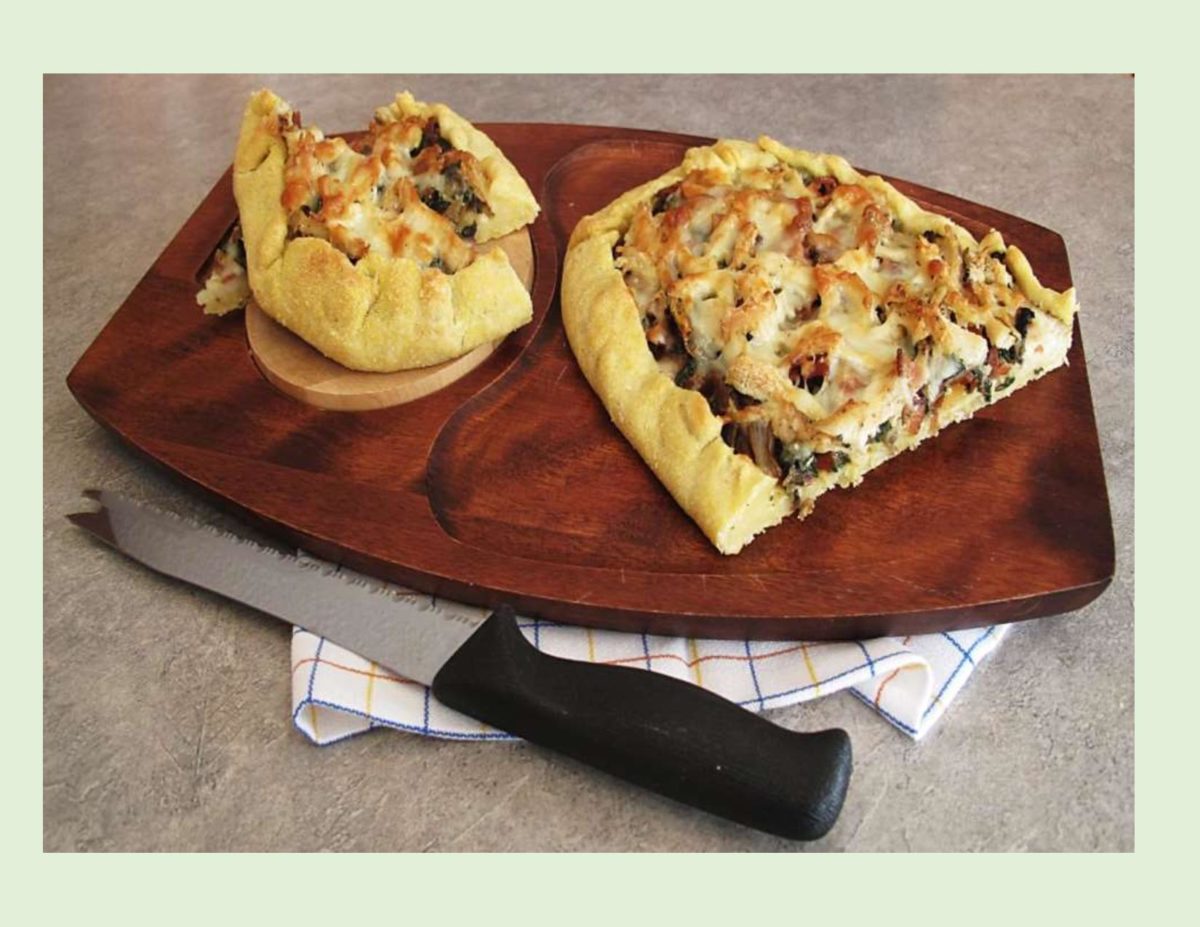
Whether you call it quiche, tart, galette, pizza or pie, these uncomplicated dishes remain some of the most universally appealing. Depending on the setting and time of day, such open face preparations can serve as a first course or an ideal main luncheon dish. Versatility makes them picnic fare as well as late evening snacks.
Spinach is a green that Brion longer enjoys to eat so I have sometimes used Swiss chard in its place. This particular galette uses a nice flour/cornmeal pastry. The chard and Gruyere make an excellent pairing. I love the vast complexity of Gruyere with its fruity tones slowly going towards earthy and nutty flavors. Covered by a natural rind, the texture is dense then matures to flaky and somewhat granular as it ages. No silage ever enters the diet of the cows providing the milk for it. Instead, these Swiss alpine cows, are allowed to roam freely on pastures cushioned between freshwater streams and hillsides. This natural forage is key to imparting the signature flavors of Gruyere.
Today’s galette can be just a meatless version or you can add chicken, bacon, pine-nuts, corn, mushrooms or whatever you prefer. It all works!
Print Recipe
Chard, Chicken & Gruyere Galette
Votes: 1
Rating: 5
You:
Rate this recipe!
|
|
Votes: 1
Rating: 5
You:
Rate this recipe!
|
Instructions
Cornmeal Galette Dough
-
In a small bowl, combine sour cream & ice water; set aside. In a large bowl, whisk together flour, cornmeal, sugar & salt. Using a pastry blender or finger tips, cut in butter until mixture resembles Both coarse crumbs & small peas. Sprinkle the cold sour cream mixture over dough, 1 Tbsp at a time, tossing with a fork to evenly distribute it. After you have added all the sour cream mixture, dough should be moist enough to stick together when pressed; if not, add additional cold water, 1 tsp at a time. DO NOT overwork dough. Press dough into a disk shape & wrap in plastic wrap. Refrigerate for at least 2 hours.
Mustard Sauce
-
In a small saucepan, melt butter. Whisk in flour & continue to cook, whisking constantly for about 2 minutes until golden brown. Add chicken broth & mustard. Continue to simmer, whisking until thick & bubbly. Remove from heat; set aside to cool slightly.
Filling
-
In a skillet, saute bacon until cooked; remove from pan; set aside. Remove stems from chard leaves; chop to equal 1 cup. Chop leaves to equal 4 cups. Heat bacon drippings in skillet over med-high heat. Reduce heat & add chard stems, mushrooms, garlic & onion to pan; saute 5 minutes. Add chard leaves to pan; saute until chard is wilted & no moisture remains, about 10 minutes. Stir in thyme, parsley, pepper, bacon & shredded chicken. Remove from heat & cool slightly.
Assembly
-
Preheat oven to 375 F. Remove pastry from refrigerator. On a 12 X 16-inch sheet of parchment paper, press out pastry into two rectangles about 9 X 14-inches ( you can make one big one if you prefer). Carefully spread mustard sauce over surface of dough, leaving an inch border all the way around pastry. Sprinkle with Parmesan cheese; make a layer of cooked, thinly sliced potato then evenly top with filling mixture. Sprinkle divided Gruyere between both galettes & fold edges of dough inward over filling. Brush egg wash over exposed crust.
-
Bake until crust has browned & cheese has melted, about 25-30 minutes. Slide the galettes off the parchment onto a cooling rack or cutting board. Slice & serve.


