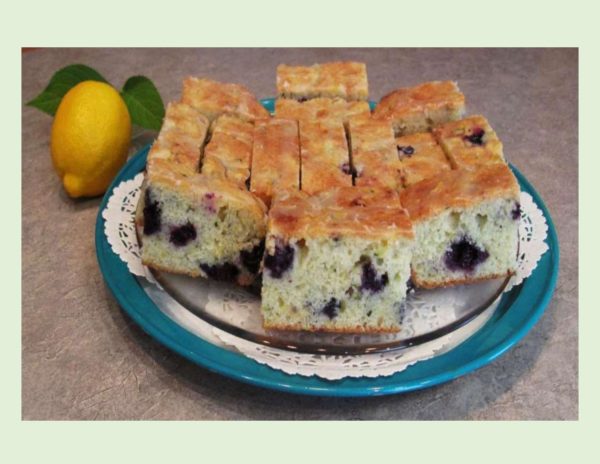
There’s no question, fresh blueberries are a pleasure to bake with. But, along with being quite expensive, their season is short. As a result, frozen ones become the backbone of winter blueberry desserts. Using them in a pie presents no problem. When it comes to putting them into a batter, frozen berries bleeding juice, turn that golden hue into a shade of purple green when baked. Not good! I’ve found a simple solution is to rinse the berries in cold water, then gently dry them between layers of paper towel. You will probably lose a bit of the berries nutrition, but for most part, the juice and vitamins will remain inside.
Pairing zucchini with fruit in baked goods might seem a little odd but no different than using carrots in cake. Zucchini has grown in popularity over the years due to its amazing growth rate in the garden and its versatility. It can be sauteed, baked, poached, stuffed, eaten raw and of course baked into breads, cakes, scones etc., etc.
These little blueberry/zucchini bars are extremely moist and tender. The lemon in the batter and the glaze takes them to the level of amazing in my opinion. We just loved them.
Print Recipe
Blueberry Zucchini Bars with Lemon Glaze
Votes: 5
Rating: 4.4
You:
Rate this recipe!
|
|
Votes: 5
Rating: 4.4
You:
Rate this recipe!
|
Instructions
Batter
Preheat oven to 350 F. Grease a 9 X 13-inch ( or 15 X 10 X 1) baking pan.
In a small bowl, combine zucchini, buttermilk, lemon zest & lemon juice; toss to combine. In a large bowl, cream butter & sugar until light & fluffy. Beat in eggs, one at a time. In a third bowl, whisk 3 1/4 cups flour, baking soda & salt; gradually add to creamed mixture alternately with zucchini mixture, mixing well after each addition. Toss blueberries in remaining flour; fold into batter.
Transfer batter to prepared pan, spreading evenly. Bake 50 minutes for 9 X 13-inch size or until light golden & a toothpick inserted in center comes out clean. Remove from oven to a wire rack.
Lemon Glaze
In a small bowl, mix glaze ingredients until smooth; spread over top while bars are still warm.
Recipe Notes
- This recipe easily divides in half for a smaller amount using an 8 X 8-inch baking pan.
When I was growing up, cornbread was one of my favorites. My mother always called it ‘Johnny Cake’. Because it is a little sweeter than most dinner breads, it seemed like we were having dessert along with our soup, chili or whatever our main course was. That’s the nice thing about cornbread — it can be whatever you want it to be from breakfast to dessert.
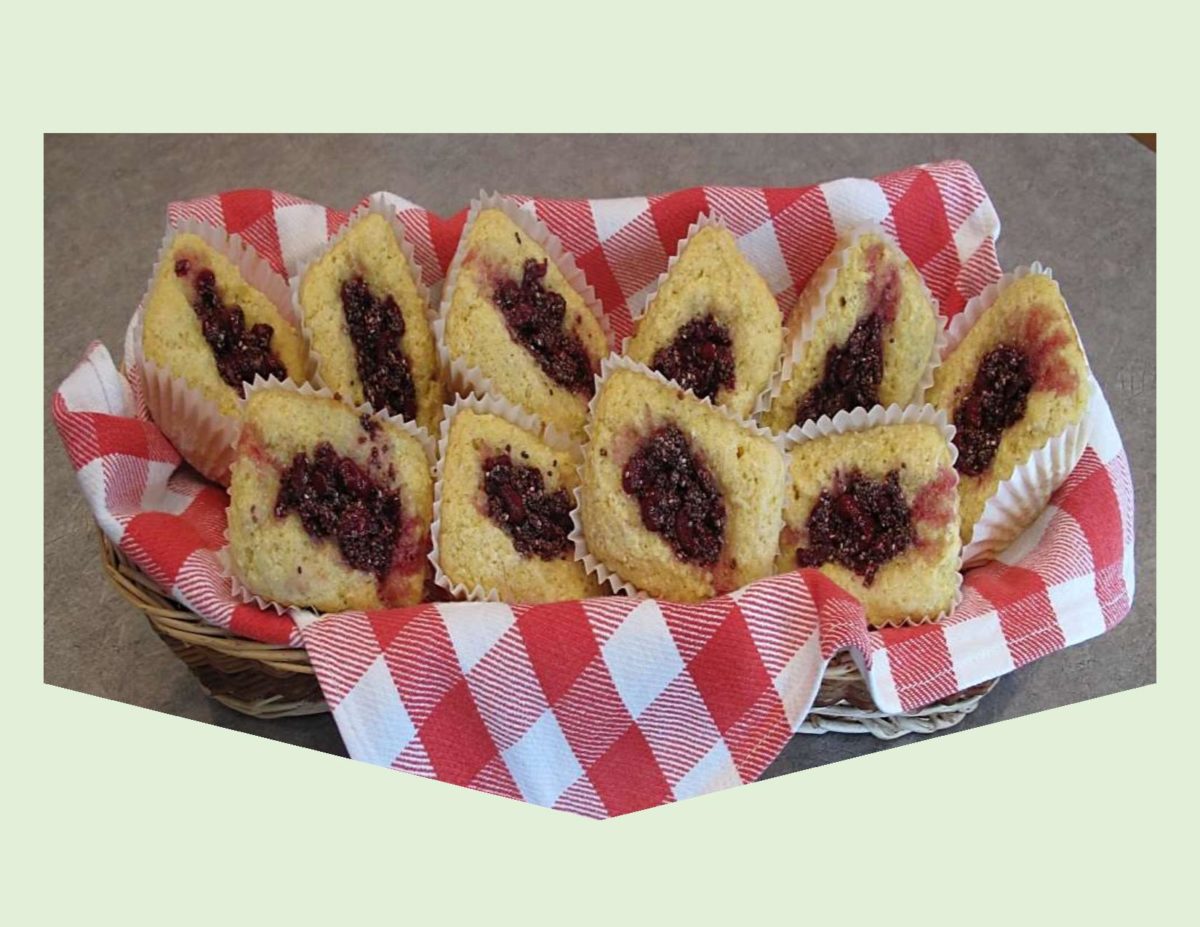
Tucked away in the freezer, I have a little stash of sour cherries. On this occasion I’ve decided to make a bit of ‘sour cherry chia jam’ and add a dollop to the center of some cornbread scones.
Chia seeds used to be a niche ingredient you could only come up with at health food stores. Then all of a sudden they began appearing at the grocery store in the bulk department. As time has passed, the price is becoming a little better as well as the availability of them.
Chia seeds are harvested from a flowering plant in the mint family, which is native to parts of Mexico and Guatemala. Good quality seeds are naturally black or white in color, not brown. The brown chia seeds are immature ones which haven’t had a chance to mature properly, resulting in a bitter taste. Having a long shelf life, chia seeds will keep for several years when stored in a cool, dry place.
These scones may seem a bit unusual, but are well worth trying. I always enjoy to incorporate a bit of oatmeal for some extra flavor.
Print Recipe
Cornbread Scones with Sour Cherry Chia Jam
Votes: 2
Rating: 5
You:
Rate this recipe!
|
|
Votes: 2
Rating: 5
You:
Rate this recipe!
|
Instructions
Sour Cherry Chia Jam
In a saucepan, bring cherries to a boil, stirring frequently. Reduce heat to low & simmer until the cherries soften, about 5 minutes. Remove from heat & stir in honey & chia seeds. Continue stirring for about 5 minutes until mixture thickens. Use in making the cornbread scones. Store any leftovers in a glass jar in the refrigerator. The jam will keep in the fridge for up to a week.
Scones
Preheat oven to 350 F. Lightly butter mini loaf pans or whatever choice of pan is preferred. In a food processor, pulse oatmeal for a few seconds then add flour, cornmeal, salt, baking powder, baking soda & sugar. Pulse for a few more seconds to evenly mix. Add cold butter & pulse just slightly to cut in; do not over mix. Place in a bowl, add buttermilk & combine ONLY until just mixed.
Divide dough into 10 mini loaf cups. Place a dollop of cherry chia jam in the center of each scone. Bake 15-20 minutes or until they test done with a toothpick. Nice to serve warm.

Not a pie at all, traditional whoopie pies are two thin chocolate cakes sandwiched around a white frosting. The origin of the whoopie pie is somewhat controversial. Some people say they were invented in Medieval Germany and brought to the USA by immigrants. Women would bake cakes and use leftover batter and icing to make these special treats. The little cake sandwiches were placed in children’s lunch boxes, where upon discovering them, cries of ‘whoopie’ were shouted. From the basic chocolate and vanilla formula of the past, a whole host of varieties have since taken the stage.
I love the pastel shades of Spring and try to incorporate them into anything I can. When I was shopping the other day, I happened to see some little colorful French Macaron cookies in a bakery window. As great as they look, I personally have never cared for the ‘meringue’ type cookie. Nevertheless, it gave me some inspiration for some ‘spring’ whoopie pies. Adding a few new flavors to the chocolate and vanilla batters along with some flavored Mascarpone fillings takes whoopie pies (cookies) to a whole new level.
Print Recipe
'Spring" Whoopie Pies with Mascarpone Filling
Votes: 1
Rating: 5
You:
Rate this recipe!
Ingredients
Basic Vanilla Cookie Batter
MASCARPONE FILLINGS - Raspberry, Blueberry, Apricot & Strawberry Preserve
Ingredients
Basic Vanilla Cookie Batter
MASCARPONE FILLINGS - Raspberry, Blueberry, Apricot & Strawberry Preserve
|
Votes: 1
Rating: 5
You:
Rate this recipe!
|
Instructions
Preheat oven 350 F. Line baking sheets with parchment paper. In a large bowl, using an electric mixer, beat butter, sugar & vanilla until light & fluffy. Beat in egg. In another bowl, whisk together flour, baking soda & salt. Add flour mixture to butter mixture alternately with buttermilk.
In separate small bowls, divide vanilla batter into 4 equal portions. Leave one plain, to the second dish add pistachio nuts & a tiny bit of green food color gel. To the third dish add 2-3 Tbsp Chambord liqueur & red food coloring. To the fourth add lemon zest & yellow food color.
FOR CHOCOLATE BATTER: Follow directions in the first paragraph, adding cocoa along with flour mixture. Using a small scoop or heaped tablespoon, spoon mixtures onto baking sheet. Allow room for spreading. Bake for 10-12 minutes. DO NOT OVER BAKE. Remove from oven & transfer to wire rack.
While whoopies are baking prepare Mascarpone fillings. For every 60 grams of Mascarpone use 2-3 Tbsp of one of the preserve flavors.
When the whoopies are cold, match each with whoopie half with its closest partner size. Spread with a knife or use a piping bag to cover the flat side of one whoopie half of each pair generously with filling. Top each with its matching half, flat side down & gently press together.
Recipe Notes
- Another flavor you might enjoy is lemon curd which can be purchased in the preserve section of the grocery store.
- For chocolate filling, add a little cocoa powder & powdered sugar to some Mascarpone.
- For some of the vanilla whoopies, I made a Rosewater flavored filling with 1 tsp margarine, 60 gm Mascarpone, 3 Tbsp powdered sugar & 3/4 tsp rosewater.

Traditions are always an interesting subject to me and as we acknowledge St. Patrick’s Day it seems a good time to check out a few. Corned beef and cabbage is hardly an Irish tradition. While the Irish certainly cooked corned beef, it was actually bacon (more like ham) and cabbage that was the yearly tradition. The unpopularity of corned beef in Ireland comes from its relationship with beef in general. From early on, cattle in Ireland were not used for their meat but for their strength in the fields, their milk and the dairy products produced. In Gaelic Ireland, cows were a symbol of wealth and a sacred animal. Because of their sacred association, cows were only killed for their meat if they became too old to work or produce milk. Beef was not even a part of the diet of the majority of the population.
However, the move to America changed that for many Irish immigrants. Corned beef was made popular in New York bars at lunchtime. The bars offered a ‘free lunch’ to the Irish construction workers who were building NYC in the early part of the 20th century. The catch was that you had to buy a couple of beers or shots of whiskey to get the free lunch. This is how corned beef became known as an ‘Irish’ food.
The Irish Americans transformed St. Patrick’s Day from a religious feast day to a celebration of their heritage and homeland. The popularity of corned beef and cabbage never crossed the Atlantic to the homeland. Instead the traditional St. Patrick’s Day meal eaten in Ireland is either lamb or bacon.
While on the subject of traditions, it brings me to Irish Soda Bread. Contrary to belief, soda bread did not originate with the Irish but instead with Native Americans before European colonization. At that time soda bread was made by using pearl-ash or potash (a natural soda in wood ashes) to make the bread rise. This became the forerunner to baking soda.
In the early and mid 1800’s, Ireland adopted this soda bread which is most often identified with them. Because it required so few ingredients, soda bread was an economic choice for staple breads. Irish families generally had kitchens with open hearths instead of ovens with breads being baked on griddles or in iron pots. This resulted in a loaf that was dense, slightly sour and with a hard crust. The original recipe contained nothing more than flour, buttermilk, baking soda and salt. The buttermilk was leftover from the butter making process. Irish Soda Bread pairs well with soups, stews and meat dishes.
Print Recipe
Irish Soda Bread
Votes: 1
Rating: 5
You:
Rate this recipe!
|
|
Votes: 1
Rating: 5
You:
Rate this recipe!
|
Instructions
Preheat oven to 425 F. Lightly flour a baking sheet. In a large bowl, combine flour, caraway seeds, baking soda & salt. Stir in buttermilk to form moist clumps. Gather dough into a ball. On a lightly floured work surface, knead dough until it holds together, about 1 minute.
Shape dough into a 6-inch diameter by 2-inch high round. Place on prepared baking sheet. Cut a 1-inch deep X across the top of bread, extending almost to the edges. Bake until bread is golden brown about 35 minutes. Remove from oven, cool completely on a wire rack.
Today is Shrove Tuesday or Pancake Day. The date can be any time between February 3rd and March 9th. It is exactly 47 days before Easter Sunday, based on the cycles of the moon. The expression ‘Shrove Tuesday’ comes from the word shrive, meaning ‘absolve’. This day is observed by many Christians who make a special point of self-examination of considering what wrongs they need to repent and what amendments of life or areas of spiritual growth they especially need to ask God’s help in dealing with.
Shrove Tuesday precedes Ash Wednesday or the first day of Lent. Popular practices, such as indulging in food that one sacrifices before commencing the fasting and religious obligations associated with Lent.
FASTNACHT, (or Shrove Tuesday) is celebrated throughout Germany with masquerades, carnival processions and ceremonials that vary in character according to locality and folk custom. Fasching is Germany’s version of Mardi Gras, a French term for ‘Fat Tuesday’. This carnival climaxes on the night before the fast. It’s roots go way back to ancient Roman times.
Fastnachts are yeasted doughnuts that are eaten in Germany instead of pancakes. Typically they have no hole or filling and are dusted with powdered sugar. The rich treats presented a way to use up all of the butter, sugar and fat in the house prior to the self-denying diets of Lent.
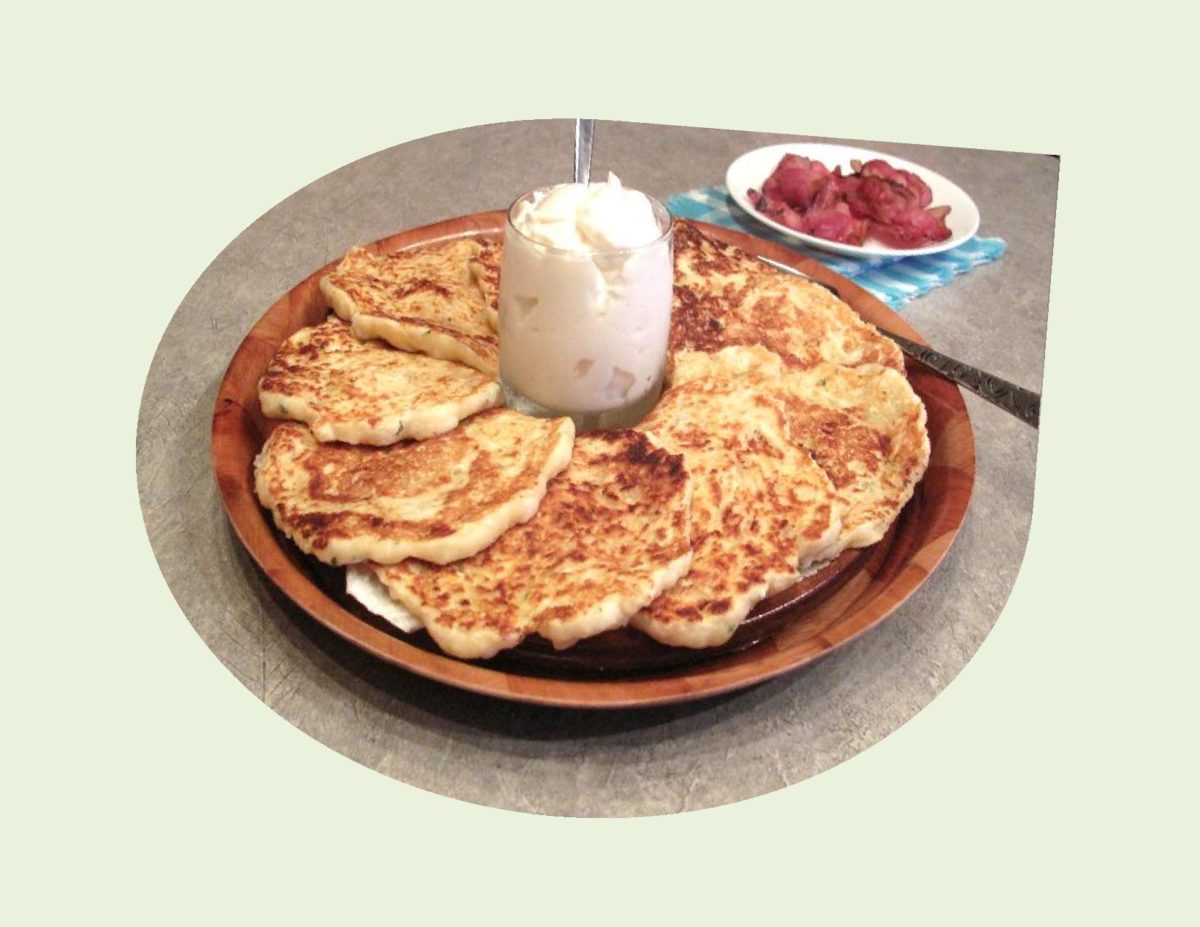
GERMAN POTATO PANCAKES are my Shrove Tuesday meal. I definitely grew up enjoying pancakes and with the many flavor options of today how could you not like them!
Print Recipe
Kartoffelpuffer - German Potato Pancakes
Sour cream or applesauce make great compliments to this meal.
Votes: 1
Rating: 5
You:
Rate this recipe!
|
|
Votes: 1
Rating: 5
You:
Rate this recipe!
|
Instructions
Par boil potatoes; cool slightly so you can peel & grate them. In a small bowl, combine next 6 ingredients. In a separate dish, whisk together melted margarine, buttermilk & eggs. Carefully combine wet & dry ingredients, stirring only until just blended.
Heat a non-stick griddle to 350 F. Fold potatoes into batter. Using a 1/4 cup measure, place batter on grill, spreading slightly. Brown lightly on both sides.