
HAPPY LABOUR DAY!
Once again, the last long week-end of summer has arrived. Here in Canada, families with school age children, take it as the last chance to travel before the end of summer. Others enjoy the company of family and friends at barbecues, picnics, fairs, festivals and fireworks displays. Canadian football fans may spend a large portion of their week-end watching the Labour Day Classic matches live on television. Whatever your choice of relaxation is, you know good food will be a part of the holiday.
For some reason, the classic Reuben sandwich came into my thoughts for a tasty choice. If you’re barbecuing, it can be wrapped in foil and heated on the grill. If a picnic is your preference, add a nice potato salad and of course, a beer. Perfect, easy and delicious!
I can’t quite remember when my love for sandwiches began. I have memories of my brother and I having cold, leftover mashed potato sandwiches with my mother’s homemade bread after school.
The Reuben sandwich turns 104 this year. Its origin has definitely be contested, but it is universally acknowledged as an American invention. It brings together Irish corned beef, Jewish rye bread, German sauerkraut, Swiss cheese and Russian dressing to create the perfect balance of interesting flavors and textures.
Print Recipe
Classic Reuben Sandwich on Swirl Bread
Votes: 6
Rating: 3.5
You:
Rate this recipe!
Ingredients
Ingredients for 4 Reuben sandwiches
Ingredients
Ingredients for 4 Reuben sandwiches
|
Votes: 6
Rating: 3.5
You:
Rate this recipe!
|
Instructions
Sauerkraut
In a colander, rinse & drain sauerkraut. In a large skillet, melt butter; stir in caraway seeds, salt & pepper. Add diced onion & saute for 3 minutes; add sauerkraut & combine well. Continue to saute, stirring frequently for 6 minutes; remove from heat & set aside.
Assembly
Butter one side each of 8 slices of bread. Divide shredded cheese, corned beef & sauerkraut between 4 of the slices (on the unbuttered side) Top with remaining 4 slices. Heat an electric griddle to 350 F. Transfer sandwiches to griddle & grill until cheese is melted. Remove from griddle on to serving plates; lift top slice of bread from each sandwich & drizzle with Russian dressing. Close Reuben & slice. Serve with pickles & potato fries or chips.
Recipe Notes
- Thousand Island & Russian dressings are similar. If you want to make your own Russian dressing just add 1/2 cup chili sauce to 3/4 cup Thousand Island dressing for a simple fix.

Traditions are always an interesting subject to me and as we acknowledge St. Patrick’s Day it seems a good time to check out a few. Corned beef and cabbage is hardly an Irish tradition. While the Irish certainly cooked corned beef, it was actually bacon (more like ham) and cabbage that was the yearly tradition. The unpopularity of corned beef in Ireland comes from its relationship with beef in general. From early on, cattle in Ireland were not used for their meat but for their strength in the fields, their milk and the dairy products produced. In Gaelic Ireland, cows were a symbol of wealth and a sacred animal. Because of their sacred association, cows were only killed for their meat if they became too old to work or produce milk. Beef was not even a part of the diet of the majority of the population.
However, the move to America changed that for many Irish immigrants. Corned beef was made popular in New York bars at lunchtime. The bars offered a ‘free lunch’ to the Irish construction workers who were building NYC in the early part of the 20th century. The catch was that you had to buy a couple of beers or shots of whiskey to get the free lunch. This is how corned beef became known as an ‘Irish’ food.
The Irish Americans transformed St. Patrick’s Day from a religious feast day to a celebration of their heritage and homeland. The popularity of corned beef and cabbage never crossed the Atlantic to the homeland. Instead the traditional St. Patrick’s Day meal eaten in Ireland is either lamb or bacon.
While on the subject of traditions, it brings me to Irish Soda Bread. Contrary to belief, soda bread did not originate with the Irish but instead with Native Americans before European colonization. At that time soda bread was made by using pearl-ash or potash (a natural soda in wood ashes) to make the bread rise. This became the forerunner to baking soda.
In the early and mid 1800’s, Ireland adopted this soda bread which is most often identified with them. Because it required so few ingredients, soda bread was an economic choice for staple breads. Irish families generally had kitchens with open hearths instead of ovens with breads being baked on griddles or in iron pots. This resulted in a loaf that was dense, slightly sour and with a hard crust. The original recipe contained nothing more than flour, buttermilk, baking soda and salt. The buttermilk was leftover from the butter making process. Irish Soda Bread pairs well with soups, stews and meat dishes.
Print Recipe
Irish Soda Bread
Votes: 1
Rating: 5
You:
Rate this recipe!
|
|
Votes: 1
Rating: 5
You:
Rate this recipe!
|
Instructions
Preheat oven to 425 F. Lightly flour a baking sheet. In a large bowl, combine flour, caraway seeds, baking soda & salt. Stir in buttermilk to form moist clumps. Gather dough into a ball. On a lightly floured work surface, knead dough until it holds together, about 1 minute.
Shape dough into a 6-inch diameter by 2-inch high round. Place on prepared baking sheet. Cut a 1-inch deep X across the top of bread, extending almost to the edges. Bake until bread is golden brown about 35 minutes. Remove from oven, cool completely on a wire rack.
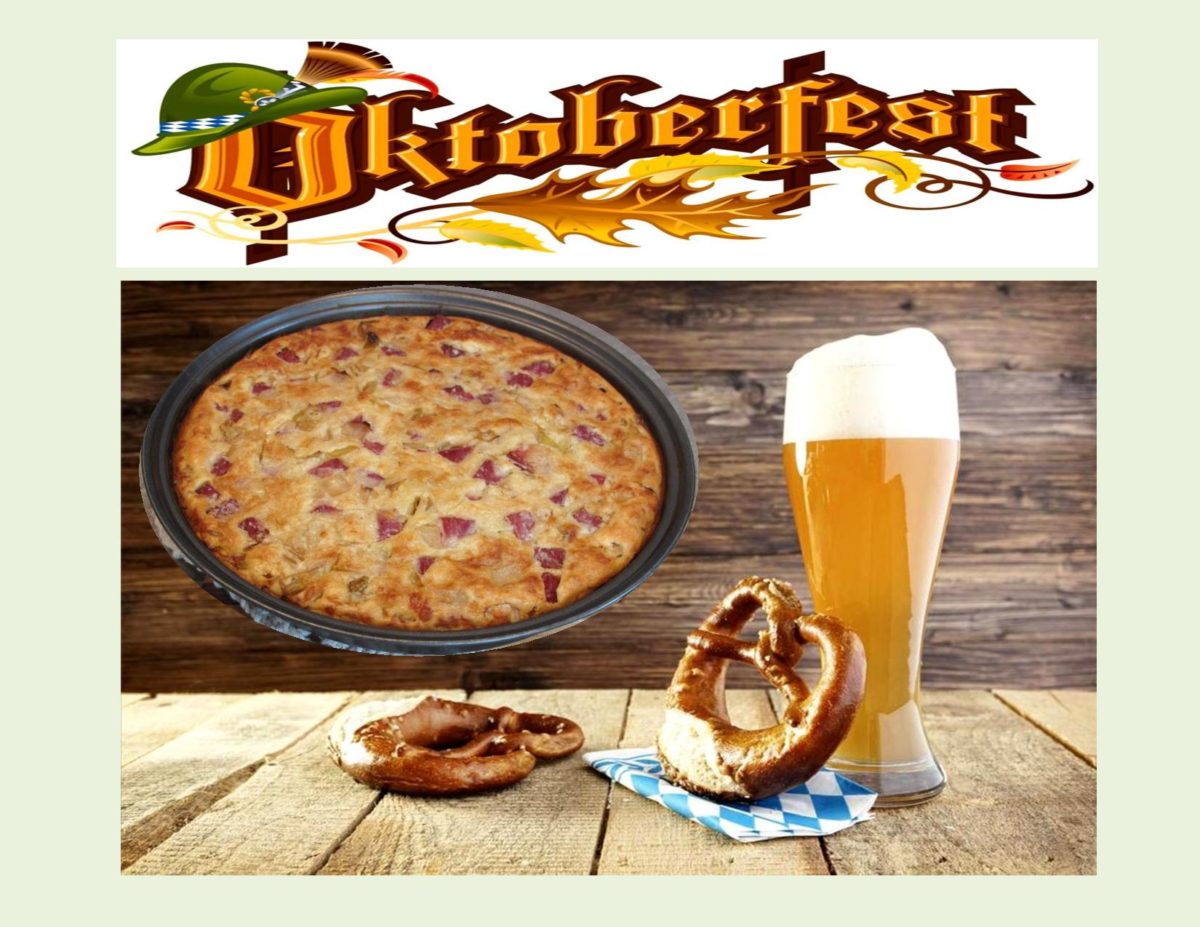
CELEBRATING OKTOBERFEST!
Nothing says fall better than Oktoberfest, a tradition dating back to 1810 in Munich, Germany. Originally a celebration of the marriage of the King of Bavaria and Princess Therese. Everybody had so much fun that it was resolved to repeat the celebration, which has been done, every year since.
Beer enthusiasts from all over the world flock to Munich for Oktoberfest, where they feast on everything from steins of beer to plates of sauerkraut, bratwurst, cabbage rolls, sausage and wiener schnitzel. Bavarian music fills the air to promote the fun atmosphere of Oktoberfest.
While the true celebration has to be experienced in Munich, there are actually some great Canadian events that try to duplicate the festivities without having to travel abroad. In different parts of the country this is a fun and social sampling event featuring many local craft and authentic Bavarian breweries as well as authentic food, Oktoberfest music, dancers, games, etc..
Even if it is a little hard to admit summer has ended and fall is officially here, Oktoberfest seems like a great little celebration to ease into the coming winter months.
I came across this recipe for CORNED BEEF AND CABBAGE QUICHE. From the reviews I read it sounded pretty good so I thought it was worth a try. It seems to fit the occasion I think.
Print Recipe
Corned Beef & Cabbage Quiche
Votes: 1
Rating: 5
You:
Rate this recipe!
|
|
Votes: 1
Rating: 5
You:
Rate this recipe!
|
Instructions
In a large skillet, melt butter; add onion, cabbage & garlic. Cook, stirring frequently, until vegetables are crisp-tender, about 5-7 minutes. Add water, cover & cook for 5 minutes. Remove cover & cook until liquid evaporates & cabbage begins to brown, about 8-10 minutes longer. It is important to get the liquid out of the cabbage or it will cause quiche to become watery.
Stir in corned beef; remove pan from heat & allow to cool for 15 minutes. Preheat oven to 375 F. In a medium bowl, whisk together eggs, milk, flour, caraway seeds, salt & pepper until blended.
Spread half of cabbage mixture in pie crust. Top with half of the Swiss cheese; repeat layers. Slowly pour egg mixture over ingredients in pie shell. Sprinkle with Parmesan cheese. Bake for 30-40 minutes or until quiche is puffed & golden. Let cool 5 minutes before slicing to serve.
Recipe Notes
- This quiche is nice baked 'galette' style or using a springform pan instead of a regular pie pan.
- Recipe inspired by busycooks.about.com


