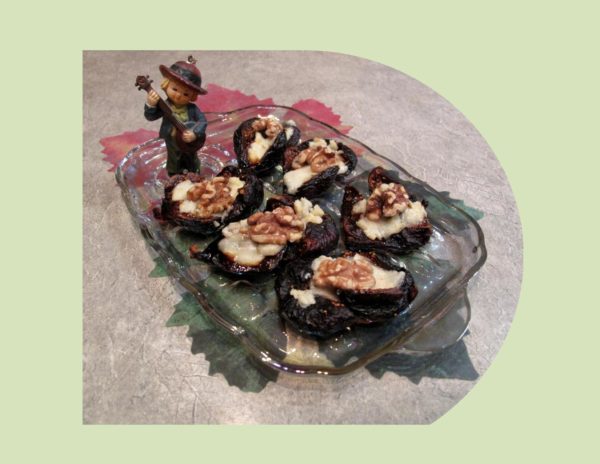
The flavor combination of deeply sweet figs and the nutty, creaminess of Gorgonzola dolce is one of those pairings where opposites attract.
Among the oldest fruits consumed by humans, figs tell a complex and symbolic story in culinary history. Spanish Franciscan missionaries brought the fig to southern California in 1520, leading to the variety known as Mission figs.
The deciduous fig tree can live as long as 100 years and grow to 50′ (15 m) tall, though they are more typically 10-30′ (3-9 m). Figs flourish in hot, dry climates where the fruit has all-day sun to ripen.
The Black Mission figs are extremely sweet — sometimes even oozing a bit of syrup. They have a blackish-purple skin and dark pink flesh. Figs are best to use when they are very ripe, a little soft rather than firm. If you have figs that aren’t quite ready, use the heating method as that will soften them and add a bit of caramelization.
I came across this recipe excerpted from Cook Like a Rock Star by Anne Burrell. What a great and unbelievably simple hors d’ oeuver.
Print Recipe
Figs, Gorgonzola & Walnuts
Votes: 1
Rating: 5
You:
Rate this recipe!
|
|
Votes: 1
Rating: 5
You:
Rate this recipe!
|
Instructions
Preheat oven to 350 F. Place fig halves sliced side up on a baking sheet. Using your finger, make a depression in the center of each. Place 2-3 drops of vinegar in each depression and sprinkle figs with salt.
Fill each fig with a dollop of cheese & top with a walnut piece. Bake until cheese melts & is bubbly, about 5 minutes.

Being one who appreciates both roasted vegetables and the origins of things, I was curious as to when roasting vegetables became a ‘thing’.
The presence of a platter of blistered carrots and parsnips on our dinner table is happily commonplace these days. However, this was not always the case.
Restaurant chefs have forever roasted vegetables for certain preparations, especially classics like roasted plum tomato sauce and charred red peppers for antipasto.
Dry-heat cooking in an oven has traditionally been associated with meat, poultry and game. Roasting other foods like fish, vegetables and fruit seals in and intensifies flavors, imparts an attractive burnish and often uses less ‘fat’ than other cooking methods. The use of ‘professional’ quality sheet pans, roasting pans and ovenproof skillets is best for such roasting.
This roasting technique came into vogue in the late 1990’s and early 2000’s. Clearly, roasting is the only way to treat vegetables. The taste is legitimately superior to older techniques in almost all cases as it concentrates and enhances via caramelization. So, it begs the question, why did it take so long to become the default vegetable cooking technique? A lingering preference for boiled, steamed and sauteed veggies seems to be the main reason. Although technology has not changed that much in several decades, sensibilities regarding how certain foods should be prepared have shifted greatly. The days of limp, tasteless, boiled vegetables are gone!
This simple recipe is one Brion and I enjoy often.
Print Recipe
Oven Roasted Squash with Apples & Onions
Votes: 1
Rating: 5
You:
Rate this recipe!
|
|
Votes: 1
Rating: 5
You:
Rate this recipe!
|
Instructions
Preheat oven to 400 F. Mix dressing, sugar & rosemary. Toss apples, squash & onions in dressing mixture. Spread on baking sheet. Bake about 20-30 minutes until tender & caramelized.