
Aduki, or adzuki beans, also known as cowpeas or red mung beans, are small red sweet-flavored beans popular in Oriental cuisine. They come from East Asia and are prevalent in places like Japan, China, and Korea, playing a versatile role that can be used in sweet and savory dishes.
- Regarding sweet dishes, you can use them to make red bean paste, which can be used as a filling for desserts like mochi, pancakes, or ice cream. You can also use them to make sweet aduki bean soup, a popular dessert in Japan.
- Adzuki beans can also be used in savory dishes, such as stews, soups, and curries. They work particularly well in dishes with a slightly sweet flavor, such as a Japanese-style curry.
- Using adzuki beans in a salad adds some protein and texture. They work particularly well in salads with a slightly sweet dressing, such as a sweet mustard dressing.
- For a snack, adzuki beans can be roasted in the oven with some spices to create a crunchy snack high in protein and fiber.
Rugelach is an irresistible baked treat which is both delicious and versatile. So is it a pastry or a cookie? Rugelach’s unique buttery, tender dough wrapped around any variety of tasty fillings seems to straddle the line.
Traditionally, rugelach was made with yeast dough but the pastry has evolved and is now made with cream cheese which is both quicker and easier to make. The cream cheese dough was first used by North American bakers in the 1940’s, and now forms the staple of the modern rugelach we know today.
This Jewish-Asian fusion cookie combines Jewish rugelach pastry and the widely popular Asian dessert filling: adzuki red bean paste. The pastry dough and red bean paste are rolled together, then sprinkled with black sesame seeds and coarse sugar. When baked it creates a cookie that is ‘nutty’, sweet, buttery and crispy. Perfect for the holidays!
Print Recipe
Adzuki Sweet Red Bean Rugelach
Votes: 1
Rating: 5
You:
Rate this recipe!
|
|
Votes: 1
Rating: 5
You:
Rate this recipe!
|
Instructions
In a food processor, whisk together flour & salt. Add cream cheese & butter; cut into the flour mixture until coarse crumbs form.
Add egg yolk & cold water to the dough, combining until the mixture is thoroughly moistened & clumpy. Gather dough together into a rough ball & divide in half, flattening each half into a disk. Wrap disks & refrigerate, 2 hours or overnight.
Preheat oven to 375 F. Line a baking sheet with parchment paper.
Roll out each disk into a 1/8" - 3/16" thick circle, dusting with powdered sugar to prevent sticking. Spread with red bean paste, leaving a 1/4" border around the edges. Using a sharp knife or pizza cutter, cut the circle into 16 equal triangular slices.
To roll, cut a little notch into the wide end of the triangle & pull the ends apart slightly. Start with that same side & roll inwards, taking care not to roll too tightly and squeeze out the filling. Tuck the end underneath & pinch slightly to fix in place. Repeat for the remaining pieces. Brush rugelach lightly with egg wash then sprinkle with black sesame seeds & coarse sugar.
Space at least 1" apart on baking sheet. Refrigerate for another 20 minutes. Bake for 20-24 minutes until cookies are golden brown. Remove, dust with a little powdered sugar, and let cool for 5 minutes before transferring to a cooling rack.
Remove from oven & allow to cool for 5 minutes before transferring to a cooling rack.
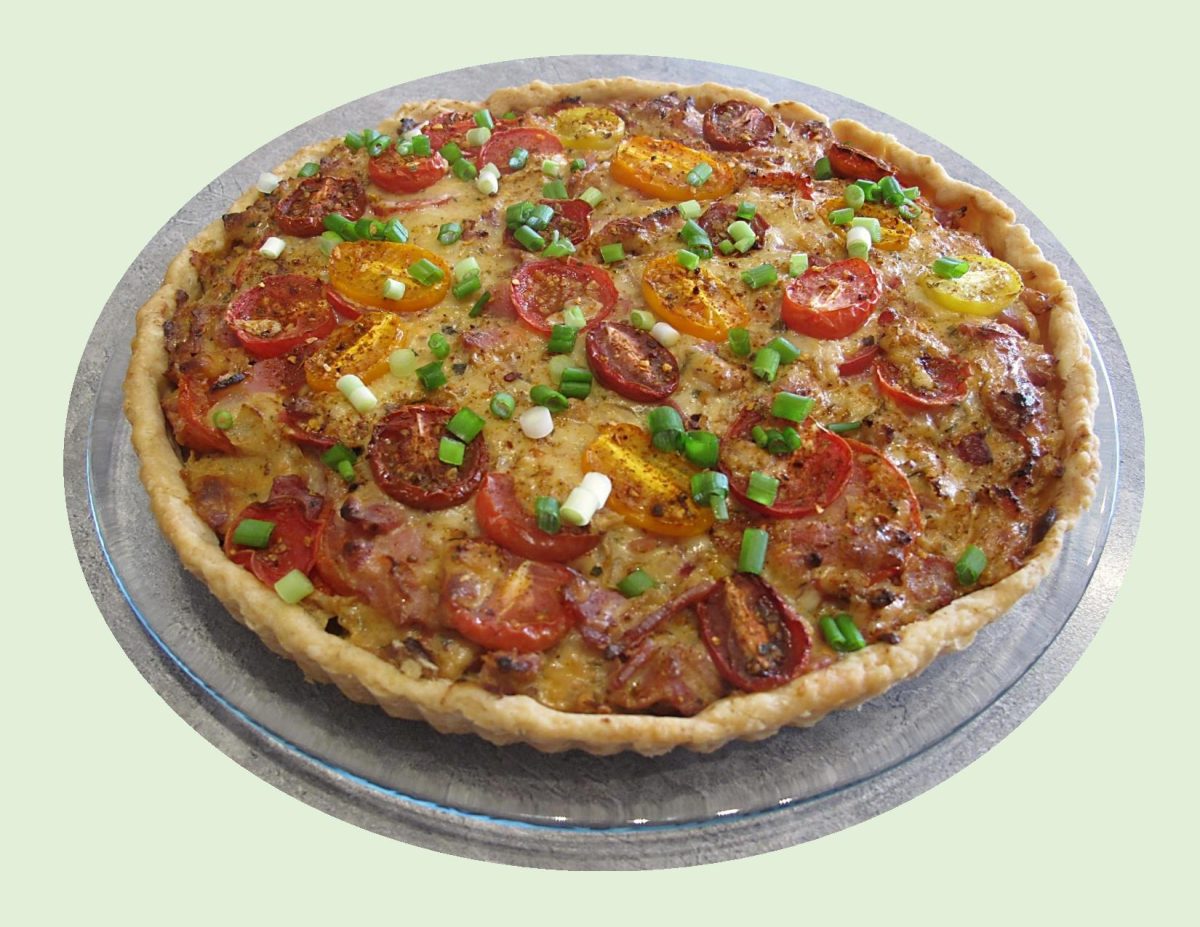
There’s something real special about using heirloom tomatoes as opposed to hybrid varieties. Heirloom tomatoes are ‘breed true’, meaning that the seeds can be saved to grow more of the same tomatoes year after year. Generally, they are more expensive because they are not as prolific as hybrids, and they do not ship or store well.
The seeds from heirloom tomatoes (also called heritage tomatoes) have been selected over many years for desirable traits, such as size, color, and taste. They are open-pollinated, meaning that bees, moths, birds, bats, wind, or rain pollinate the tomato flowers.
These days, many hybrid tomatoes are bred for traits such as high yield, disease resistance, and the ability to ship and store well. This decreases costs for farmers and consumers and minimizes waste due to spoiled produce.
However, this cost savings and efficiency comes at the expense of flavor. When you cross two tomato plants to make the offspring disease resistant or highly productive, you may also lose other traits, such as rich flavor.
This is exactly what has happened to many hybrid tomato varieties: they have lost some of the sugar and nutrient content that makes heirloom tomatoes taste sweeter and juicier. These little gems add such a special touch to this savory summer tart.
Print Recipe
Savory Heirloom Tomato Tart
Votes: 1
Rating: 5
You:
Rate this recipe!
Ingredients
Parmesan Buttermilk Pastry
Ingredients
Parmesan Buttermilk Pastry
|
Votes: 1
Rating: 5
You:
Rate this recipe!
|
Instructions
Filling
Preheat oven to 400°F. Cut tomatoes into ½-inch-thick slices. Place about 7 or 8 slices (enough to cover top of pie) on a baking sheet lined with paper towels, and sprinkle with ¼ teaspoon of the salt. Cover with additional paper towels, and reserve.
Arrange remaining tomatoes in a single layer on a lightly greased wire rack set on a large baking sheet. Sprinkle with ½ teaspoon of the salt. Bake in preheated oven until wilted and slightly dried out, 40 to 45 minutes. Cool completely, about 1 hour.
Make Parmesan-Buttermilk Pie Crust. Instructions below.
While pie crust cools, cook bacon in a skillet over medium-high until fat is beginning to render, 4 to 5 minutes. Add chopped shallots, and cook until bacon is crisp and shallots are caramelized, 6 to 7 more minutes. Stir in garlic; cook until fragrant, about 1 minute. Using a slotted spoon, transfer bacon mixture to a plate lined with paper towels to drain. Cool 20 minutes.
Stir together cheese, ranch dressing, basil paste, chives, Dijon, and egg until combined. Sprinkle with pepper and remaining ¼ teaspoon salt & spices. Fold in bacon mixture.
Gently spread a third of cheese mixture onto cooled Parmesan-Buttermilk Crust; layer with half of the roasted tomato slices in slightly overlapping pattern. Spread another third of cheese mixture on top of tomato slices. Repeat with remaining roasted tomato slices and cheese mixture. Top with reserved sliced fresh tomatoes, pressing filling gently into crust. Shield edges of pie with aluminum foil.
Bake in preheated oven until filling is set, 40 to 45 minutes. Transfer to a wire rack, and let stand 1 hour before serving. Garnish with chopped green onion or chives.
Pastry
Pulse flour, cheese, 1/2 teaspoon salt, and 1/4 teaspoon pepper in food processor until combined. Add butter and shortening. Pulse until butter and shortening are pea size pieces, about 5 times. Drizzle in buttermilk processing until dough begins to just come together. Gather and lightly knead dough into a ball on a large piece of plastic wrap; flatten into disk and wrap tightly. Chill at least 2 hours or up to 2 days.
Preheat oven to 400°F. Roll dough on a floured surface into a 15- to 16-inch circle about 1/3 inch thick. Transfer to a 9-inch deep dish pie plate. Trim edges leaving a 1-inch overhang. Fold edges under and crimp. Freeze dough at least 20 minutes.
Line piecrust with parchment paper, and fill with pie weights or dried beans. Bake at 400°F 20 minutes. Remove parchment and weights and bake until edges are golden and bottom of crust is set, about 8 more minutes. Cool completely, about 30 minutes.
Recipe Notes
- Whether using store-bought or homemade dough, don't forget to blind-bake the crust (bake it a bit on its own) before adding the filling. This extra step will keep the crust from turning soggy as the pie bakes.
- Another good pastry alternative would be one with cornmeal in it.


